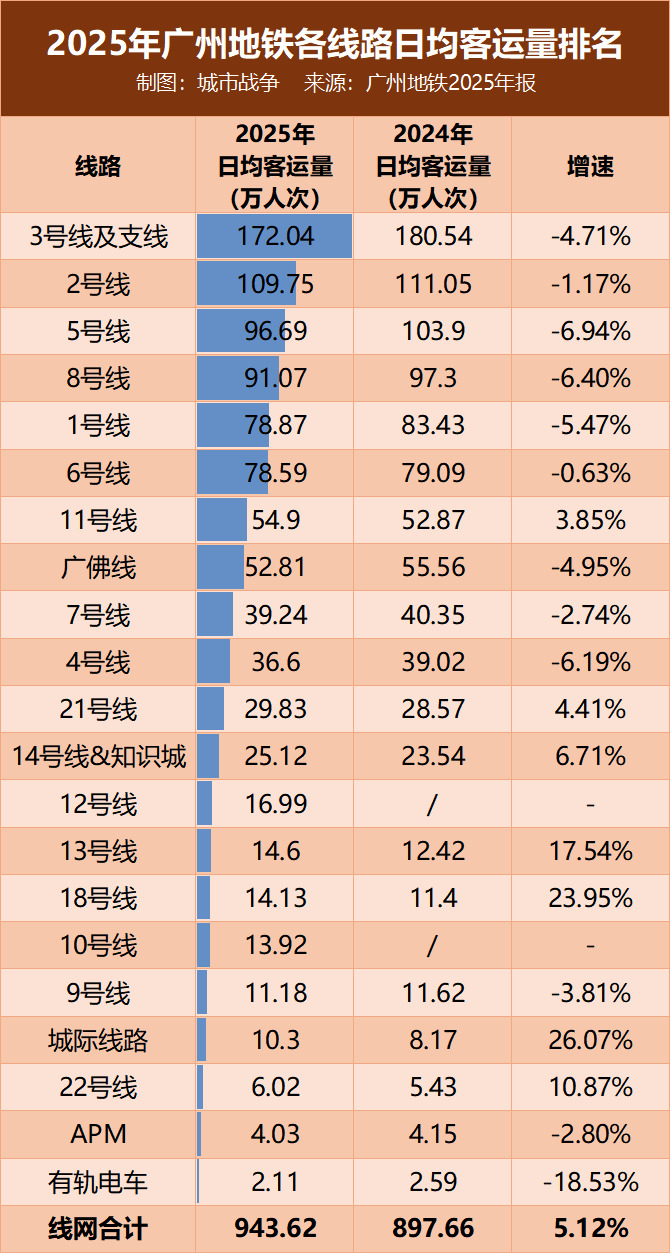
Guangzhou Metro traffic declines in central districts
💡Data-driven insight into urban mobility shifts, relevant for smart city and logistics AI applications.
⚡ 30-Second TL;DR
What Changed
Central district metro lines like Line 3 and Line 5 saw significant passenger declines in 2025.
Why It Matters
This shift indicates a change in urban mobility patterns that could affect future smart city infrastructure and logistics planning.
What To Do Next
If working on urban mobility AI, incorporate 'micro-mobility' data (e-bikes) as a primary variable for traffic prediction models.
Key Points
- •Central district metro lines like Line 3 and Line 5 saw significant passenger declines in 2025.
- •Electric bikes have become a major competitor for short-distance commuting, with daily usage exceeding metro ridership.
- •The city is shifting from a single-center model to a multi-center model, dispersing population and traffic.
🧠 Deep Insight
Background and context from public sources — not the original article. 13 sources cited.
🔑 Enhanced Key Takeaways
- •While the original article suggests declines in central districts, the overall Guangzhou Metro network achieved record-breaking passenger volumes in 2025, with an average daily ridership of 9.312 million and a peak of 14.093 million on December 31, 2025. This growth was fueled by the intensive opening of six new metro lines and three intercity rail sections, expanding the network to over 779 kilometers.
- •Despite overall network growth, central lines like Line 3 have historically faced severe overcrowding and overcapacity issues, which new suburban extensions could potentially exacerbate by directing more passengers into already congested core sections.
- •Guangzhou's urban development strategy is actively shifting towards a "multi-centered, clustered, and networked urban spatial structure" by 2049, aiming to optimize the city's layout and disperse population and economic activity away from a singular core.
- •Electric bikes have emerged as a significant mode of transport for short-distance commuting, with daily cycling trips in Guangzhou exceeding 9 million in 2024, surpassing the local metro network's daily ridership for the first time. The city has seen registered e-bike ownership grow to over 5.6 million, with an estimated 6 million in circulation.
- •In response to the e-bike boom, Guangzhou has invested heavily in non-motorized transport (NMT) infrastructure, upgrading and connecting 2,966 kilometers of cycling corridors between 2022 and 2024, achieving 82% street coverage in six districts, while also planning to regulate the total number of electric bicycles due to traffic and accident concerns.
📊 Competitor Analysis▸ Show
| Feature | Guangzhou Metro | Electric Bikes |
|---|---|---|
| Mode | Rapid transit (mass public transport) | Individual/personal transport |
| Coverage | Extensive rail network, intercity connections | Flexible, door-to-door, last-mile connectivity |
| Capacity | High passenger volume per trip | Individual or low passenger volume |
| Speed | High average speed, especially on express lines | Moderate speed, susceptible to road traffic |
| Cost | Fixed fare structure, potentially higher for short trips | Purchase/rental cost, charging, generally lower for short trips |
| Infrastructure | Dedicated underground/elevated tracks, stations | Road lanes, bike paths, parking, charging facilities |
| Environmental | Electric, mass transit, lower per-passenger emissions | Electric, zero direct emissions, battery disposal concerns |
| Congestion | Reduces road congestion | Can contribute to road/pavement congestion if unregulated |
| Safety | Generally high safety record | Higher accident rates, especially with unregulated use |
🛠️ Technical Deep Dive
- Guangzhou Metro utilizes different train car widths: Type A (largest, used on Lines 1 and 2), Type B (smaller, used on Lines 3, 4, 5, 6), and Type L.
- Line 4 was the first metro line in mainland China to employ linear motor trains.
- Newer lines, such as Line 22, are designed for high operating speeds of up to 160 km/h, facilitating faster intercity travel.
- The Guangzhou and Foshan metro systems are integrated with a "one network, one ticket" system, enhancing cross-city travel convenience.
- The metro network is continuously expanding, with plans for 53 rail transit lines totaling 2,029 kilometers by 2035, including high-speed metro lines to connect with surrounding urban centers.
🔮 Future ImplicationsAI analysis grounded in cited sources
⏳ Timeline
📎 Sources (13)
Factual claims are grounded in the sources below. Forward-looking analysis is AI-generated interpretation.
Weekly AI Recap
Read this week's curated digest of top AI events →
👉Related Updates




AI-curated news aggregator. All content rights belong to original publishers.
Original source: 虎嗅 ↗
This is a summary, not the original. Read the source, or get the weekly briefing.
The weekly digest
One email a week. Unsubscribe anytime.