來源虎嗅•較早收集於 87m
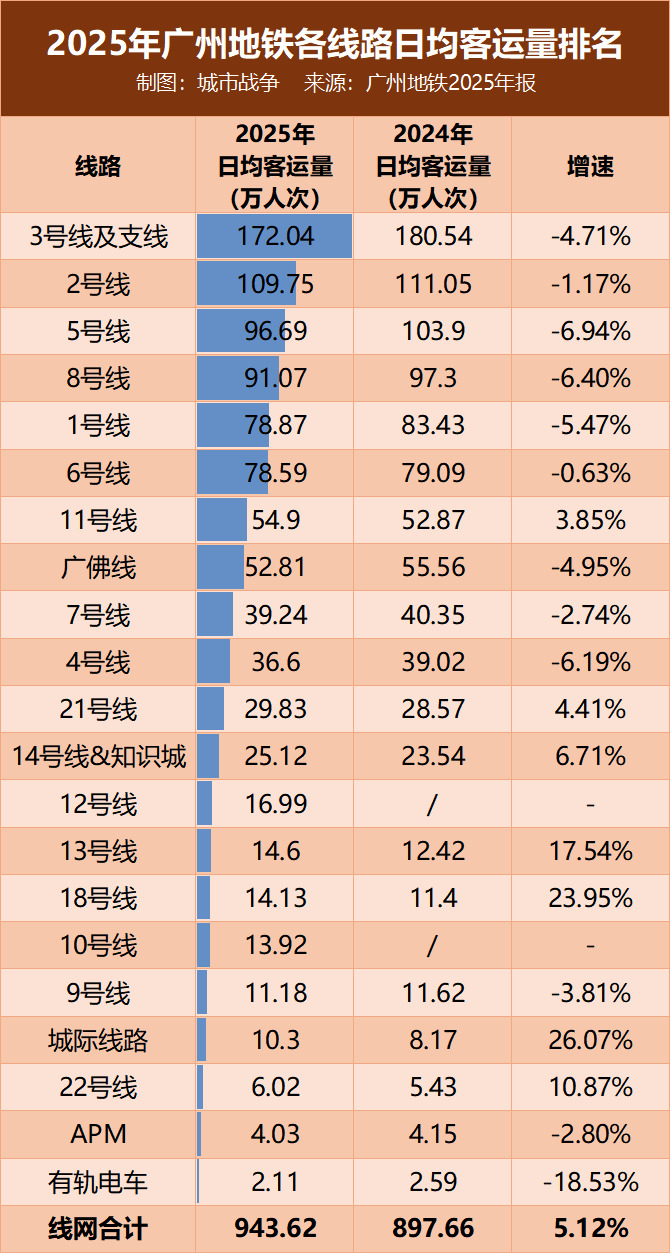
廣州地鐵中心城區客流量集體下滑
#smart-city#urban-planning#mobilityguangzhou-metro-systemguangzhou-metro
💡數據驅動的城市移動趨勢洞察,對智慧城市與物流AI應用具有參考價值。
⚡ 30 秒速覽
有什麼變化
2025年廣州地鐵3號線、5號線等中心城區線路客流量顯著下降。
為什麼重要
此轉變顯示了城市移動模式的改變,可能影響未來智慧城市基礎設施與物流規劃。
下一步行動
若從事城市移動AI開發,應將「微移動」數據(電動自行車)納入交通預測模型的主要變數。
誰應關注:Developers & AI Engineers
關鍵要點
- •2025年廣州地鐵3號線、5號線等中心城區線路客流量顯著下降。
- •電動自行車已成為短途通勤的主要競爭對手,日騎行量已超過地鐵客運量。
- •城市正從單中心轉向多中心模式,有效疏散了人口與交通壓力。
🧠 深度解析
背景與延伸:來自公開資料,非原文內容。引用 13 個來源。
🔑 增強重點摘要
- •While the original article suggests declines in central districts, the overall Guangzhou Metro network achieved record-breaking passenger volumes in 2025, with an average daily ridership of 9.312 million and a peak of 14.093 million on December 31, 2025. This growth was fueled by the intensive opening of six new metro lines and three intercity rail sections, expanding the network to over 779 kilometers.
- •Despite overall network growth, central lines like Line 3 have historically faced severe overcrowding and overcapacity issues, which new suburban extensions could potentially exacerbate by directing more passengers into already congested core sections.
- •Guangzhou's urban development strategy is actively shifting towards a "multi-centered, clustered, and networked urban spatial structure" by 2049, aiming to optimize the city's layout and disperse population and economic activity away from a singular core.
- •Electric bikes have emerged as a significant mode of transport for short-distance commuting, with daily cycling trips in Guangzhou exceeding 9 million in 2024, surpassing the local metro network's daily ridership for the first time. The city has seen registered e-bike ownership grow to over 5.6 million, with an estimated 6 million in circulation.
- •In response to the e-bike boom, Guangzhou has invested heavily in non-motorized transport (NMT) infrastructure, upgrading and connecting 2,966 kilometers of cycling corridors between 2022 and 2024, achieving 82% street coverage in six districts, while also planning to regulate the total number of electric bicycles due to traffic and accident concerns.
📊 競品分析▸ Show
| Feature | Guangzhou Metro | Electric Bikes |
|---|---|---|
| Mode | Rapid transit (mass public transport) | Individual/personal transport |
| Coverage | Extensive rail network, intercity connections | Flexible, door-to-door, last-mile connectivity |
| Capacity | High passenger volume per trip | Individual or low passenger volume |
| Speed | High average speed, especially on express lines | Moderate speed, susceptible to road traffic |
| Cost | Fixed fare structure, potentially higher for short trips | Purchase/rental cost, charging, generally lower for short trips |
| Infrastructure | Dedicated underground/elevated tracks, stations | Road lanes, bike paths, parking, charging facilities |
| Environmental | Electric, mass transit, lower per-passenger emissions | Electric, zero direct emissions, battery disposal concerns |
| Congestion | Reduces road congestion | Can contribute to road/pavement congestion if unregulated |
| Safety | Generally high safety record | Higher accident rates, especially with unregulated use |
🛠️ 技術深入
- Guangzhou Metro utilizes different train car widths: Type A (largest, used on Lines 1 and 2), Type B (smaller, used on Lines 3, 4, 5, 6), and Type L.
- Line 4 was the first metro line in mainland China to employ linear motor trains.
- Newer lines, such as Line 22, are designed for high operating speeds of up to 160 km/h, facilitating faster intercity travel.
- The Guangzhou and Foshan metro systems are integrated with a "one network, one ticket" system, enhancing cross-city travel convenience.
- The metro network is continuously expanding, with plans for 53 rail transit lines totaling 2,029 kilometers by 2035, including high-speed metro lines to connect with surrounding urban centers.
🔮 前景展望基於引用來源的 AI 分析
Urban decentralization will continue to reshape commuting patterns, potentially reducing reliance on central metro lines for all trips.
Guangzhou's strategic urban development plan for 2049 aims to optimize a multi-center, networked urban structure, dispersing population and economic activity.
Electric bikes will continue to be a dominant force in short-distance and last-mile connectivity, necessitating further infrastructure and regulatory adjustments.
E-bike usage surpassed metro ridership for daily trips in 2024, driven by affordability and convenience, and the city is actively expanding cycling infrastructure and considering total number regulation.
Guangzhou Metro will continue its aggressive expansion, particularly with high-speed intercity lines, to integrate the Greater Bay Area, potentially shifting focus from solely intra-city central district traffic.
In 2025, Guangzhou Metro intensively opened new lines, pushing its operational length to over 779 km, and has plans for 53 rail transit lines totaling 2,029 km by 2035, including high-speed metro lines extending to surrounding urban centers.
⏳ 時間線
1997-06
Guangzhou Metro Line 1 begins trial operations.
2002-12
Guangzhou Metro Line 2 opens its first section.
2005-12
Guangzhou Metro Line 3 and Line 4 begin operations.
2017-08
China's Ministry of Transportation issues guidelines discouraging shared electric bicycle rental businesses.
2021-11
Guangzhou introduces registration and licensing management for electric bicycles.
2024
Daily cycling trips in Guangzhou exceed 9 million, surpassing metro ridership for the first time.
2025
Guangzhou Metro opens six new lines/sections and three intercity rail sections, expanding network to over 779 km.
2025-12
Guangzhou Metro network sets new national record for daily passenger volume (14.093 million).
📎 來源 (13)
Factual claims are grounded in the sources below. Forward-looking analysis is AI-generated interpretation.
📰
AI 週報
閱讀本週精選 AI 大事摘要 →
👉相關動態


AI 策展新聞聚合。所有內容版權歸原始發布者所有。
原始來源: 虎嗅 ↗
每週電子報
每週一封,可隨時退訂。