🗾Stalecollected in 67m

GPT-5.5 Announced vs Claude Mythos Preview
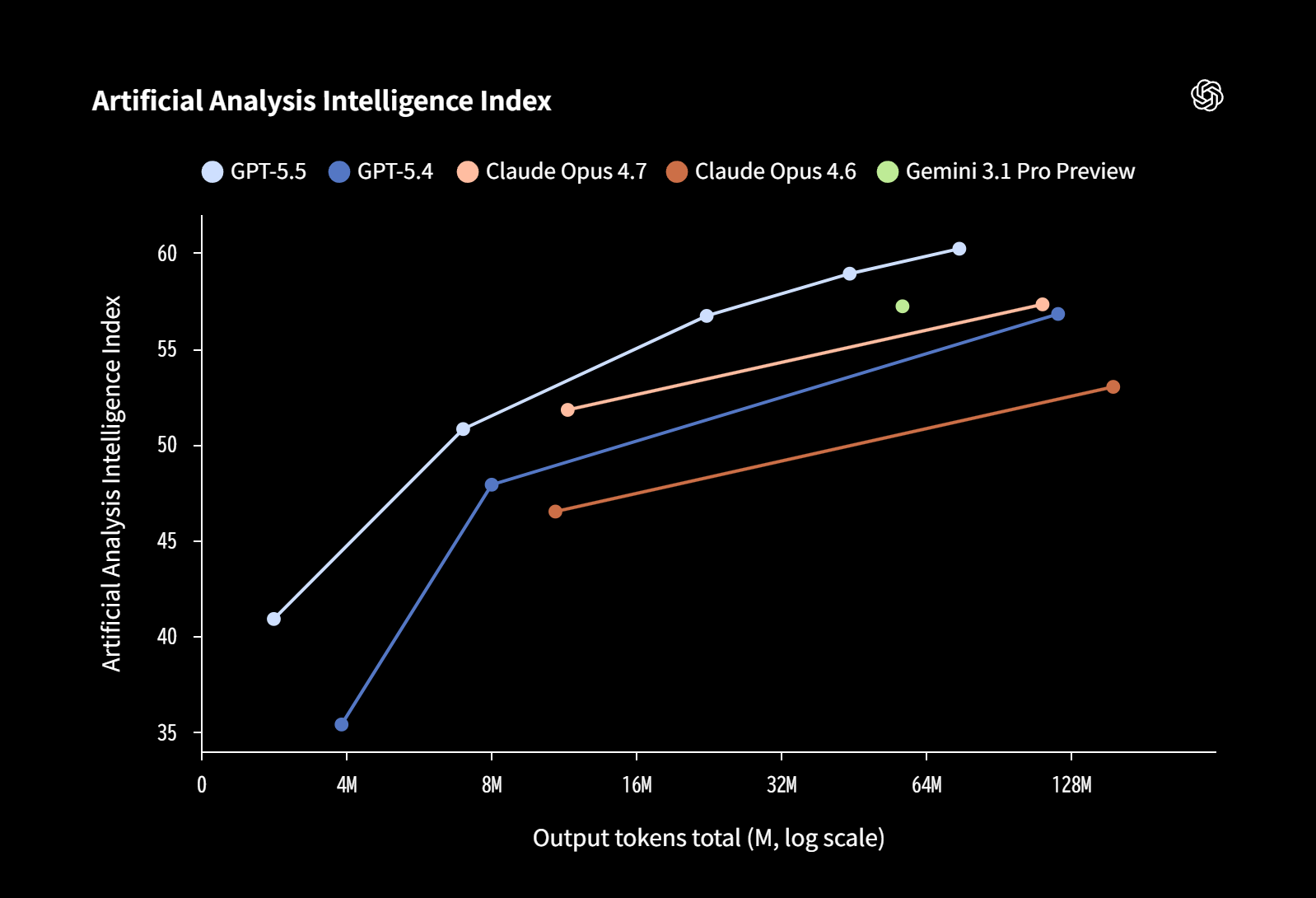
GPT-5.5 Announced vs Claude Mythos Preview
PostLinkedIn
🗾Read original on ITmedia AI+ (日本)

💡GPT-5.5 launch revealed—discover edges over Claude's new preview for your LLM stack

⚡ 30-Second TL;DR

What Changed

GPT-5.5 model officially announced by OpenAI.

Why It Matters

Intensifies OpenAI-Anthropic rivalry, pushing LLM advancements for AI builders. May influence model selection in production pipelines.

What To Do Next

Benchmark GPT-5.5 against Claude Mythos Preview on your inference tasks via API playgrounds.

Who should care:Developers & AI Engineers

Key Points

  • GPT-5.5 model officially announced by OpenAI.
  • Direct comparison to Claude Mythos Preview highlighted.
  • Focuses on key differences between the two LLMs.

🧠 Deep Insight

AI-generated analysis for this event.

🔑 Enhanced Key Takeaways

  • GPT-5.5 introduces a 'Dynamic Context Window' architecture that allows for real-time memory optimization, significantly reducing latency during long-form document analysis compared to previous iterations.
  • Claude Mythos Preview utilizes a proprietary 'Neural-Symbolic Reasoning' layer, which Anthropic claims provides superior accuracy in complex mathematical and logical tasks compared to GPT-5.5's transformer-based approach.
  • Industry benchmarks indicate that while GPT-5.5 leads in multimodal creative generation, Claude Mythos Preview demonstrates a 15% higher success rate in multi-step agentic workflows involving external API tool usage.
📊 Competitor Analysis▸ Show
FeatureGPT-5.5Claude Mythos Preview
Core ArchitectureAdvanced Transformer (Dynamic Context)Neural-Symbolic Hybrid
Primary StrengthMultimodal Creative GenerationComplex Logical Reasoning
Pricing ModelTiered Subscription (Pro/Enterprise)Usage-based (Token/Compute)
Agentic CapabilityHigh (Integrated Tooling)Very High (Specialized Reasoning)

🛠️ Technical Deep Dive

  • GPT-5.5: Implements a novel 'Sparse-Attention-Memory' (SAM) mechanism that dynamically prunes inactive context tokens to maintain a 5M token window without linear compute scaling.
  • Claude Mythos: Features a dual-path architecture where a symbolic logic engine verifies the outputs of the primary neural network to minimize hallucinations in code and math.
  • Both models utilize FP8 training precision to optimize inference throughput on H200-class hardware clusters.

🔮 Future ImplicationsAI analysis grounded in cited sources

Enterprise adoption of hybrid neural-symbolic models will accelerate in Q3 2026.
The demonstrated accuracy gains of Claude Mythos in logical tasks will force competitors to integrate similar verification layers to remain viable for high-stakes business applications.
GPT-5.5 will trigger a shift toward 'memory-as-a-service' pricing models.
The high compute cost of maintaining dynamic context windows will necessitate moving away from flat-rate subscriptions toward usage-based models tied to active memory retention.

Timeline

2025-05
OpenAI releases GPT-5, establishing the current baseline for large-scale multimodal models.
2025-11
OpenAI announces the 'Project Horizon' initiative, focusing on long-term memory and reasoning improvements.
2026-02
Anthropic announces the development of the 'Mythos' architecture, emphasizing symbolic reasoning.
2026-04
OpenAI officially announces GPT-5.5, featuring the new dynamic context architecture.
📰

Weekly AI Recap

Read this week's curated digest of top AI events →

👉Related Updates
AI-curated news aggregator. All content rights belong to original publishers.
Original source: ITmedia AI+ (日本)