Google's Gemini Intelligence Controls Android Phones
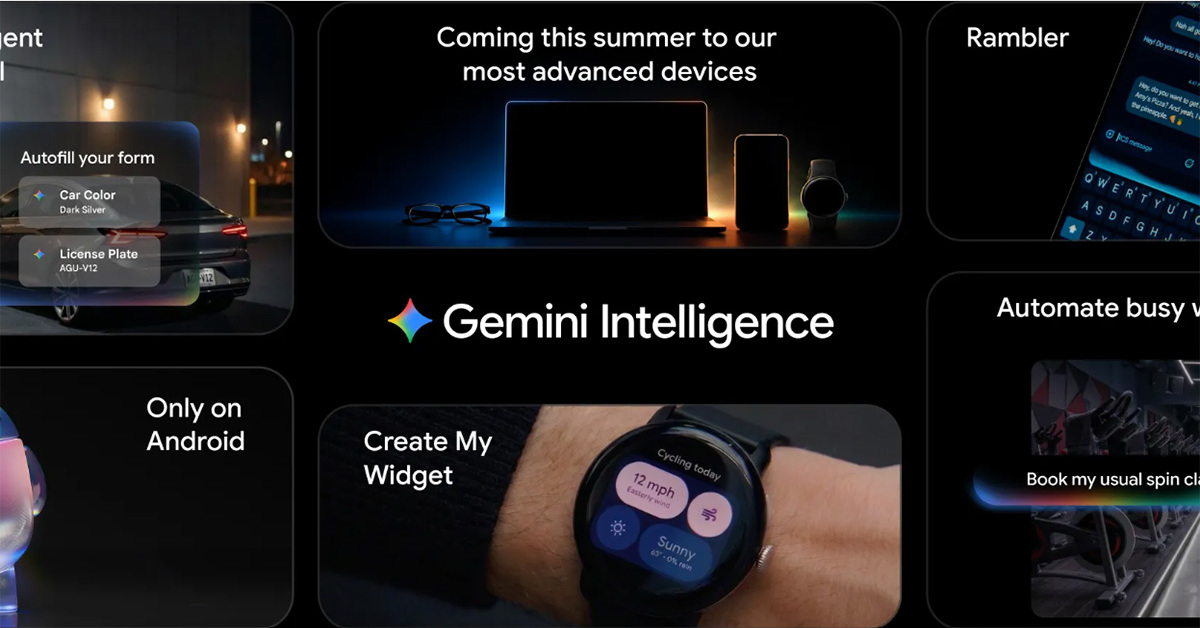
Google AI to control Android phones + voice boost—game-changer for mobile devs
30-Second TL;DR
What Changed
Google launches Gemini Intelligence for Android
Why It Matters
This deepens AI integration into mobile OS, potentially transforming user interactions and app development on Android. It positions Google strongly against Apple Intelligence.
What To Do Next
Check Google I/O updates for early Gemini Intelligence developer previews.
Key Points
- •Google launches Gemini Intelligence for Android
- •AI can operate smartphones autonomously
- •Voice input efficiency improvements
- •Deploys summer 2026 on Galaxy and Pixel
- •Targeted at major Android flagships
Deep Insight
AI-generated analysis for this event — not the original article.
Enhanced Key Takeaways
- •Gemini Intelligence utilizes a new 'on-device orchestration layer' that allows the model to interact with UI elements via accessibility services, bypassing the need for traditional API integrations for every app.
- •The system introduces 'Contextual Awareness Persistence,' enabling the AI to maintain state across different applications to perform multi-step tasks like summarizing a message and immediately drafting a calendar invite.
- •Privacy architecture includes a 'Local Processing First' mandate, where sensitive screen data is processed by a quantized version of Gemini Nano before any metadata is sent to the cloud for complex reasoning.
Competitor Analysis
- Gemini Intelligence (Google)
- High (Direct screen interaction)
- Apple Intelligence
- Moderate (App-specific intents)
- Samsung Galaxy AI
- Low (Task-specific automation)
- Gemini Intelligence (Google)
- Included in OS/Premium tiers
- Apple Intelligence
- Included in iOS
- Samsung Galaxy AI
- Included in One UI
- Gemini Intelligence (Google)
- High (Multimodal reasoning)
- Apple Intelligence
- High (Privacy-focused)
- Samsung Galaxy AI
- Moderate (Task-specific)
| Feature | Gemini Intelligence (Google) | Apple Intelligence | Samsung Galaxy AI |
|---|---|---|---|
| UI Autonomy | High (Direct screen interaction) | Moderate (App-specific intents) | Low (Task-specific automation) |
| Pricing | Included in OS/Premium tiers | Included in iOS | Included in One UI |
| Benchmarks | High (Multimodal reasoning) | High (Privacy-focused) | Moderate (Task-specific) |
Technical Deep Dive
- Orchestration Engine: Uses a specialized Vision-Language Model (VLM) to parse screen layouts into semantic trees, allowing the AI to identify buttons, text fields, and icons dynamically.
- Latency Optimization: Employs speculative decoding to reduce the time-to-first-token for UI interactions, targeting sub-200ms response times for screen navigation.
- Security: Implements a Trusted Execution Environment (TEE) to isolate AI-driven UI inputs, preventing unauthorized apps from intercepting or spoofing user actions.
Future ImplicationsAI analysis grounded in cited sources
Timeline
- 2023-12Google announces Gemini 1.0, establishing the foundation for multimodal mobile AI.
- 2024-05Google I/O introduces Project Astra, demonstrating real-time multimodal agent capabilities.
- 2025-02Integration of Gemini Nano into the Android System Intelligence framework for on-device tasks.
- 2026-01Google expands Gemini API access for deeper system-level control in Android 17 developer previews.
Weekly AI Recap
Read this week's curated digest of top AI events →
Related Updates
AI-curated news aggregator. All content rights belong to original publishers.
Original source: ITmedia AI+ (日本) ↗
This is a summary, not the original. Read the source, or get the weekly briefing.
The weekly digest
One email a week. Unsubscribe anytime.