Google updates Android Bench with new LLM support
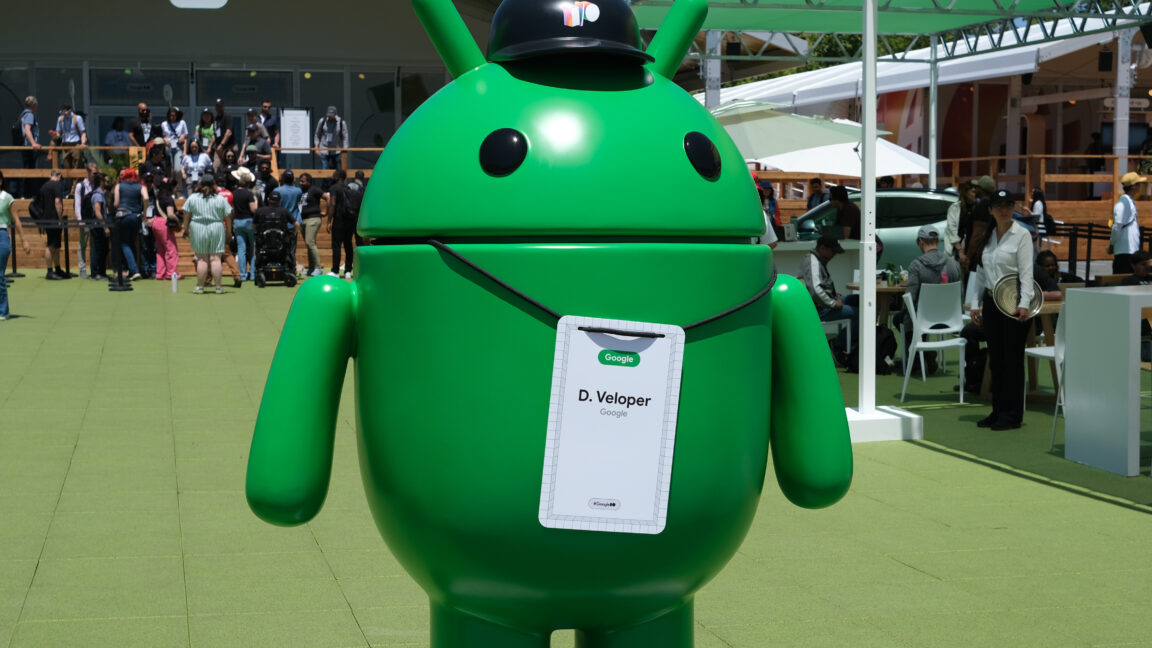
💡See how Gemini stacks up against new models in the latest Android Bench update for mobile AI developers.
⚡ 30-Second TL;DR
What Changed
Android Bench platform receives support for additional LLMs
Why It Matters
This update provides developers with a more diverse set of benchmarks to evaluate on-device AI performance. It highlights the ongoing struggle for Gemini to maintain competitive parity in mobile-optimized environments.
What To Do Next
Run your current mobile AI models through the updated Android Bench to compare their performance against the newly added LLMs.
Key Points
- •Android Bench platform receives support for additional LLMs
- •Gemini models currently underperform relative to industry benchmarks
- •Developers are encouraged to contribute to the evolution of the benchmarking process
🧠 Deep Insight
AI-generated analysis for this event — not the original article.
🔑 Enhanced Key Takeaways
- •The Android Bench update integrates the MLPerf Mobile v4.1 suite, specifically targeting on-device inference latency for quantized LLMs.
- •Google has introduced a new 'Energy Efficiency' metric to Android Bench, measuring tokens-per-watt to address thermal throttling concerns in mobile chipsets.
- •The update includes support for heterogeneous compute scheduling, allowing benchmarks to utilize NPU, GPU, and CPU clusters simultaneously.
- •Independent analysis suggests the performance gap is primarily due to Gemini's parameter density, which exceeds the optimal memory bandwidth of current mid-range Android SoCs.
- •Google is transitioning Android Bench toward an open-source model, allowing third-party silicon vendors to submit verified results for custom hardware accelerators.
📊 Competitor Analysis▸ Show
| Feature | Android Bench (Gemini) | MLPerf Mobile (General) | Geekbench AI |
|---|---|---|---|
| Primary Focus | On-device LLM Efficiency | Cross-platform Inference | Neural Engine Throughput |
| Pricing | Free / Open Source | Free / Open Source | Freemium |
| Benchmark Metric | Tokens/Watt & Latency | Inference/Second | TOPS & Latency |
🛠️ Technical Deep Dive
- Implementation utilizes the Android NNAPI (Neural Networks API) to abstract hardware-specific acceleration layers.
- Benchmarking now supports 4-bit and 8-bit weight quantization formats to better simulate real-world mobile deployment.
- The framework incorporates a new memory-bandwidth stress test designed to measure the impact of LPDDR5X throughput on LLM token generation.
- Support for Transformer-based architectures has been expanded to include speculative decoding verification, a technique used to speed up inference by predicting tokens with a smaller model.
🔮 Future ImplicationsAI analysis grounded in cited sources
⏳ Timeline
Weekly AI Recap
Read this week's curated digest of top AI events →
👉Related Updates


AI-curated news aggregator. All content rights belong to original publishers.
Original source: Ars Technica AI ↗
This is a summary, not the original. Read the source, or get the weekly briefing.
The weekly digest
One email a week. Unsubscribe anytime.