Google Eyes SpaceX for Orbital Data Centers
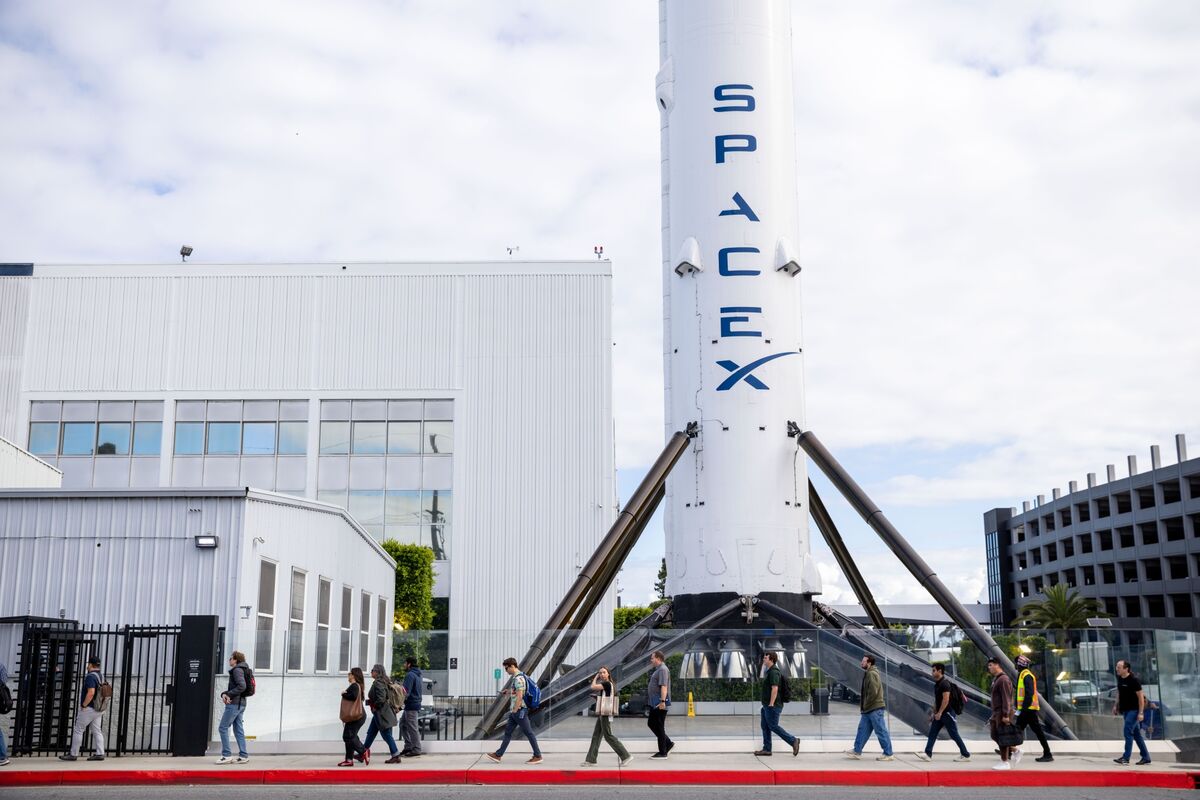
💡Space data centers could unlock unlimited, low-latency AI compute globally.
⚡ 30-Second TL;DR
What Changed
Google in talks with SpaceX for orbital data centers
Why It Matters
This could revolutionize AI infrastructure by providing scalable, low-latency compute in orbit, bypassing Earth-based power and cooling limits. It signals big tech's push into space for massive AI workloads.
What To Do Next
Monitor Google Cloud blog for orbital infrastructure pilot program announcements.
Key Points
- •Google in talks with SpaceX for orbital data centers
- •Reported by Wall Street Journal on Tuesday
- •Alphabet's search giant exploring space-based compute infrastructure
🧠 Deep Insight
AI-generated analysis for this event — not the original article.
🔑 Enhanced Key Takeaways
- •The initiative is reportedly centered on leveraging SpaceX's Starlink satellite constellation to provide low-latency edge computing capabilities for Google Cloud's distributed infrastructure.
- •Technical discussions are focused on integrating Google's proprietary TPU (Tensor Processing Unit) hardware into custom-built, radiation-hardened satellite modules.
- •Industry analysts suggest this move is a strategic response to the growing demand for real-time data processing in remote areas, such as maritime, aerospace, and defense sectors, where terrestrial connectivity is unreliable.
📊 Competitor Analysis▸ Show
| Feature | Google/SpaceX (Proposed) | Microsoft Azure Space | AWS Aerospace & Satellite |
|---|---|---|---|
| Primary Strategy | Dedicated orbital compute nodes | Hybrid cloud/satellite integration | Ground station as a Service (GSaaS) |
| Hardware Focus | Custom TPU-integrated satellites | Azure Modular Datacenter (ground) | AWS Ground Station (managed) |
| Latency Target | Ultra-low (orbital edge) | Low (regional edge) | Low (regional edge) |
🛠️ Technical Deep Dive
- •Integration of Google's TPU v5p architecture into space-rated chassis to handle high-throughput AI inference tasks.
- •Utilization of Starlink's laser inter-satellite links (ISL) to create a mesh network for data routing between orbital nodes and ground stations.
- •Implementation of advanced thermal management systems designed to dissipate heat in a vacuum environment, a critical challenge for high-density compute in orbit.
- •Deployment of specialized software-defined networking (SDN) layers to manage traffic prioritization between satellite-based compute and terrestrial Google Cloud regions.
🔮 Future ImplicationsAI analysis grounded in cited sources
⏳ Timeline
Weekly AI Recap
Read this week's curated digest of top AI events →
👉Related Updates

AI-curated news aggregator. All content rights belong to original publishers.
Original source: Bloomberg Technology ↗
This is a summary, not the original. Read the source, or get the weekly briefing.
Weekly AI briefing
One email a week. Unsubscribe anytime.