🇨🇳cnBeta (Full RSS)•Stalecollected in 45m
Google CEO Meets White House on TPU Approvals
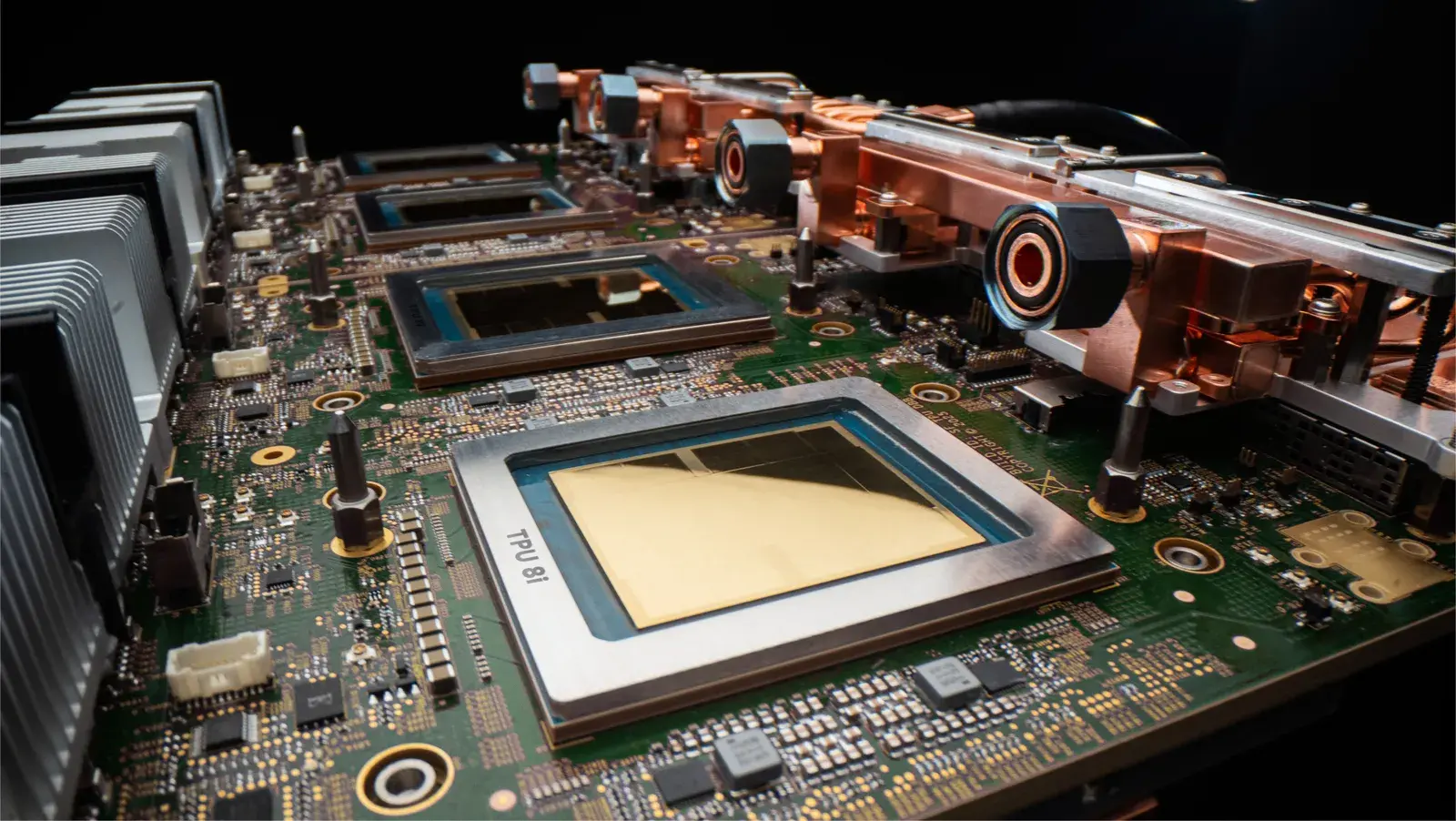
💡US gov speeds TPU approvals to fix AI defense compute gap
⚡ 30-Second TL;DR
What Changed
Sundar Pichai held key meetings at White House
Why It Matters
This could unlock faster deployment of Google TPUs for US defense AI, easing supply constraints and boosting national security compute capabilities amid global AI race.
What To Do Next
Track US DoD announcements on TPU procurement for AI defense contracts.
Who should care:Enterprise & Security Teams
Key Points
- •Sundar Pichai held key meetings at White House
- •Trump admin worries about classified AI compute shortage
- •Plans to fast-track TPU security approvals for defense
- •Focus on bolstering US AI infrastructure reserves
🧠 Deep Insight
AI-generated analysis for this event.
🔑 Enhanced Key Takeaways
- •The discussions center on the integration of Google's TPU v6 and v7 architectures into the Department of Defense's 'Project Maven' successor programs to reduce reliance on commercial-grade GPU clusters.
- •The White House is exploring a 'Secure Cloud Enclave' initiative that would allow Google to operate air-gapped TPU pods within government-controlled data centers to meet strict security clearance requirements.
- •This meeting follows a broader executive order issued in early 2026 aimed at domesticating the AI supply chain, specifically targeting the reduction of foreign-manufactured components in high-security compute hardware.
📊 Competitor Analysis▸ Show
| Feature | Google TPU (v6/v7) | NVIDIA Blackwell (B200/GB200) | AWS Trainium/Inferentia |
|---|---|---|---|
| Primary Architecture | ASIC (Custom Tensor Core) | GPU (Hopper/Blackwell) | ASIC (Custom Silicon) |
| Defense Focus | Air-gapped/On-prem integration | High-performance cloud/HPC | Cloud-native/AWS GovCloud |
| Interconnect | ICI (Inter-Chip Interconnect) | NVLink / InfiniBand | EFA (Elastic Fabric Adapter) |
| Security Status | Pending Classified Approval | FedRAMP High (Commercial) | FedRAMP High (Commercial) |
🛠️ Technical Deep Dive
- TPU v6/v7 utilize a proprietary 3D-stacked memory architecture designed to minimize latency in large-scale transformer model training.
- The hardware features hardware-level 'Secure Boot' and 'Trusted Execution Environments' (TEEs) specifically hardened against side-channel attacks for classified workloads.
- The integration involves a custom software stack (XLA - Accelerated Linear Algebra) optimized for low-precision arithmetic (INT8/FP8) to maximize throughput in defense-specific signal processing tasks.
🔮 Future ImplicationsAI analysis grounded in cited sources
Google will secure a multi-billion dollar contract for on-premise TPU deployment by Q4 2026.
The urgency of the White House meeting suggests a shift from pilot testing to large-scale infrastructure procurement to address the identified compute deficit.
US defense agencies will mandate 'domestic-only' silicon manufacturing for all future classified AI projects.
The focus on supply chain security during the meeting indicates a policy pivot toward reducing dependence on overseas semiconductor fabrication for national security assets.
⏳ Timeline
2023-05
Google announces TPU v5p, marking a significant shift toward large-scale cluster performance.
2024-12
Google begins internal testing of TPU v6 for classified research applications.
2025-08
Google expands its 'Google Public Sector' division to focus specifically on defense-grade AI infrastructure.
2026-02
White House issues Executive Order 14120, prioritizing domestic AI compute capacity for national security.
📰
Weekly AI Recap
Read this week's curated digest of top AI events →
👉Related Updates


AI-curated news aggregator. All content rights belong to original publishers.
Original source: cnBeta (Full RSS) ↗