Google announces Wear OS 7 with Gemini integration
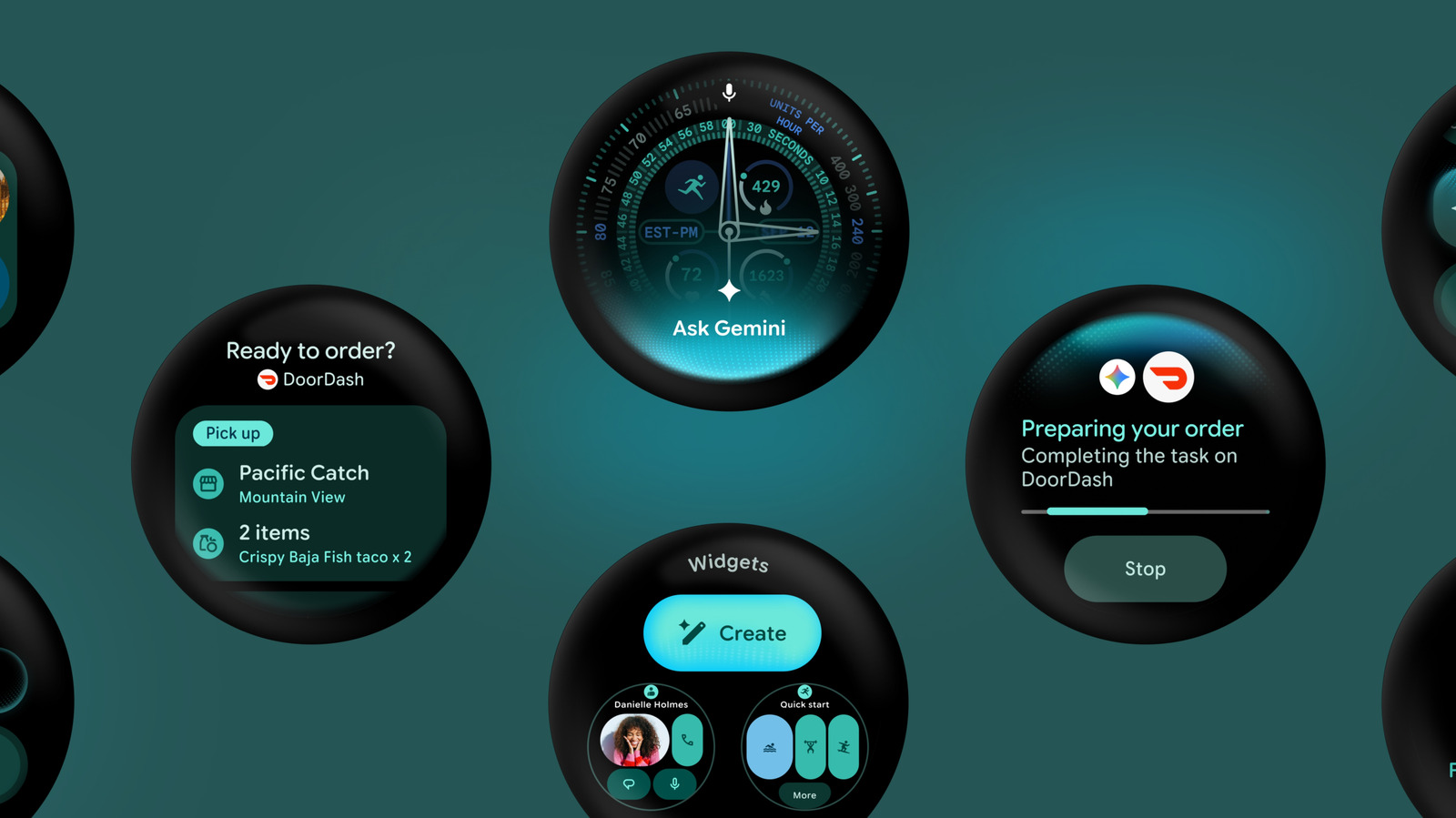
Gemini is coming to your wrist: learn how Wear OS 7 integrates generative AI into edge devices.
30-Second TL;DR
What Changed
Deep integration of Gemini Intelligence
Why It Matters
Bringing Gemini to wearables expands the reach of generative AI to edge devices. This creates new opportunities for context-aware AI applications on the wrist.
What To Do Next
Review the new Wear OS 7 SDK to prototype context-aware AI features for your wearable applications.
Key Points
- •Deep integration of Gemini Intelligence
- •New widget system for better UI/UX
- •Significant OS-level performance improvements
Deep Insight
Background and context from public sources — not the original article. 13 sources cited.
Enhanced Key Takeaways
- •Wear OS 7 introduces 'Wear Widgets' as an evolution of the previous 'Tiles,' designed to be more dynamic and consistent with Android's widget system, supporting 2x1 and 2x2 formats, and powered by Jetpack Glance and the new RemoteCompose framework.
- •The update brings 'Live Updates' to Wear OS, enabling real-time information display on the watch face and within expanded notifications, mirroring a feature already present on Android phones.
- •A new AppFunctions API allows developers to deeply integrate their applications with Gemini Intelligence, enabling users to complete tasks using voice commands, such as initiating a run with Samsung Health or placing an order via DoorDash.
- •Wear OS 7, based on Android 17, is projected to deliver up to a 10% improvement in battery life for watches upgrading from Wear OS 6.
- •Enhanced system media controls are included, featuring per-app media auto-launch settings and a 'Remote Output Switcher' for seamless audio routing to various connected devices directly from the wrist.
Technical Deep Dive
- Wear OS 7 is built upon the Android 17 codebase.
- The new Wear Widgets leverage Jetpack Glance and the RemoteCompose framework for enhanced expressiveness and consistency with the broader Android ecosystem.
- Gemini Intelligence integration is facilitated by the AppFunctions API, allowing third-party applications to connect with Google's AI assistant for voice-activated tasks.
- Select watches will feature proactive and personalized Gemini Intelligence, potentially requiring chipsets that support Google Nano v3 for on-device AI processing.
- A hybrid AI processing architecture is suggested, where a custom Google Tensor processing unit handles local AI workloads alongside a Qualcomm Snapdragon chip, offloading heavier tasks to a lightweight cloud version of Gemini.
- Developers can access a Wear OS 7 Canary Emulator for testing application compatibility and new features.
- Watch Face Format version 5 (WFF5) is introduced to simplify watch face development, offering improved alignment options, auto-size enhancements, blend modes, stroke joins, and hierarchical settings.
Future ImplicationsAI analysis grounded in cited sources
Timeline
- 2014-03-18Android Wear platform announced.
- 2018-03-15Android Wear rebranded to Wear OS.
- 2021-05Google announced Wear OS 3.0 and a partnership with Samsung to unify Tizen with Wear OS.
- 2023-12-06Google Gemini 1.0 (Ultra, Pro, Nano models) announced.
- 2025-07-09Gemini begins rolling out to Wear OS watches running Wear OS 4+.
- 2026-05-19Wear OS 7 announced with deeper Gemini integration, new widgets, and Live Updates.
Sources (13)
Factual claims are grounded in the sources below. Forward-looking analysis is AI-generated interpretation.
Weekly AI Recap
Read this week's curated digest of top AI events →
Related Updates

AI-curated news aggregator. All content rights belong to original publishers.
Original source: Engadget ↗
This is a summary, not the original. Read the source, or get the weekly briefing.
The weekly digest
One email a week. Unsubscribe anytime.