Google and MediaTek partner on next-gen TPU v9
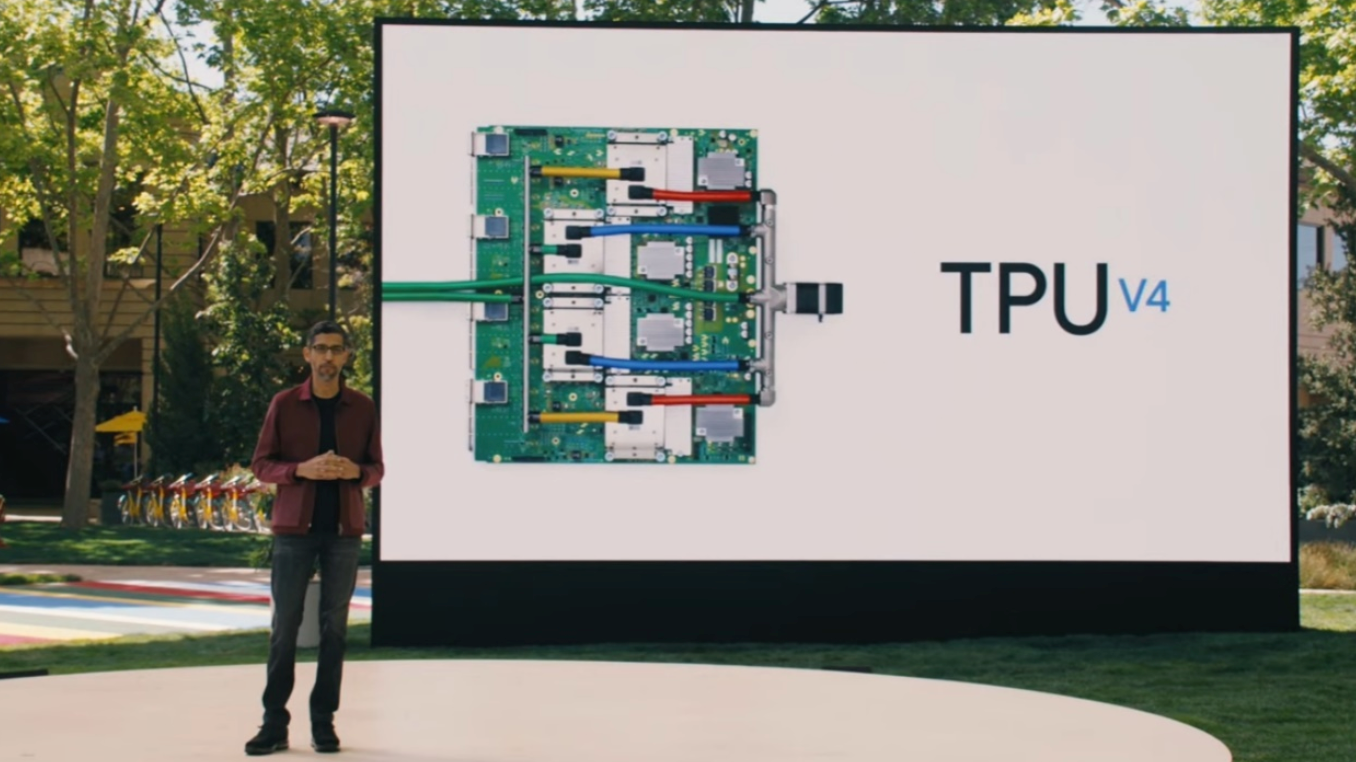
Google's new TPU v9 'Triggerfish' chip aims to redefine efficiency for AI agents and reinforcement learning.
30-Second TL;DR
What Changed
Google and MediaTek are collaborating on the 'Triggerfish' TPU v9 chip
Why It Matters
This partnership signals Google's strategic move to secure custom silicon supply chains for its AI agent ecosystem, potentially challenging current GPU dominance.
What To Do Next
Evaluate your infrastructure roadmap to include custom silicon alternatives like TPU v9 for specialized AI agent workloads.
Key Points
- •Google and MediaTek are collaborating on the 'Triggerfish' TPU v9 chip
- •The hardware is specifically optimized for AI agents and reinforcement learning
- •The project aims to maximize effective compute power for large-scale AI workloads
Deep Insight
AI-generated analysis for this event — not the original article.
Enhanced Key Takeaways
- •The 'Triggerfish' project utilizes MediaTek's advanced 2nm process node technology to achieve higher transistor density compared to previous TPU generations.
- •Google is integrating custom interconnect technology within the TPU v9 to reduce latency for distributed reinforcement learning tasks across massive clusters.
- •The partnership marks a strategic shift for MediaTek, moving beyond consumer mobile SoCs into the high-performance data center AI accelerator market.
- •TPU v9 architecture incorporates specialized hardware blocks specifically designed to accelerate Transformer-based agentic workflows and long-context reasoning.
- •The collaboration includes a co-design effort where Google provides the TPU architecture logic while MediaTek handles the physical design and supply chain integration for high-yield manufacturing.
Competitor Analysis
- Google TPU v9 (Triggerfish)
- Agentic AI / RL
- NVIDIA Blackwell (B300)
- General Purpose LLM Training
- AWS Trainium2
- Cloud-Scale Training
- Google TPU v9 (Triggerfish)
- 2nm (MediaTek)
- NVIDIA Blackwell (B300)
- 4NP (TSMC)
- AWS Trainium2
- 5nm (TSMC)
- Google TPU v9 (Triggerfish)
- Custom Proprietary
- NVIDIA Blackwell (B300)
- NVLink 5.0
- AWS Trainium2
- Elastic Fabric Adapter
- Google TPU v9 (Triggerfish)
- Vertical Integration
- NVIDIA Blackwell (B300)
- Ecosystem Dominance
- AWS Trainium2
- Cloud Infrastructure Lock-in
| Feature | Google TPU v9 (Triggerfish) | NVIDIA Blackwell (B300) | AWS Trainium2 |
|---|---|---|---|
| Primary Focus | Agentic AI / RL | General Purpose LLM Training | Cloud-Scale Training |
| Process Node | 2nm (MediaTek) | 4NP (TSMC) | 5nm (TSMC) |
| Interconnect | Custom Proprietary | NVLink 5.0 | Elastic Fabric Adapter |
| Market Strategy | Vertical Integration | Ecosystem Dominance | Cloud Infrastructure Lock-in |
Technical Deep Dive
- Architecture: Utilizes a tiled-array design optimized for sparse matrix operations common in reinforcement learning.
- Memory: Implements HBM4 (High Bandwidth Memory) to address memory wall bottlenecks in large-scale agentic models.
- Power Efficiency: Features dynamic voltage and frequency scaling (DVFS) tuned specifically for the bursty nature of AI agent decision-making cycles.
- Interconnect: Supports a new generation of chip-to-chip interconnects designed for low-latency communication in multi-node training environments.
Future ImplicationsAI analysis grounded in cited sources
Timeline
- 2023-05Google announces TPU v5e, focusing on cost-effective inference and training.
- 2024-05Google unveils TPU v5p, the most powerful TPU to date for large-scale model training.
- 2025-02MediaTek and Google expand collaboration scope to include custom silicon for data center applications.
- 2026-01Initial tape-out of the 'Triggerfish' TPU v9 prototype completed.
Weekly AI Recap
Read this week's curated digest of top AI events →
Related Updates

AI-curated news aggregator. All content rights belong to original publishers.
Original source: cnBeta (Full RSS) ↗
This is a summary, not the original. Read the source, or get the weekly briefing.
The weekly digest
One email a week. Unsubscribe anytime.