Google and Samsung Take Different Folding Paths
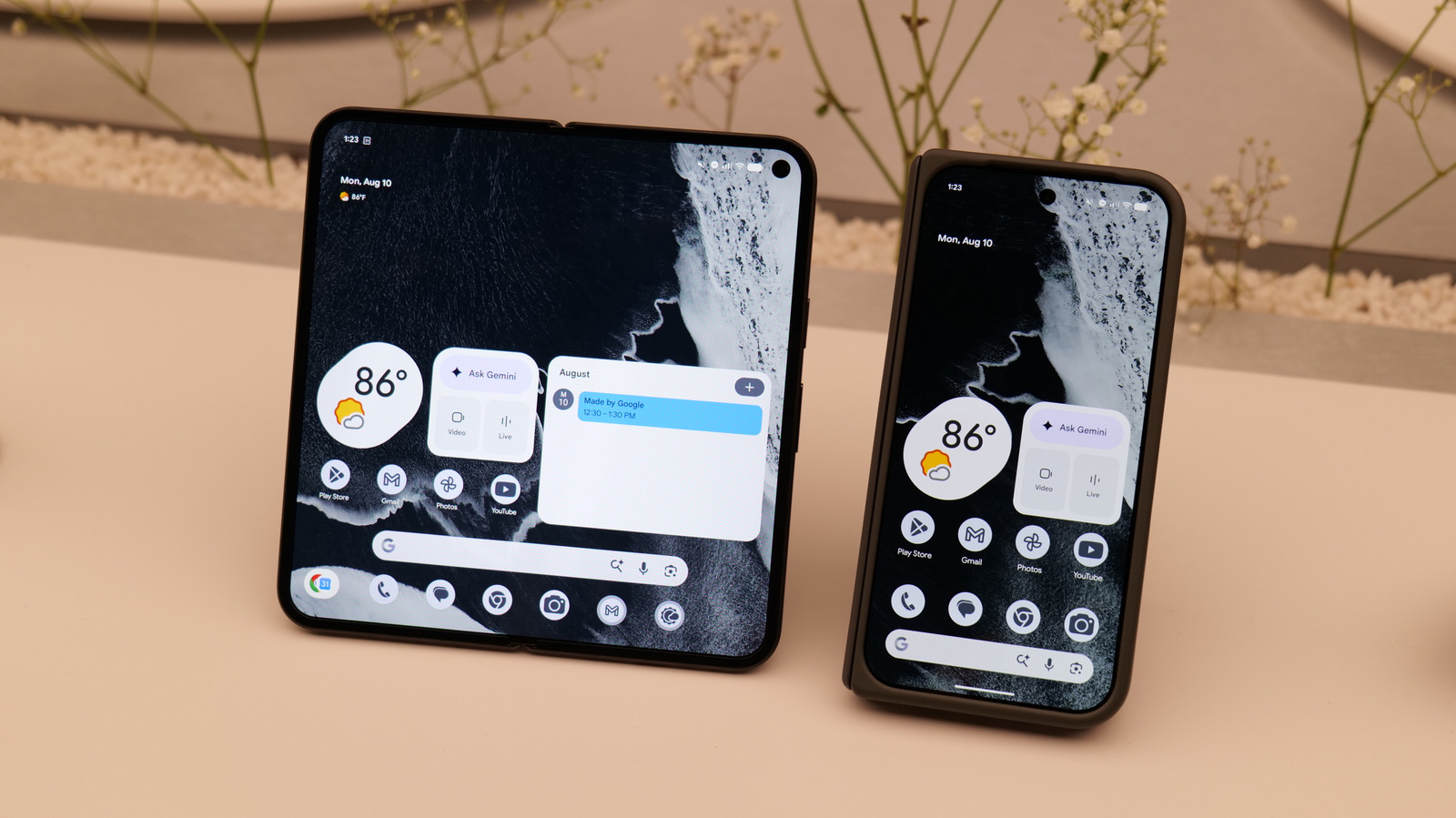
💡See how Google and Samsung’s divergent foldable strategies may shape future mobile AI interfaces.
⚡ 30-Second TL;DR
What Changed
Compares the Pixel 11 Pro Fold and Galaxy Z Fold 8.
Why It Matters
The comparison may help developers and founders assess which foldable ecosystem is more relevant for mobile AI experiences. Different hardware and software strategies could affect how AI interfaces are designed for larger, flexible displays.
What To Do Next
Prototype one responsive AI workflow on both Android foldable form factors and compare usability across compact and expanded layouts.
Key Points
- •Compares the Pixel 11 Pro Fold and Galaxy Z Fold 8.
- •Focuses on the contrasting foldable-phone strategies of Google and Samsung.
- •Provides a product-level view of how major Android companies differentiate foldables.
🧠 Deep Insight
AI-generated analysis for this event.
🔑 Enhanced Key Takeaways
- •Google's Pixel 11 Pro Fold utilizes a 'Passport' hinge mechanism designed to prioritize a wider, more traditional smartphone aspect ratio when closed, contrasting with Samsung's narrower 'Book' style.
- •Samsung has integrated a new 'Flex-Gap' display technology in the Galaxy Z Fold 8 that significantly reduces the visible crease compared to the Pixel's current generation display.
- •The Pixel 11 Pro Fold leverages Google's Tensor G6 chip, which is optimized specifically for on-device generative AI multitasking, whereas the Galaxy Z Fold 8 utilizes a custom Snapdragon 'for Galaxy' chipset focused on raw gaming performance.
- •Software differentiation has diverged, with Google focusing on 'Adaptive App Continuity' that forces UI scaling for unoptimized apps, while Samsung continues to refine 'Multi-Active Window' for power-user multitasking.
- •Supply chain reports indicate Samsung is moving toward a more durable, thinner UTG (Ultra Thin Glass) iteration, while Google is experimenting with a hybrid polymer-glass composite for improved impact resistance.
📊 Competitor Analysis▸ Show
| Feature | Pixel 11 Pro Fold | Galaxy Z Fold 8 | OnePlus Open 2 |
|---|---|---|---|
| Primary Chipset | Tensor G6 | Snapdragon 8 Gen 5 (for Galaxy) | Snapdragon 8 Gen 5 |
| Outer Display | 6.3-inch (Wide) | 6.2-inch (Narrow) | 6.31-inch (Wide) |
| Crease Visibility | Moderate | Low | Low |
| Starting Price | $1,799 | $1,899 | $1,699 |
🛠️ Technical Deep Dive
- Pixel 11 Pro Fold: Employs a dual-cell battery architecture totaling 4800mAh with a focus on thermal dissipation via a vapor chamber that spans both halves of the device.
- Galaxy Z Fold 8: Features an upgraded 'Armor Aluminum 3.0' frame and a redesigned hinge with fewer moving parts to improve ingress protection (IP48 rating).
- Display Tech: The Z Fold 8 uses an LTPO 4.0 OLED panel capable of 1-144Hz variable refresh rate, while the Pixel 11 Pro Fold utilizes a custom Actua display optimized for high-brightness outdoor visibility.
- AI Implementation: Google's implementation relies on a dedicated TPU (Tensor Processing Unit) for real-time translation and image processing, whereas Samsung utilizes a hybrid NPU approach integrated into the Snapdragon SoC.
🔮 Future ImplicationsAI analysis grounded in cited sources
⏳ Timeline
Weekly AI Recap
Read this week's curated digest of top AI events →
👉Related Updates
AI-curated news aggregator. All content rights belong to original publishers.
Original source: Engadget ↗