📲Digital Trends•Freshcollected in 2h
Pixel 11 Adds Speed, Storage, and Less Weight
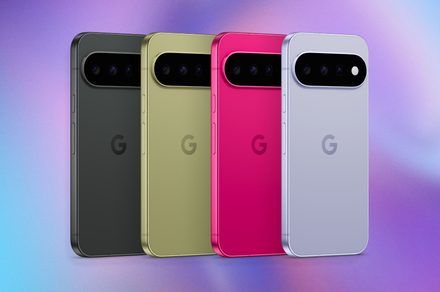
💡Pixel 11’s Tensor G6 offers a practical new target for testing everyday mobile AI workloads.
⚡ 30-Second TL;DR
What Changed
Upgraded to the faster Tensor G6 chip
Why It Matters
The Tensor G6 gives mobile AI developers a newer target for testing on-device inference and camera workloads. However, the largely unchanged hardware may make this a gradual upgrade rather than a major platform shift.
What To Do Next
Run your Android model-inference and camera-processing benchmarks on Pixel 11 hardware before optimizing for Tensor G6-specific performance.
Who should care:Developers & AI Engineers
Key Points
- •Upgraded to the faster Tensor G6 chip
- •Doubles the base storage capacity
- •Uses a lighter build while retaining most of the existing design
🧠 Deep Insight
AI-generated analysis for this event.
🔑 Enhanced Key Takeaways
- •The Tensor G6 chip is manufactured using TSMC's 2nm process node, marking a significant shift in power efficiency and thermal management compared to previous generations.
- •Google has integrated a new custom-designed NPU (Neural Processing Unit) specifically optimized for on-device multimodal AI tasks, reducing latency for Gemini Nano operations.
- •The device features an updated display panel with a peak brightness of 3,000 nits and improved LTPO 4.0 technology for more granular refresh rate control.
- •The lighter build is achieved through the use of a new aerospace-grade aluminum alloy frame and a reinforced bio-resin back panel.
- •Connectivity upgrades include support for Wi-Fi 7 and a new satellite SOS feature that allows for two-way text communication in remote areas.
📊 Competitor Analysis▸ Show
| Feature | Pixel 11 | iPhone 17 | Galaxy S26 |
|---|---|---|---|
| Processor | Tensor G6 (2nm) | A19 Pro (2nm) | Snapdragon 8 Gen 5 |
| Base Storage | 256GB | 128GB | 256GB |
| Weight | 185g | 178g | 192g |
| Starting Price | $799 | $899 | $849 |
🛠️ Technical Deep Dive
- Tensor G6 Architecture: Utilizes a 2nm process node with a 1+4+4 core configuration focusing on high-efficiency AI throughput.
- Memory: Standardized on 12GB LPDDR5X RAM to support advanced on-device generative AI models.
- Thermal Management: Implements a new vapor chamber design with a graphite heat spreader to mitigate heat during sustained AI workloads.
- Display: 6.3-inch Actua OLED panel with 1-120Hz adaptive refresh rate and 3,000 nits peak brightness.
- Battery/Charging: 4,800mAh capacity with support for 30W wired and 25W wireless charging.
🔮 Future ImplicationsAI analysis grounded in cited sources
Google will phase out 128GB base storage across all future flagship tiers.
The move to 256GB as the new standard for the Pixel 11 suggests a strategic shift to accommodate the increasing storage demands of on-device AI models and high-resolution media.
Tensor G6 will become the primary differentiator for Google's enterprise AI services.
The integration of a specialized NPU in the G6 indicates Google's intent to leverage hardware-level security and AI performance to capture the enterprise smartphone market.
⏳ Timeline
2021-10
Google launches the original Tensor chip with the Pixel 6 series.
2023-10
Pixel 8 introduces 7 years of software support, setting a new industry standard.
2024-08
Pixel 9 series launches with a heavy focus on Gemini AI integration.
2025-08
Pixel 10 debuts the Tensor G5, marking Google's first fully custom-designed silicon.
2026-08
Pixel 11 is released with the 2nm Tensor G6 and increased base storage.
📰
Weekly AI Recap
Read this week's curated digest of top AI events →
👉Related Updates




AI-curated news aggregator. All content rights belong to original publishers.
Original source: Digital Trends ↗