Global Robotaxi Market Projected to Reach $1T by 2040
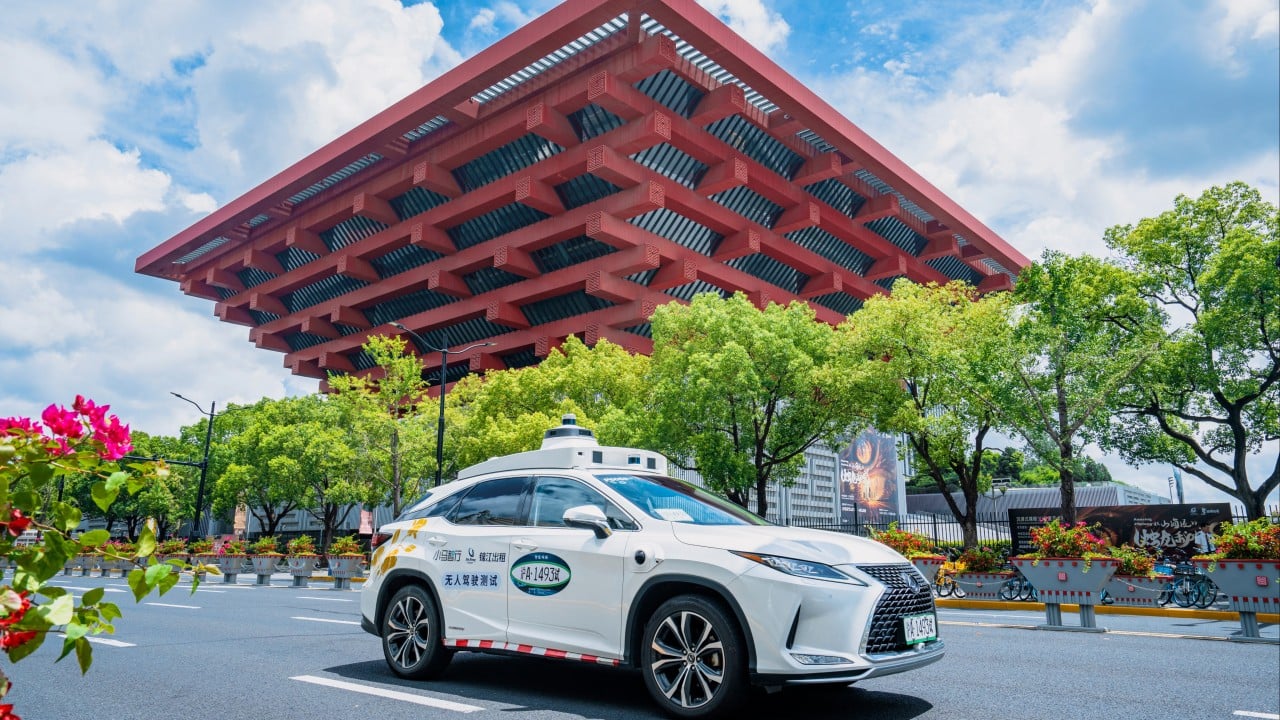
💡Understand how falling Chinese manufacturing costs are reshaping the global $1T autonomous vehicle market landscape.
⚡ 30-Second TL;DR
What Changed
Global robotaxi market valuation expected to reach $1 trillion by 2040.
Why It Matters
The shift toward lower-cost hardware in China could accelerate the global deployment of autonomous fleets, forcing Western competitors to optimize their supply chains or risk losing market share.
What To Do Next
Analyze the supply chain cost structures of your autonomous hardware providers to identify potential competitive advantages in scaling your fleet.
Key Points
- •Global robotaxi market valuation expected to reach $1 trillion by 2040.
- •Falling manufacturing costs in China serve as a primary catalyst for industry growth.
- •Baidu, Xpeng, and WeRide identified as key regional front-runners in the autonomous vehicle space.
- •Supply chain efficiencies in China are significantly lowering per-vehicle production costs.
🧠 Deep Insight
AI-generated analysis for this event — not the original article.
🔑 Enhanced Key Takeaways
- •Regulatory frameworks in China, specifically in cities like Beijing and Wuhan, have shifted from pilot testing to commercial operation permits, accelerating the deployment of robotaxi fleets.
- •The integration of V2X (Vehicle-to-Everything) infrastructure in Chinese smart city projects is reducing reliance on expensive onboard LiDAR sensors, further driving down per-unit costs.
- •Tesla's 'Cybercab' strategy relies on a dedicated unboxed manufacturing process, which contrasts with the retrofitting approach often utilized by early-stage Chinese robotaxi operators.
- •Waymo has transitioned its operational model to focus on high-density urban geofencing, achieving significant improvements in 'miles between disengagements' compared to 2023 benchmarks.
- •Insurance and liability models for autonomous fleets are evolving, with major Chinese insurers now offering specialized 'robotaxi-as-a-service' policies to mitigate commercial risk.
📊 Competitor Analysis▸ Show
| Feature | Waymo (Alphabet) | Baidu (Apollo Go) | Tesla (Cybercab) | Xpeng |
|---|---|---|---|---|
| Primary Strategy | Fully Driverless (L4) | V2X-Integrated (L4) | Vision-Only (L4/L5) | ADAS to Robotaxi |
| Market Focus | North America | China | Global | China/Europe |
| Tech Stack | LiDAR/Radar/Vision | LiDAR/V2X/Vision | Vision-Only (FSD) | Vision/LiDAR |
🛠️ Technical Deep Dive
- Baidu Apollo 6.0 architecture utilizes a cloud-native, end-to-end autonomous driving model that leverages massive real-world data loops for reinforcement learning.
- Tesla's FSD v13+ utilizes a transformer-based neural network architecture that processes raw video input to predict occupancy flow and path planning without high-definition maps.
- Waymo's 6th generation hardware suite features a reduced sensor count compared to previous iterations, utilizing custom-designed compute platforms to lower power consumption and heat dissipation.
- WeRide employs a modular sensor fusion approach that allows for rapid deployment across different vehicle platforms, including passenger cars and autonomous mini-buses.
🔮 Future ImplicationsAI analysis grounded in cited sources
⏳ Timeline
Weekly AI Recap
Read this week's curated digest of top AI events →
👉Related Updates

AI-curated news aggregator. All content rights belong to original publishers.
Original source: SCMP Technology ↗
This is a summary, not the original. Read the source, or get the weekly briefing.
Weekly AI briefing
One email a week. Unsubscribe anytime.