Global Pharma Market Shift: GLP-1 Drugs Dominate Revenue
See how AI-accelerated drug discovery is shifting the power balance in the global pharmaceutical industry.
30-Second TL;DR
What Changed
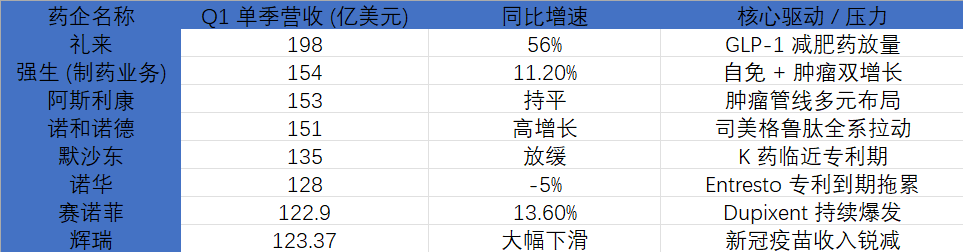
Eli Lilly leads global pharma revenue driven by Mounjaro and Zepbound sales.
Why It Matters
The rapid rise of GLP-1 drugs demonstrates how AI-driven drug discovery and metabolic research are reshaping global healthcare economics and investment priorities.
What To Do Next
Analyze the R&D pipelines of companies pivoting to metabolic and autoimmune therapies to identify future market leaders.
Key Points
- •Eli Lilly leads global pharma revenue driven by Mounjaro and Zepbound sales.
- •Metabolic disease treatments have replaced oncology as the primary growth engine for the industry.
- •Companies like Novartis and Pfizer are experiencing significant revenue declines due to patent expirations.
- •The industry is moving toward a structure where single-drug performance defines market valuation.
Deep Insight
Background and context from public sources — not the original article. 42 sources cited.
Enhanced Key Takeaways
- •The global GLP-1 receptor market is projected for substantial growth, with estimates ranging from $53.46 billion in 2024 to potentially $156.71 billion by 2030, and some forecasts reaching $268.4 billion by 2030, driven by expanded indications beyond diabetes to include weight loss, cardiovascular risk reduction, and other emerging conditions like sleep apnea and fatty liver disease.
- •Eli Lilly's Mounjaro (tirzepatide) and Zepbound (tirzepatide) differentiate themselves through a dual agonism of both GLP-1 and GIP receptors, a mechanism that has demonstrated superior weight loss efficacy in clinical trials, with patients losing up to 22.5% of body weight, compared to single GLP-1 agonists like semaglutide.
- •The pharmaceutical industry is currently navigating an unprecedented 'patent cliff' between 2025 and 2030, where nearly 200 drugs, including approximately 70 blockbuster medications, are expected to lose patent protection, putting an estimated $300 billion to $400 billion in annual revenue at risk for traditional pharmaceutical giants.
- •The introduction of oral GLP-1 medications, such as Novo Nordisk's Wegovy pill (launched early 2026) and Eli Lilly's Foundayo (orforglipron, launched Q1 2026), is poised to significantly broaden market access and adoption, particularly appealing to patients who are hesitant about injectable therapies.
Competitor Analysis
- Eli Lilly (Tirzepatide: Mounjaro, Zepbound)
- Dual GIP and GLP-1 receptor agonist
- Novo Nordisk (Semaglutide: Ozempic, Wegovy, Rybelsus)
- GLP-1 receptor agonist
- Eli Lilly (Tirzepatide: Mounjaro, Zepbound)
- Mounjaro: Type 2 Diabetes. Zepbound: Chronic Weight Management, Obstructive Sleep Apnea.
- Novo Nordisk (Semaglutide: Ozempic, Wegovy, Rybelsus)
- Ozempic: Type 2 Diabetes. Wegovy: Chronic Weight Management, Cardiovascular Risk Reduction, MASH. Rybelsus: Type 2 Diabetes (oral).
- Eli Lilly (Tirzepatide: Mounjaro, Zepbound)
- Weekly subcutaneous injection (Mounjaro, Zepbound). Oral (Foundayo, launched Q1 2026).
- Novo Nordisk (Semaglutide: Ozempic, Wegovy, Rybelsus)
- Weekly subcutaneous injection (Ozempic, Wegovy). Once-daily oral tablet (Rybelsus, Wegovy pill).
- Eli Lilly (Tirzepatide: Mounjaro, Zepbound)
- Up to 22.5% body weight loss (Zepbound 15mg over 72 weeks).
- Novo Nordisk (Semaglutide: Ozempic, Wegovy, Rybelsus)
- Up to 15% body weight loss (Wegovy 2.4mg over 68 weeks). Wegovy HD injection showed ~21% at 72 weeks.
- Eli Lilly (Tirzepatide: Mounjaro, Zepbound)
- Up to 2.4% (Mounjaro 15mg).
- Novo Nordisk (Semaglutide: Ozempic, Wegovy, Rybelsus)
- Up to 2.1% (Ozempic 2.0mg).
- Eli Lilly (Tirzepatide: Mounjaro, Zepbound)
- Mounjaro: $8.7 billion (+125% YoY). Zepbound: $4.2 billion (+80% YoY).
- Novo Nordisk (Semaglutide: Ozempic, Wegovy, Rybelsus)
- Ozempic: Fell 8% (but above expectations). Wegovy (injectable): 18.2 billion DKK (
$2.9 billion), +12% YoY. Wegovy (oral pill): 2.26 billion DKK ($353-355 million).
| Feature/Drug Class | Eli Lilly (Tirzepatide: Mounjaro, Zepbound) | Novo Nordisk (Semaglutide: Ozempic, Wegovy, Rybelsus) |
|---|---|---|
| Mechanism of Action | Dual GIP and GLP-1 receptor agonist | GLP-1 receptor agonist |
| Primary Indications | Mounjaro: Type 2 Diabetes. Zepbound: Chronic Weight Management, Obstructive Sleep Apnea. | Ozempic: Type 2 Diabetes. Wegovy: Chronic Weight Management, Cardiovascular Risk Reduction, MASH. Rybelsus: Type 2 Diabetes (oral). |
| Administration | Weekly subcutaneous injection (Mounjaro, Zepbound). Oral (Foundayo, launched Q1 2026). | Weekly subcutaneous injection (Ozempic, Wegovy). Once-daily oral tablet (Rybelsus, Wegovy pill). |
| Weight Loss Efficacy (Clinical Trials) | Up to 22.5% body weight loss (Zepbound 15mg over 72 weeks). | Up to 15% body weight loss (Wegovy 2.4mg over 68 weeks). Wegovy HD injection showed ~21% at 72 weeks. |
| A1C Reduction (Type 2 Diabetes) | Up to 2.4% (Mounjaro 15mg). | Up to 2.1% (Ozempic 2.0mg). |
| Q1 2026 Sales (Selected) | Mounjaro: $8.7 billion (+125% YoY). Zepbound: $4.2 billion (+80% YoY). | Ozempic: Fell 8% (but above expectations). Wegovy (injectable): 18.2 billion DKK ( |
Technical Deep Dive
- GLP-1 (Glucagon-Like Peptide-1) is a naturally occurring incretin hormone produced and secreted by intestinal enteroendocrine L-cells and certain brainstem neurons in response to food consumption.
- GLP-1 receptor agonists mimic the action of natural GLP-1, binding to GLP-1 receptors on pancreatic beta cells and alpha cells.
- Mechanism of Action for GLP-1 Agonists (e.g., Semaglutide - Ozempic, Wegovy):
- Increased Insulin Production: They stimulate glucose-dependent insulin release from pancreatic beta cells, meaning insulin is released primarily when blood sugar levels are high, reducing the risk of hypoglycemia.
- Decreased Glucagon Secretion: They inhibit glucagon production from pancreatic alpha cells, which normally raises blood sugar by signaling the liver to release stored glucose.
- Slowed Gastric Emptying: They reduce the rate at which food leaves the stomach, helping to prevent post-meal blood sugar spikes and promoting feelings of fullness.
- Reduced Appetite: They act in the brain (hypothalamus and brainstem) to reduce appetite and food cravings, leading to decreased food consumption and weight loss.
- Increased Beta Cell Mass: GLP-1 also promotes the proliferation and neogenesis of beta cells while inhibiting apoptosis, which is beneficial in diabetes treatment where functional beta cell mass is reduced.
- Dual GIP/GLP-1 Agonists (e.g., Tirzepatide - Mounjaro, Zepbound):
- Tirzepatide is unique as it mimics two natural incretin hormones: GLP-1 and Glucose-dependent Insulinotropic Polypeptide (GIP).
- By activating both GLP-1 and GIP receptors, tirzepatide offers a dual mechanism that further enhances insulin sensitivity, suppresses appetite, and potentially leads to greater weight loss and glycemic control compared to single GLP-1 agonists.
- GIP also plays a role in glucose-dependent insulin secretion and may have additional metabolic benefits.
- Native GLP-1 has a very short half-life (around 2 minutes) due to rapid degradation by the enzyme dipeptidyl peptidase-4 (DPP-4). Pharmaceutical GLP-1 receptor agonists are engineered to be resistant to DPP-4 degradation or have extended half-lives through other modifications, allowing for less frequent dosing (e.g., once daily or weekly).
Future ImplicationsAI analysis grounded in cited sources
Timeline
- 2005-04Exenatide (Byetta) becomes the first GLP-1 receptor agonist approved by the FDA for type 2 diabetes.
- 2014Liraglutide (Saxenda) receives FDA approval for chronic weight management, establishing the first GLP-1 drug with an obesity indication.
- 2017Semaglutide (Ozempic) is approved by the FDA for type 2 diabetes, later followed by its higher-dose version, Wegovy, for weight loss in 2021.
- 2022-05Eli Lilly's Tirzepatide (Mounjaro), a dual GIP/GLP-1 agonist, receives FDA approval for type 2 diabetes, introducing a new mechanism of action.
- 2023-11Tirzepatide (Zepbound) is approved by the FDA for chronic weight management, solidifying Eli Lilly's position in the obesity market.
- 2025-12Novo Nordisk's Wegovy pill (oral semaglutide) receives FDA approval as the first oral GLP-1 for weight management, with Eli Lilly's oral GLP-1, Foundayo, launching in Q1 2026, signaling a shift towards more accessible formulations.
Sources (42)
Factual claims are grounded in the sources below. Forward-looking analysis is AI-generated interpretation.
Weekly AI Recap
Read this week's curated digest of top AI events →
AI-curated news aggregator. All content rights belong to original publishers.
Original source: 虎嗅 ↗
This is a summary, not the original. Read the source, or get the weekly briefing.
The weekly digest
One email a week. Unsubscribe anytime.