GLM-5.3-Flash Opens Low-Cost Multimodal Coding
💡Evaluate an MIT-licensed, open-weight model for lower-cost multimodal coding and local deployment.
⚡ 30-Second TL;DR
What Changed
GLM-5.3-Flash is released under the permissive MIT license.
Why It Matters
The release could give developers a more flexible alternative for multimodal coding workloads without relying exclusively on hosted APIs. Its MIT license and local deployment option may also reduce adoption barriers for startups and research teams.
What To Do Next
Download the GLM-5.3-Flash open weights and benchmark local multimodal coding tasks against your current model before adopting it.
Key Points
- •GLM-5.3-Flash is released under the permissive MIT license.
- •The model combines multimodal reasoning with cost-efficient coding performance.
- •Open weights enable developers to deploy and evaluate the model locally.
🧠 Deep Insight
Background and context from public sources — not the original article. 6 sources cited.
🔑 Enhanced Key Takeaways
- •The model utilizes a hybrid architecture combining sparse and linear attention mechanisms to optimize long-context serving costs.
- •It features a massive 320 billion total parameter count while maintaining high inference speed through an 18 billion active parameter MoE-style configuration.
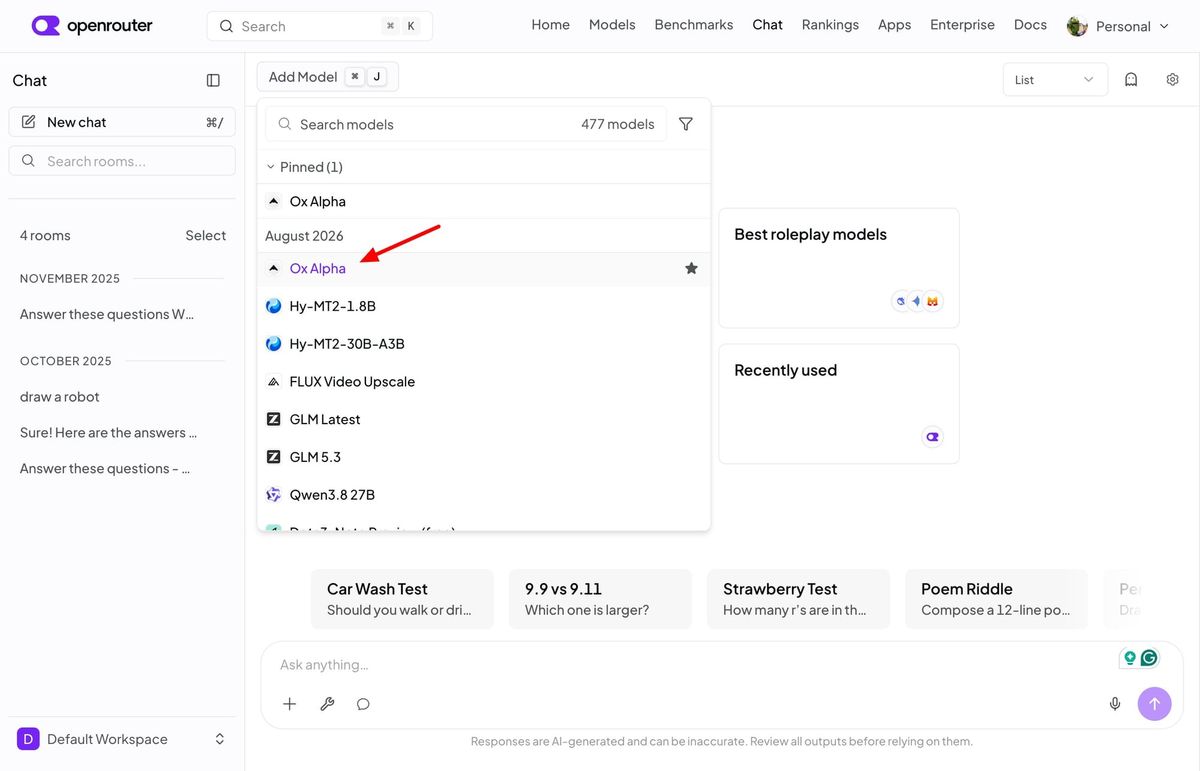
- •The model was previously evaluated by the community under the codename 'ox-alpha' on platforms like OpenRouter prior to its official release.
- •It incorporates Manifold-Constrained Hyper-Connections (mHC) to improve scaling efficiency during the training process.
- •The model is natively multimodal, supporting simultaneous processing of text, image, and video inputs within a 1 million token context window.
📊 Competitor Analysis▸ Show
| Feature | GLM-5.3-Flash | Claude Opus 4.8 | GLM-5.2 |
|---|---|---|---|
| Active Parameters | 18B | Proprietary | N/A |
| DeepSWE v1.1 Score | 63.4 | N/A | 46.2 |
| AutomationBench | 48.8 | N/A | 26.2 |
| Pricing (per task) | $0.045 | Higher | ~$0.45 |
🛠️ Technical Deep Dive
- Architecture: Hybrid sparse and linear attention model.
- Parameterization: 320B total parameters with 18B active parameters.
- Context Window: 1 million tokens.
- Training Corpus: 30 trillion tokens of multimodal data.
- Scaling Mechanism: Manifold-Constrained Hyper-Connections (mHC).
- Deployment Support: Compatible with SGLang, vLLM, TokenSpeed, and KTransformers.
🔮 Future ImplicationsAI analysis grounded in cited sources
⏳ Timeline
📎 Sources (6)
Factual claims are grounded in the sources below. Forward-looking analysis is AI-generated interpretation.
Weekly AI Recap
Read this week's curated digest of top AI events →
👉Related Updates

AI-curated news aggregator. All content rights belong to original publishers.
Original source: TestingCatalog ↗
This is a summary, not the original. Read the source, or get the weekly briefing.
Weekly AI briefing
One email a week. Unsubscribe anytime.