GLM-5.3-Flash Brings Multimodal Frontier Performance

💡A 320B open-weight multimodal model promises frontier coding and agentic performance at flash-inference costs.
⚡ 30-Second TL;DR
What Changed
Uses 34 KDA linear-attention layers and 11 DeepSeek-style sparse-attention layers to reduce long-context serving costs.
Why It Matters
GLM-5.3-Flash could make high-capability multimodal and agentic inference more accessible to teams operating under cost or hardware constraints. Its hybrid attention design and FP8 release may be particularly valuable for long-context deployments.
What To Do Next
Benchmark the official FP8 GLM-5.3-Flash checkpoint in vLLM with its five-token speculative-decoding recipe against your current long-context model.
Key Points
- •Uses 34 KDA linear-attention layers and 11 DeepSeek-style sparse-attention layers to reduce long-context serving costs.
- •Adds native image and video understanding through a 24-layer ViT trained as part of a 30T-token multimodal corpus.
- •Ships with a one-layer MTP head, while the official vLLM recipe uses five speculative decoding tokens.
- •Offers a 1,048,576-token context window and official FP8 and BF16 weight releases under the MIT license.
🧠 Deep Insight
Background and context from public sources — not the original article. 9 sources cited.
🔑 Enhanced Key Takeaways
- •Z.ai is the international branding for Zhipu AI, marking a strategic shift in their global market positioning.
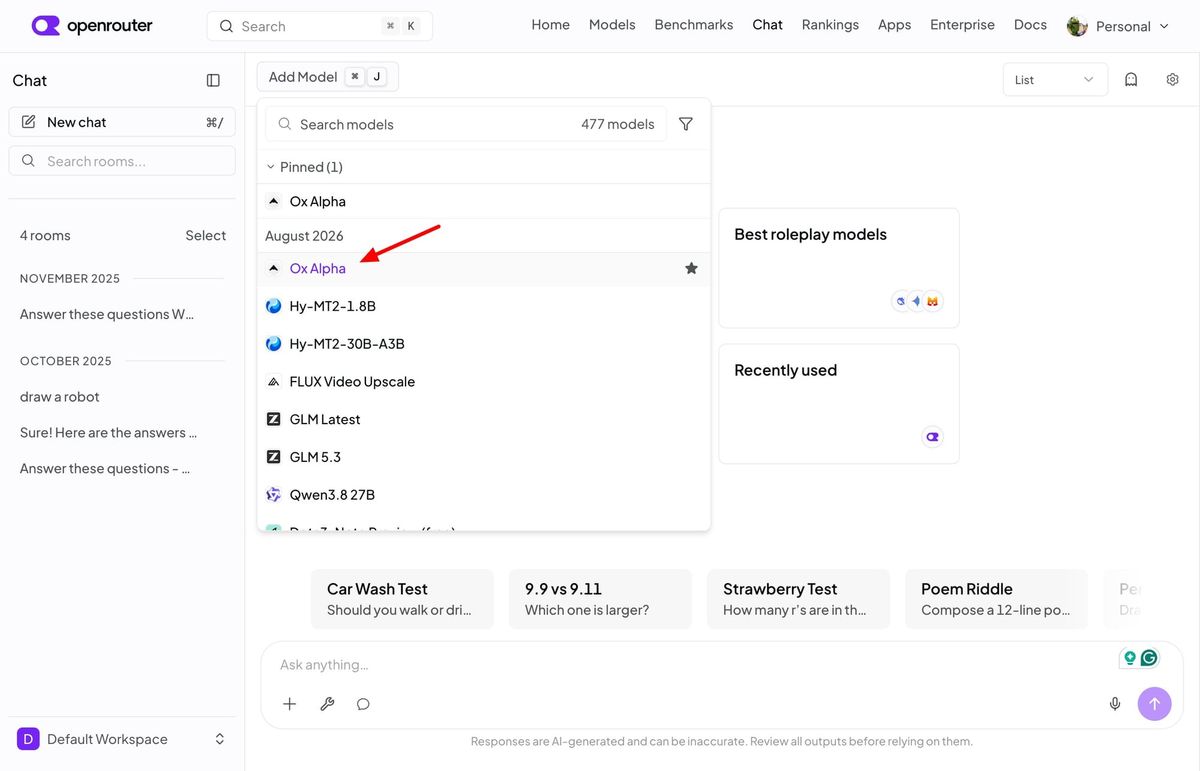
- •The model was previously circulated and stress-tested by the community under the internal codename 'Ox-Alpha' prior to the official release.
- •Training and inference infrastructure for GLM-5.3-Flash utilizes domestic Chinese AI chip clusters, achieving performance parity with Nvidia-based hardware.
- •The model demonstrates a significant cost-efficiency advantage, priced at approximately one-fortieth the cost of Claude Opus 4.8.
- •The model underwent a six-day 'blind' testing phase on platforms like OpenRouter and OpenCode to validate performance before the official announcement.
📊 Competitor Analysis▸ Show
| Feature | GLM-5.3-Flash | Claude Opus 4.8 | GLM-5.2 |
|---|---|---|---|
| Architecture | 320B MoE (18B Active) | Proprietary | Dense/Standard |
| Context Window | 1M Tokens | 200K-1M | 128K-256K |
| Pricing | 1/40th of Opus 4.8 | Baseline | 10x higher than Flash |
| Multimodal | Native (Img/Vid) | Native | Text-focused |
🛠️ Technical Deep Dive
- Architecture: Mixture-of-Experts (MoE) with 320B total parameters and 18B active parameters.
- Hybrid Attention Mechanism: Integrates 34 KDA linear-attention layers with 11 DeepSeek-style sparse-attention layers.
- Multimodal Integration: Utilizes a 24-layer Vision Transformer (ViT) trained on a 30T-token multimodal dataset.
- Inference Optimization: Features a one-layer MTP (Multi-Token Prediction) head with support for five-token speculative decoding in vLLM.
- Hardware Compatibility: Optimized for high-throughput execution on domestic Chinese AI accelerator clusters.
🔮 Future ImplicationsAI analysis grounded in cited sources
⏳ Timeline
📎 Sources (9)
Factual claims are grounded in the sources below. Forward-looking analysis is AI-generated interpretation.
Weekly AI Recap
Read this week's curated digest of top AI events →
👉Related Updates

AI-curated news aggregator. All content rights belong to original publishers.
Original source: Reddit r/LocalLLaMA ↗
This is a summary, not the original. Read the source, or get the weekly briefing.
Weekly AI briefing
One email a week. Unsubscribe anytime.