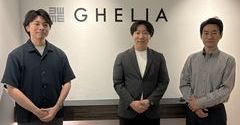
Ghelia launches AI platform to digitize manufacturing tacit knowledge
💡Learn how multimodal LLMs are being used to turn industrial failure data into searchable engineering assets.
⚡ 30-Second TL;DR
What Changed
Integrates 3D models and complex analysis results using multimodal LLMs.
Why It Matters
This platform addresses a critical gap in industrial AI by making unstructured engineering data actionable. It allows manufacturers to reduce recurring design errors by leveraging historical failure context.
What To Do Next
Evaluate your internal RAG pipelines to see if they can ingest 3D metadata and CAD-related logs to improve design decision support.
Key Points
- •Integrates 3D models and complex analysis results using multimodal LLMs.
- •Converts manufacturing 'tacit knowledge' (implicit expertise) into searchable formal knowledge.
- •Focuses on capturing the context of failure data and design rejection reasons.
🧠 Deep Insight
Background and context from public sources — not the original article. 22 sources cited.
🔑 Enhanced Key Takeaways
- •Ghelia was established in June 2017 as a joint venture involving Sony CSL, UEI Corporation, and WiL, LLC, building upon AI technology initially developed through Sony CSL's Delta Project, which began in 2014.
- •The company has secured approximately $2.72 million in funding across multiple rounds, with Nippon Yusen Kabushiki Kaisha (NYK) being a notable investor. Ghelia also formed a strategic business and capital alliance with NYK in January 2023 to advance AI services in the shipping industry, including R&D for autonomous ships and digital twin development.
- •Ghelia's platform directly addresses the critical industry challenge of knowledge loss in manufacturing, which is exacerbated by skilled worker retirements and high turnover. This loss of tacit knowledge leads to significant operational inefficiencies, skills gaps, and increased training times for new hires.
- •The use of multimodal LLMs is crucial for smart manufacturing, as it allows for the integration of diverse data sources such as images, sensor data, production records, and 3D models. This comprehensive data fusion enhances decision-making, improves predictive maintenance, and aids in anomaly detection within complex industrial environments.
🛠️ Technical Deep Dive
- The platform leverages Multimodal Large Language Models (MLLMs), which are AI systems capable of processing and generating content from various data types, including text, images, audio, video, sensory, and structured data.
- MLLM architectures typically consist of modality encoders for each data type, an input projector to unify these diverse data embeddings, and an LLM backbone for processing and generating responses.
- A common MLLM structure involves a vision encoder (e.g., CLIP ViT-L/14) and a language model (e.g., Vicuna, a Llama variant), connected by a linear MLP layer that translates visual features into the LLM's input embedding space.
- A key challenge in applying MLLMs to manufacturing is the scarcity of domain-specific industrial data for training, as most existing MLLMs are trained on general natural images and open-domain text.
- Research indicates that performance in manufacturing MLLMs is often limited by insufficient domain-specific knowledge rather than visual grounding, suggesting that Ghelia's platform likely incorporates supervised fine-tuning on structured annotations to improve accuracy in industrial scenarios.
- The system is designed to provide real-time, intelligent Q&A services, supporting critical industrial functions such as production management, equipment maintenance, fault diagnosis, and anomaly detection.
🔮 Future ImplicationsAI analysis grounded in cited sources
⏳ Timeline
📎 Sources (22)
Factual claims are grounded in the sources below. Forward-looking analysis is AI-generated interpretation.
Weekly AI Recap
Read this week's curated digest of top AI events →
👉Related Updates
AI-curated news aggregator. All content rights belong to original publishers.
Original source: ITmedia AI+ (日本) ↗
This is a summary, not the original. Read the source, or get the weekly briefing.
The weekly digest
One email a week. Unsubscribe anytime.