GalaxySpace Eyes Hong Kong, Macau for Global Space Expansion
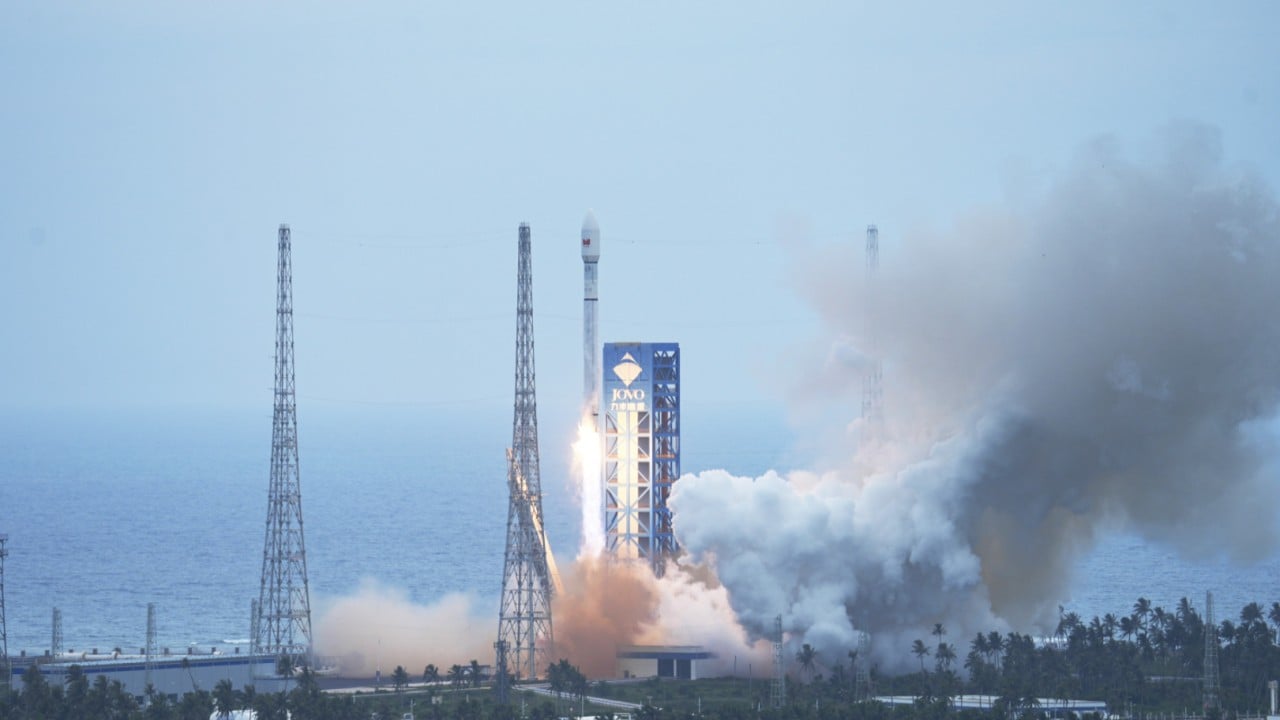
💡Understand how commercial space firms are leveraging regional hubs to scale satellite-based AI and data infrastructure.
⚡ 30-Second TL;DR
What Changed
GalaxySpace identifies Hong Kong and Macau as irreplaceable strategic assets for commercial space growth.
Why It Matters
This strategy highlights the growing importance of regional hubs in supporting large-scale satellite infrastructure and international data connectivity. It may open new opportunities for cross-border collaboration in aerospace and satellite-based AI applications.
What To Do Next
Monitor satellite-based connectivity APIs and regional aerospace policy updates if your AI application requires low-latency global data transmission.
Key Points
- •GalaxySpace identifies Hong Kong and Macau as irreplaceable strategic assets for commercial space growth.
- •The company plans to use these regions as a gateway to export mainland China's space technologies overseas.
- •The move signals a shift toward integrating regional industrial value into national space infrastructure.
🧠 Deep Insight
AI-generated analysis for this event — not the original article.
🔑 Enhanced Key Takeaways
- •GalaxySpace is specifically targeting the development of a 'Space-Ground Integrated Network' (SGIN) that utilizes Hong Kong's robust international data connectivity to manage satellite constellations.
- •The company has been actively collaborating with Hong Kong universities to establish a satellite research laboratory, focusing on low-Earth orbit (LEO) communication payloads.
- •GalaxySpace's expansion strategy aligns with the 'Greater Bay Area' (GBA) development plan, which aims to integrate high-tech manufacturing and aerospace services across the region.
- •The move is supported by recent policy shifts in Hong Kong that prioritize the 'New Space' economy, including tax incentives for aerospace startups and satellite operators.
- •GalaxySpace has previously demonstrated its technical capability by launching the 'Lingxi-03' satellite, which features a flexible solar array and high-speed communication capabilities.
📊 Competitor Analysis▸ Show
| Feature | GalaxySpace | SpaceSail | Starlink |
|---|---|---|---|
| Primary Market | China/International | China (State-backed) | Global (Private) |
| Focus | LEO Broadband/SGIN | LEO Constellation | Global Broadband |
| Tech Maturity | High (Operational) | Emerging | High (Operational) |
🛠️ Technical Deep Dive
- Satellite Architecture: Utilizes a modular, flat-panel satellite design to maximize launch capacity per rocket.
- Communication Payload: Employs Q/V/Ka-band multi-beam phased array antennas for high-throughput satellite (HTS) performance.
- Network Integration: Implements a software-defined satellite (SDS) architecture allowing for on-orbit reconfiguration of communication protocols.
- Solar Technology: Features flexible, roll-out solar arrays that provide high power-to-weight ratios for sustained operations in LEO.
🔮 Future ImplicationsAI analysis grounded in cited sources
⏳ Timeline
Weekly AI Recap
Read this week's curated digest of top AI events →
👉Related Updates

AI-curated news aggregator. All content rights belong to original publishers.
Original source: SCMP Technology ↗
This is a summary, not the original. Read the source, or get the weekly briefing.
The weekly digest
One email a week. Unsubscribe anytime.