Galactic Energy Advances Electromagnetic Rocket Launch Technology
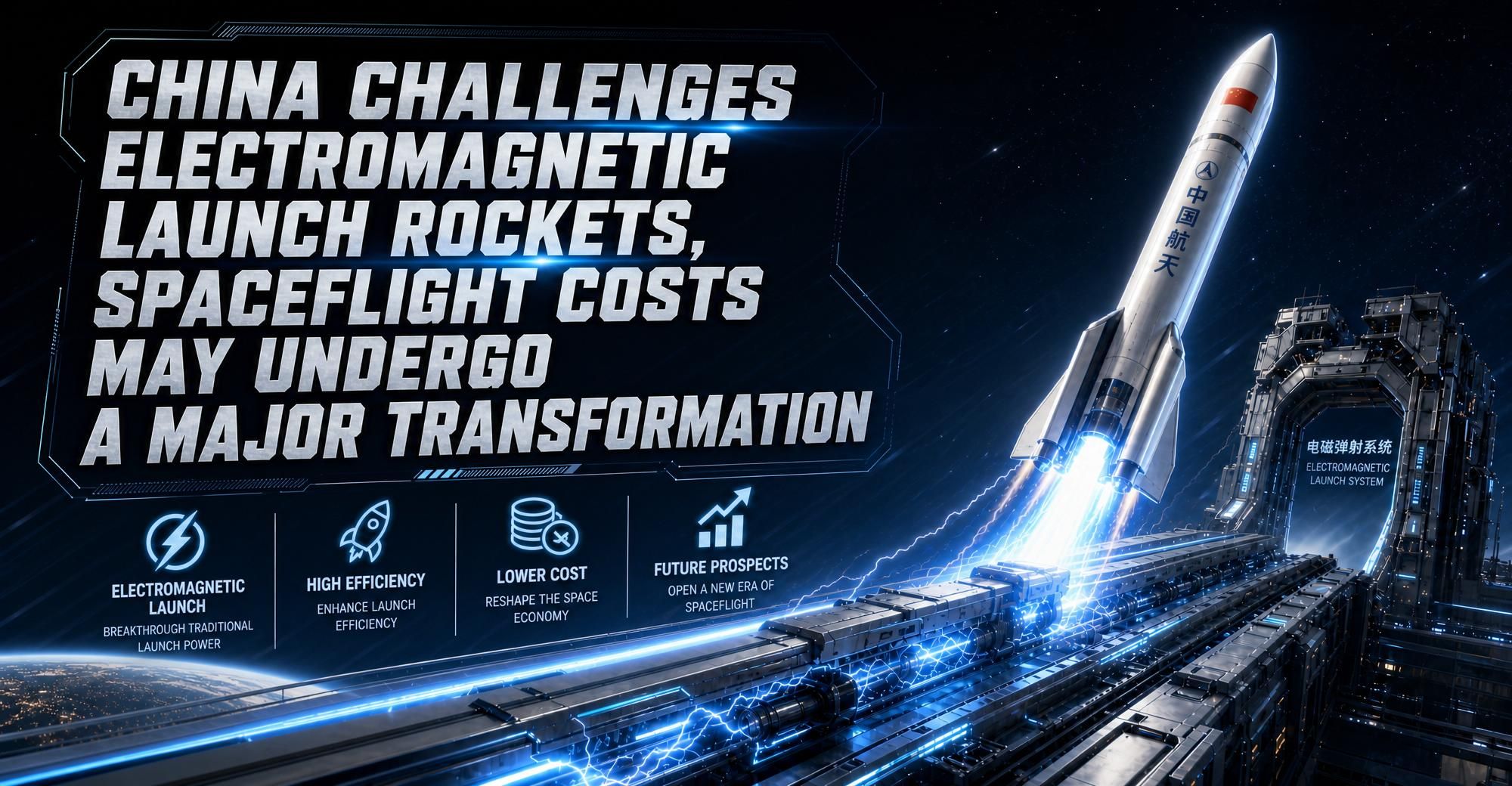
💡A potential breakthrough in aerospace infrastructure that could redefine the economics of space-based AI hardware.
⚡ 30-Second TL;DR
What Changed
Galactic Energy is pioneering electromagnetic launch systems for orbital delivery.
Why It Matters
Successful implementation could drastically lower the barrier to entry for satellite deployment and space exploration. It represents a shift toward high-efficiency, infrastructure-based launch systems.
What To Do Next
Monitor Galactic Energy's technical whitepapers to understand how electromagnetic propulsion could integrate with future autonomous orbital logistics.
Key Points
- •Galactic Energy is pioneering electromagnetic launch systems for orbital delivery.
- •The technology aims to significantly lower the cost and complexity of space launches.
- •The firm is positioning itself as the global leader in operationalizing this aerospace innovation.
🧠 Deep Insight
Background and context from public sources — not the original article. 15 sources cited.
🔑 Enhanced Key Takeaways
- •Galactic Energy aims to demonstrate an electromagnetic maglev pad by 2028, a system designed to propel rockets before ignition.
- •This electromagnetic launch system would accelerate vehicles along a superconducting track to supersonic speeds (above Mach 1) before engine ignition, potentially doubling payload capacity and reducing fuel use.
- •The company has secured substantial funding, including a Series D round of $336 million in September 2025, which valued the company at $1.5 billion.
- •Beyond electromagnetic launch, Galactic Energy is a leading private launch provider in China, having achieved multiple milestones with its Ceres-1 solid rocket, such as mass production, high-density launches, and sea launches.
- •Galactic Energy is also developing the Pallas-1, a medium-lift, partially reusable liquid-fueled rocket, which completed key static fire tests of its first and second stages in late 2025.
🛠️ Technical Deep Dive
- Galactic Energy's electromagnetic launch system utilizes a maglev pad concept to provide initial acceleration to rockets.
- The system is designed to accelerate launch vehicles along a superconducting track using magnetic fields.
- The goal is to propel rockets horizontally to supersonic speeds (above Mach 1) before their chemical engines ignite for vertical ascent.
- This approach aims to reduce the amount of chemical propellant needed for launch, thereby cutting fuel use and easing stress on the rocket's structure during the initial phase of flight.
- Key technical challenges include maintaining superconducting systems, precisely controlling electromagnetic fields, and ensuring a stable transition from the track to powered flight.
- Historically, electromagnetic launch concepts, often referred to as 'mass drivers' or 'coilguns,' have been explored since the early 20th century, with early challenges including aerodynamic heating at high speeds in Earth's atmosphere.
🔮 Future ImplicationsAI analysis grounded in cited sources
⏳ Timeline
📎 Sources (15)
Factual claims are grounded in the sources below. Forward-looking analysis is AI-generated interpretation.
Weekly AI Recap
Read this week's curated digest of top AI events →
👉Related Updates


AI-curated news aggregator. All content rights belong to original publishers.
Original source: Pandaily ↗
This is a summary, not the original. Read the source, or get the weekly briefing.
The weekly digest
One email a week. Unsubscribe anytime.