來源Pandaily•較早收集於 39m
Galactic Energy 推動電磁火箭發射技術
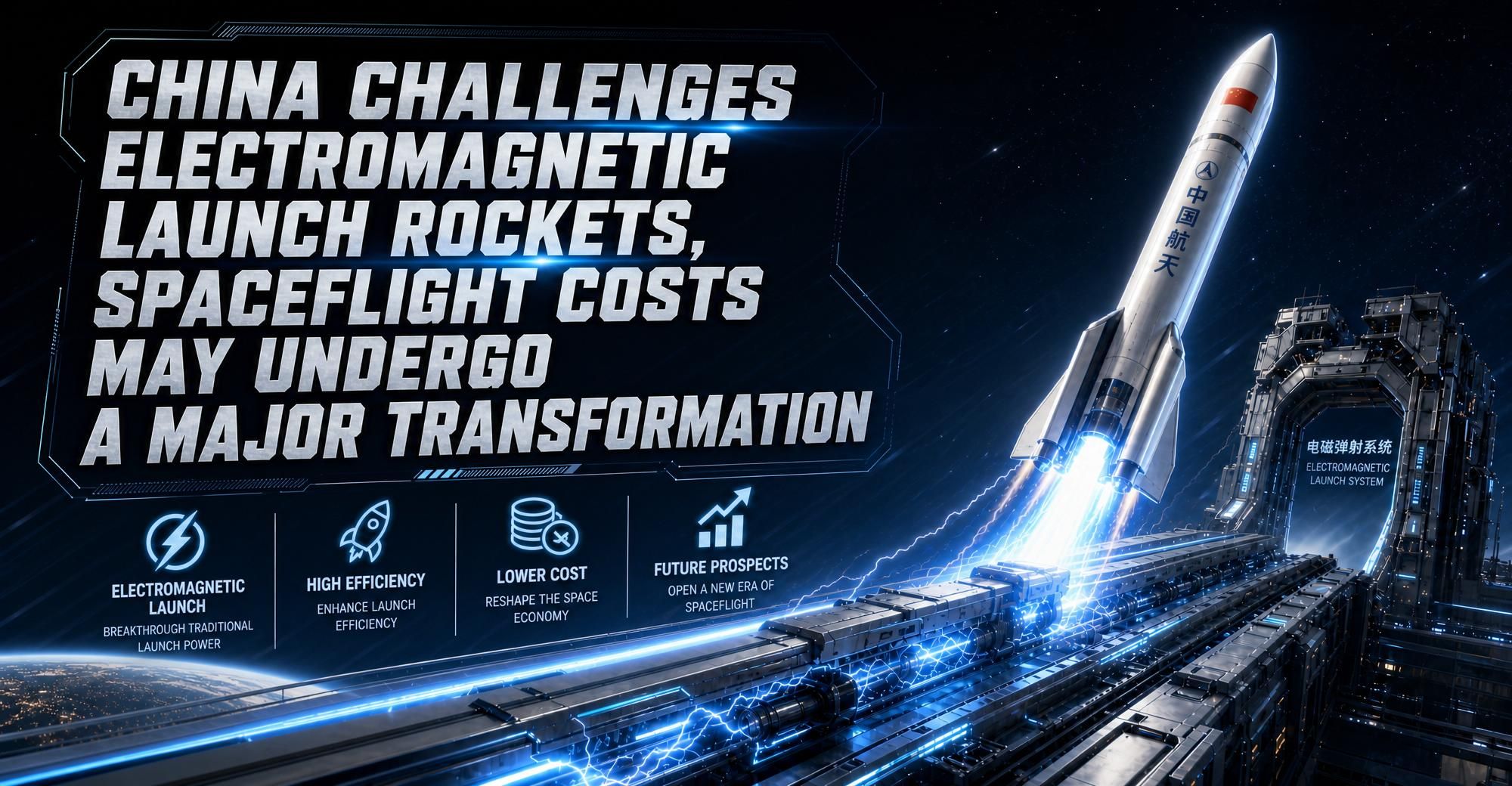
💡航太基礎設施的潛在突破,可能重新定義太空 AI 硬體的經濟效益。
⚡ 30 秒速覽
有什麼變化
Galactic Energy 正在開拓用於軌道運送的電磁發射系統。
為什麼重要
若成功實施,將大幅降低衛星部署與太空探索的門檻。這代表了向高效率、基於基礎設施的發射系統轉型的趨勢。
下一步行動
密切關注 Galactic Energy 的技術白皮書,了解電磁推進如何與未來的自動化軌道物流整合。
誰應關注:Developers & AI Engineers
關鍵要點
- •Galactic Energy 正在開拓用於軌道運送的電磁發射系統。
- •該技術旨在顯著降低太空發射的成本與複雜性。
- •該公司正定位為將此航太創新商業化的全球領導者。
🧠 深度解析
背景與延伸:來自公開資料,非原文內容。引用 15 個來源。
🔑 增強重點摘要
- •Galactic Energy aims to demonstrate an electromagnetic maglev pad by 2028, a system designed to propel rockets before ignition.
- •This electromagnetic launch system would accelerate vehicles along a superconducting track to supersonic speeds (above Mach 1) before engine ignition, potentially doubling payload capacity and reducing fuel use.
- •The company has secured substantial funding, including a Series D round of $336 million in September 2025, which valued the company at $1.5 billion.
- •Beyond electromagnetic launch, Galactic Energy is a leading private launch provider in China, having achieved multiple milestones with its Ceres-1 solid rocket, such as mass production, high-density launches, and sea launches.
- •Galactic Energy is also developing the Pallas-1, a medium-lift, partially reusable liquid-fueled rocket, which completed key static fire tests of its first and second stages in late 2025.
🛠️ 技術深入
- Galactic Energy's electromagnetic launch system utilizes a maglev pad concept to provide initial acceleration to rockets.
- The system is designed to accelerate launch vehicles along a superconducting track using magnetic fields.
- The goal is to propel rockets horizontally to supersonic speeds (above Mach 1) before their chemical engines ignite for vertical ascent.
- This approach aims to reduce the amount of chemical propellant needed for launch, thereby cutting fuel use and easing stress on the rocket's structure during the initial phase of flight.
- Key technical challenges include maintaining superconducting systems, precisely controlling electromagnetic fields, and ensuring a stable transition from the track to powered flight.
- Historically, electromagnetic launch concepts, often referred to as 'mass drivers' or 'coilguns,' have been explored since the early 20th century, with early challenges including aerodynamic heating at high speeds in Earth's atmosphere.
🔮 前景展望基於引用來源的 AI 分析
Electromagnetic launch technology will significantly reduce the environmental impact of space launches.
By shifting part of the energy load away from traditional chemical propulsion and reducing fuel consumption, this method will lead to fewer emissions.
This technology could enable more frequent and routine space launches.
The electromagnetic launch track is expected to require less maintenance compared to conventional launch pads, thereby supporting faster launch cycles.
China could gain a significant competitive edge in the global space industry.
If Galactic Energy successfully operationalizes this technology by 2028, it could challenge the dominance of existing space launch providers.
⏳ 時間線
2018-02
Galactic Energy founded.
2020-11-07
First successful launch of Ceres-1 rocket.
2021-12-06
Became the first Chinese private firm to reach orbit twice with Ceres-1.
2021-12
Completed Pre-Series-B and Pre-Series-B+ funding, raising 1.27 billion yuan (approx. $190 million).
2023-09
Completed C and C+ rounds of financing totaling 1.1 billion yuan ($154 million).
2025-09-28
Raised $336 million in a Series D funding round, valuing the company at $1.5 billion.
📎 來源 (15)
Factual claims are grounded in the sources below. Forward-looking analysis is AI-generated interpretation.
📰
AI 週報
閱讀本週精選 AI 大事摘要 →
👉相關動態


AI 策展新聞聚合。所有內容版權歸原始發布者所有。
原始來源: Pandaily ↗
每週電子報
每週一封,可隨時退訂。