G7 Summit: The Battle for AI Model Sovereignty
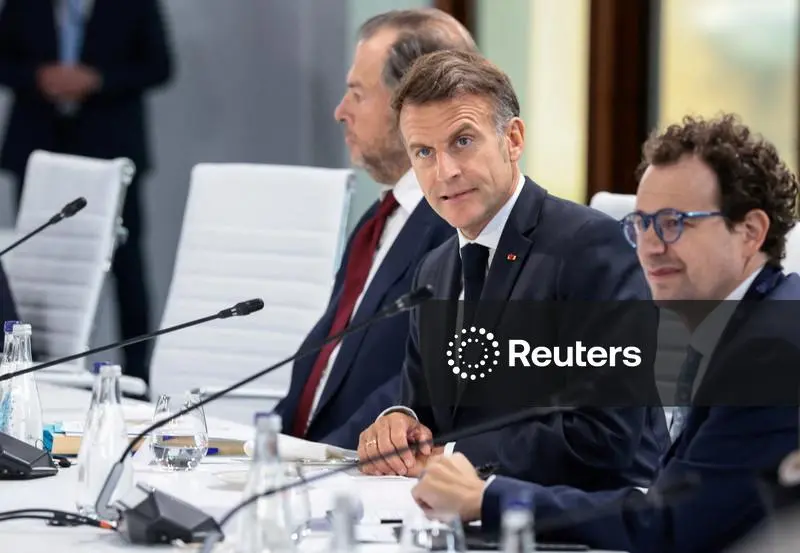
💡Understand the new geopolitical reality of AI model access and why 'sovereign AI' is becoming a top priority.
⚡ 30-Second TL;DR
What Changed
US government is implementing a 'trusted partners' whitelist for frontier AI model access.
Why It Matters
The politicization of AI model access will force global enterprises to diversify their model dependencies to avoid sudden service disruptions.
What To Do Next
Implement a multi-model strategy in your architecture to avoid vendor lock-in and mitigate risks from potential export restrictions.
Key Points
- •US government is implementing a 'trusted partners' whitelist for frontier AI model access.
- •European nations are investing heavily in sovereign AI infrastructure to reduce dependency.
- •Global AI market is shifting toward a model of 'export-controlled' technology similar to chips.
- •Emerging trend of countries using Chinese models (e.g., DeepSeek) for local development.
🧠 Deep Insight
Background and context from public sources — not the original article. 40 sources cited.
🔑 Enhanced Key Takeaways
- •G7 leaders are actively discussing a 'trusted partners' scheme to grant select allied countries or companies access to advanced US AI models, such as Anthropic's Fable 5 and Mythos 5, as a direct workaround to recent US export controls that blocked foreign nationals from these frontier technologies.
- •The European Union has launched the 'InvestAI' initiative, a public-private partnership aiming to mobilize €200 billion for AI, including €20 billion for four large-scale 'AI gigafactories' equipped with next-generation AI chips, alongside proposing the Cloud and AI Development Act (CADA) to establish a four-tier sovereignty framework for cloud and AI infrastructure to reduce reliance on non-EU providers.
- •Japan and Canada have formalized their own AI sovereignty strategies; Japan is pursuing a 'resilience-first' approach with targeted domestic investments like the Fugaku-LLM, while Canada's 'AI for All' strategy commits over C$2 billion to build a sovereign AI foundation, including a public supercomputer, to enhance domestic capabilities and reduce dependencies.
- •The release of China's DeepSeek-R1 in January 2025, a powerful and cost-efficient AI reasoning model, sent 'shock waves' through the industry by demonstrating performance comparable to top Western models despite being trained with weaker chips due to export restrictions, leading to over 800,000 downloads and significant interest from US and EU users for Chinese LLMs hosted outside China.
- •The efficacy of current AI export controls, particularly those focused on semiconductors, is being debated, with arguments suggesting that a hardware-centric approach may be insufficient to maintain a technological lead due to the dynamic nature of AI capabilities, algorithmic adaptation, and enforcement challenges.
🛠️ Technical Deep Dive
- DeepSeek-R1 achieved its cost-efficiency and performance through architectural optimizations, including the use of Mixture of Experts (MoE) layers, reinforcement learning strategies, and hardware-software codesign.
- DeepSeek's models were trained using Nvidia H800 chips, demonstrating that competitive AI capabilities could be developed with less computing power and at a significantly lower cost than models like OpenAI's GPT-4.
- DeepSeek-V3.1, released in August 2025, features a hybrid architecture incorporating 'thinking and non-thinking modes' and showed over 40% performance improvement on benchmarks like SWE-bench and Terminal-bench compared to prior versions.
- The US Center for AI Standards and Innovation (CAISI) is establishing a classified benchmarking process to identify 'covered frontier models' with advanced cyber capabilities, requiring voluntary pre-release access from developers like Google DeepMind, Microsoft, xAI, Anthropic, and OpenAI for evaluation.
- The EU's Cloud and AI Development Act (CADA) proposes a four-tier sovereignty framework for cloud and AI infrastructure: Level 1 requires data processing and storage within the EU; Level 2 mandates provider independence from third countries and supply chain transparency; Level 3 requires EU ownership and control, including personnel citizenship.
🔮 Future ImplicationsAI analysis grounded in cited sources
⏳ Timeline
📎 Sources (40)
Factual claims are grounded in the sources below. Forward-looking analysis is AI-generated interpretation.
- resultsense.com
- indexbox.io
- computing.co.uk
- yahoo.com
- sightmagazine.com.au
- data-en-maatschappij.ai
- mckinsey.com
- europa.eu
- raconteur.net
- europa.eu
- iapp.org
- sciencebusiness.net
- europa.eu
- institute.global
- newsonjapan.com
- canada.ca
- globalgovernmentforum.com
- kpmg.com
- canada.ca
- rbc.com
- cao.go.jp
- ibm.com
- wikipedia.org
- dig.watch
- stanford.edu
- csis.org
- atlanticcouncil.org
- laweconcenter.org
- chathamhouse.org
- substack.com
- amazonaws.com
- cio.com
- wiley.law
- gtlaw.com
- issarice.com
- wikipedia.org
- whitecase.com
- nemko.com
- gartner.com
- artificialintelligence-news.com
Weekly AI Recap
Read this week's curated digest of top AI events →
👉Related Updates

AI-curated news aggregator. All content rights belong to original publishers.
Original source: 虎嗅 ↗
This is a summary, not the original. Read the source, or get the weekly briefing.
The weekly digest
One email a week. Unsubscribe anytime.