Forestry carbon sink methodology revised to boost market
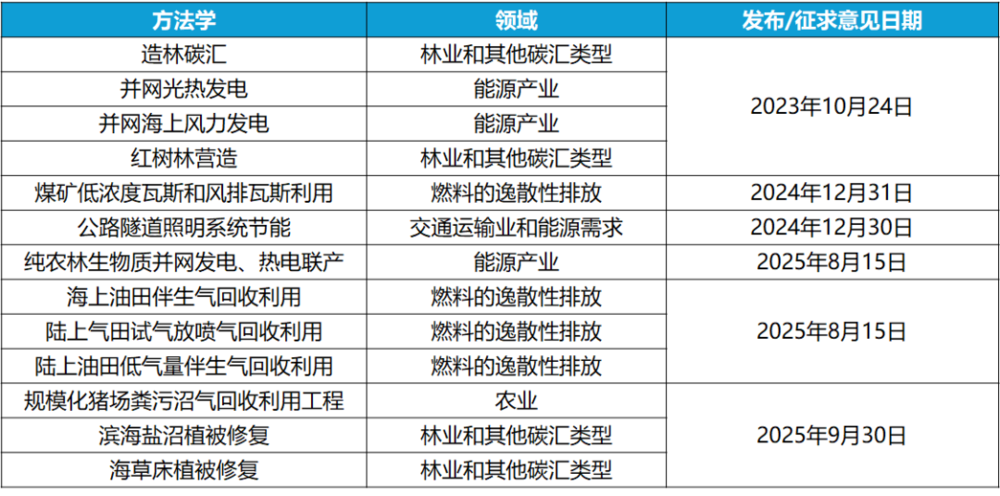
Critical policy update for carbon markets; learn how technical changes will impact the viability of forestry projects.
30-Second TL;DR
What Changed
Exemption of additionality demonstration for all eligible afforestation projects.
Why It Matters
These revisions are expected to accelerate the commercialization of forestry carbon projects, providing a much-needed boost to the CCER market.
What To Do Next
If you are developing carbon accounting software, update your algorithms to support the new default value calculation methods for forestry carbon stocks.
Key Points
- •Exemption of additionality demonstration for all eligible afforestation projects.
- •Expanded land eligibility to include non-forest land like urban and industrial areas.
- •Simplified carbon stock calculation using default values to reduce monitoring costs.
Deep Insight
AI-generated analysis for this event — not the original article.
Enhanced Key Takeaways
- •The revision specifically targets the 'CCER' (China Certified Emission Reduction) market, aiming to revitalize forestry carbon credits which had stalled due to complex verification processes.
- •New guidelines introduce a 'negative list' approach for land eligibility, clarifying that land with high ecological sensitivity or protected status remains excluded despite the broader definitions.
- •The methodology incorporates updated regional carbon sequestration coefficients, reflecting more accurate data from recent national forest inventory surveys.
- •To prevent double-counting, the revised framework mandates integration with the national forestry carbon sink registry system, ensuring credits are uniquely serialized.
- •The policy shift is part of a broader effort to align China's voluntary carbon market with international standards like Verra or Gold Standard to facilitate future cross-border trading.
Technical Deep Dive
- Implementation of a tiered carbon stock estimation model that allows projects to choose between Tier 1 (default values) and Tier 2 (site-specific biomass equations) based on project scale.
- Introduction of standardized remote sensing verification protocols to replace manual field surveys for low-risk project types.
- Integration of a dynamic baseline adjustment mechanism that accounts for regional climate change impacts on forest growth rates.
- Requirement for digital monitoring, reporting, and verification (MRV) platforms to provide real-time data uploads via satellite imagery and IoT sensors.
Future ImplicationsAI analysis grounded in cited sources
Timeline
- 2012-06China launches the voluntary CCER program to encourage emission reductions.
- 2017-03National Development and Reform Commission suspends new CCER project applications.
- 2023-10Ministry of Ecology and Environment officially restarts the national CCER market.
- 2026-07Release of revised forestry carbon sink methodology to address registration bottlenecks.
Weekly AI Recap
Read this week's curated digest of top AI events →
AI-curated news aggregator. All content rights belong to original publishers.
Original source: 虎嗅 ↗
This is a summary, not the original. Read the source, or get the weekly briefing.
The weekly digest
One email a week. Unsubscribe anytime.