Flipper Devices Announces Linux-Based Flipper One Network Tool
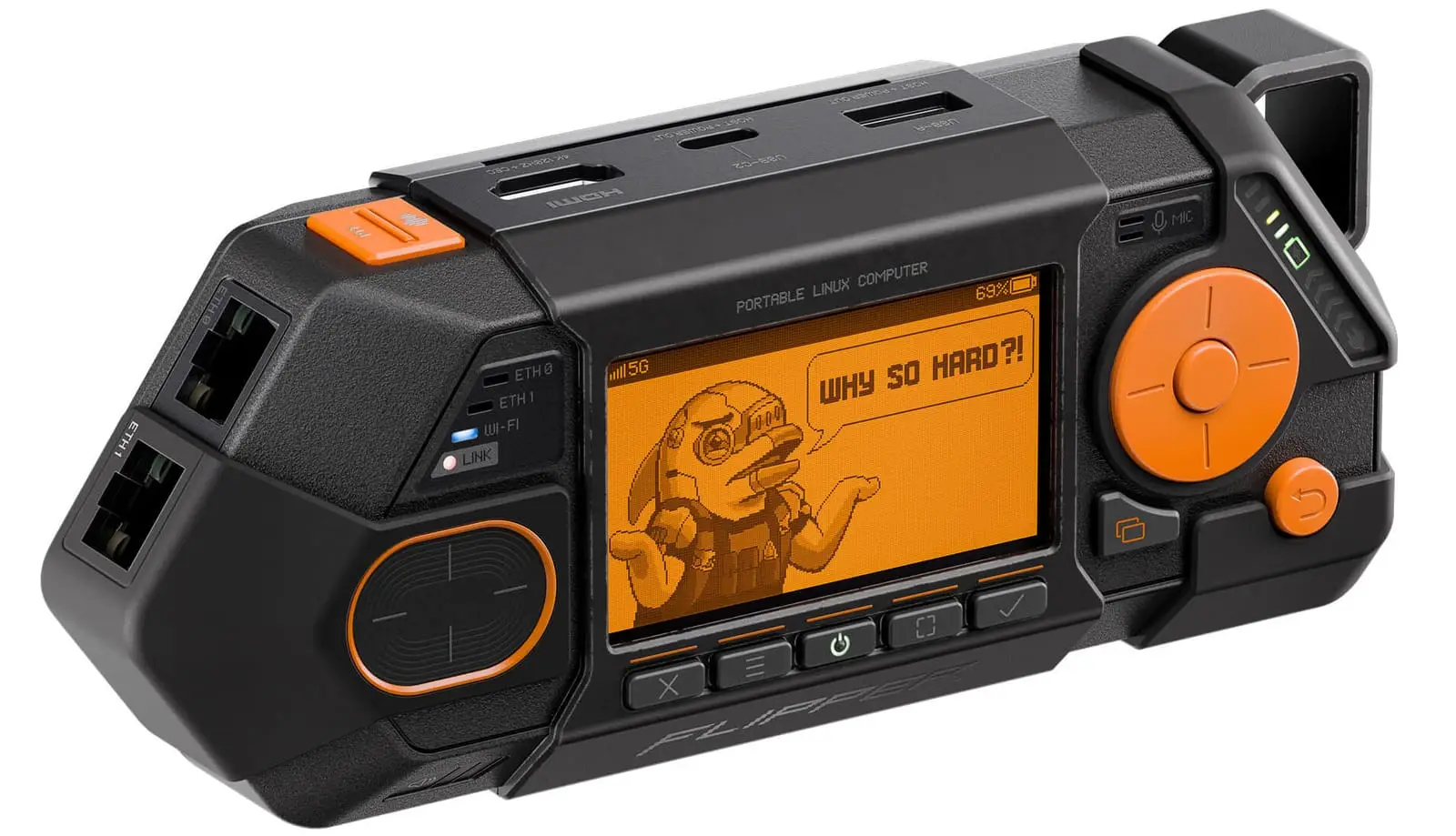
A new Linux-based hardware tool for security researchers and hardware hackers from the makers of Flipper Zero.
30-Second TL;DR
What Changed
Flipper One is a Linux-based multi-functional network hardware tool.
Why It Matters
This device provides security researchers and hardware hackers with a more powerful, Linux-native environment for penetration testing and network analysis.
What To Do Next
Evaluate Flipper One's hardware specs to see if it can serve as a portable edge-computing node for your security research projects.
Key Points
- •Flipper One is a Linux-based multi-functional network hardware tool.
- •It is not a successor to Flipper Zero but a distinct product line.
- •The device functions as a portable Linux PC with specialized network capabilities.
Deep Insight
Background and context from public sources — not the original article. 10 sources cited.
Enhanced Key Takeaways
- •Flipper One is specifically designed for professional security researchers and the cyberdeck community, focusing on IP-connected hardware, advanced pentesting, and SDR projects, contrasting with Flipper Zero's Layer 0 interactions with physical radio signals.
- •The device features a dual-processor architecture, combining an octa-core Rockchip RK3576 SoC with 8GB RAM, a Mali-G52 GPU, and a 6 TOPS NPU for local AI/LLM processing, alongside a low-power Raspberry Pi RP2350 microcontroller for managing the display, buttons, and power subsystem.
- •It boasts extensive modularity through an M.2 Key-B slot that supports PCI Express, USB 3.1, SATA, and SIM interfaces, allowing for the addition of various modules like 5G cellular modems, SDR modules, or NVMe storage.
- •Flipper One offers comprehensive network connectivity, including two Gigabit Ethernet ports, Wi-Fi 6E (2.4/5/6 GHz) with monitor mode support, and 5 Gbps USB Ethernet, and can function as a 'survival desktop' or thin client with 4K 120Hz HDMI output via USB-C DisplayPort Alt Mode.
Competitor Analysis
- Flipper One (Target)
- Portable Linux PC, Network Tool, Pentesting, SDR, Local AI
- Raspberry Pi 5 (Typical)
- General-purpose Single Board Computer, DIY Projects, Servers
- Flipper One (Target)
- Rockchip RK3576 (Octa-core, 2.2 GHz, 6 TOPS NPU)
- Raspberry Pi 5 (Typical)
- Broadcom BCM2712 (Quad-core Cortex-A76, 2.4 GHz)
- Flipper One (Target)
- 8 GB LPDDR5x
- Raspberry Pi 5 (Typical)
- 4GB or 8GB LPDDR4X
- Flipper One (Target)
- Linux (full mainline kernel support)
- Raspberry Pi 5 (Typical)
- Raspberry Pi OS (Debian-based Linux)
- Flipper One (Target)
- 2x Gigabit Ethernet, Wi-Fi 6E, USB Ethernet (5 Gbps)
- Raspberry Pi 5 (Typical)
- 1x Gigabit Ethernet, Wi-Fi 5, Bluetooth 5.0
- Flipper One (Target)
- M.2 Key-B slot (PCIe, USB 3.1, SATA, SIM), GPIO
- Raspberry Pi 5 (Typical)
- PCIe 2.0 x1, GPIO
- Flipper One (Target)
- USB-C DisplayPort Alt Mode (4K 120Hz HDMI)
- Raspberry Pi 5 (Typical)
- 2x micro-HDMI (4K 60Hz)
- Flipper One (Target)
- < $350 USD (base, no cellular module)
- Raspberry Pi 5 (Typical)
- ~$60-80 USD (for 4GB/8GB models)
| Feature | Flipper One (Target) | Raspberry Pi 5 (Typical) |
|---|---|---|
| Primary Use Case | Portable Linux PC, Network Tool, Pentesting, SDR, Local AI | General-purpose Single Board Computer, DIY Projects, Servers |
| Processor | Rockchip RK3576 (Octa-core, 2.2 GHz, 6 TOPS NPU) | Broadcom BCM2712 (Quad-core Cortex-A76, 2.4 GHz) |
| RAM | 8 GB LPDDR5x | 4GB or 8GB LPDDR4X |
| Operating System | Linux (full mainline kernel support) | Raspberry Pi OS (Debian-based Linux) |
| Network Ports | 2x Gigabit Ethernet, Wi-Fi 6E, USB Ethernet (5 Gbps) | 1x Gigabit Ethernet, Wi-Fi 5, Bluetooth 5.0 |
| Modularity | M.2 Key-B slot (PCIe, USB 3.1, SATA, SIM), GPIO | PCIe 2.0 x1, GPIO |
| Display Output | USB-C DisplayPort Alt Mode (4K 120Hz HDMI) | 2x micro-HDMI (4K 60Hz) |
| Target Price | < $350 USD (base, no cellular module) | ~$60-80 USD (for 4GB/8GB models) |
Technical Deep Dive
- Main Processor: Rockchip RK3576 Octa-core SoC (4x Cortex-A72, 4x Cortex-A53) clocked at 2.2 GHz.
- GPU: Mali-G52.
- NPU: Integrated Neural Processing Unit capable of 6 TOPS (Trillion Operations Per Second) for local AI/LLM workloads.
- RAM: 8 GB LPDDR5x.
- Co-processor: Dual-core Raspberry Pi RP2350 microcontroller, responsible for display, buttons, touchpad, LEDs, and power management.
- Operating System: Full mainline Linux kernel support, with Flipper Devices actively working with Collabora to push RK3576 SoC support.
- Network Interfaces: 2x Gigabit Ethernet, Wi-Fi 6E (802.11ax, 2.4/5/6 GHz) with MediaTek MT7921AUN chipset supporting monitor mode, USB Ethernet (up to 5 Gbps).
- Expansion Slot: M.2 Key-B slot (2242, 3042, 3052 sizes) exposing PCI Express 2.1 ×1, USB 3.1, USB 2.0, SATA3, Serial Audio, UART, I2C, and SIM card interfaces.
- Display: 1.4-inch 256x144 monochrome LCD (Amber).
- External Display: USB-C with DisplayPort Alt Mode for 4K 120Hz HDMI output.
- Input: Five-button D-pad with integrated OK button, four function buttons, a dedicated joystick, and a touchpad.
- Power: Can function as a power bank.
Future ImplicationsAI analysis grounded in cited sources
Timeline
- 2020Flipper Devices founded and Flipper Zero Kickstarter launched, raising $4.8M.
- 2024-02Flipper announced collaboration with Raspberry Pi to enable Flipper Zero for video gaming.
- 2026-05-21Flipper One, a Linux-based multi-functional network tool, officially unveiled.
Sources (10)
Factual claims are grounded in the sources below. Forward-looking analysis is AI-generated interpretation.
Weekly AI Recap
Read this week's curated digest of top AI events →
Related Updates

AI-curated news aggregator. All content rights belong to original publishers.
Original source: cnBeta (Full RSS) ↗
This is a summary, not the original. Read the source, or get the weekly briefing.
The weekly digest
One email a week. Unsubscribe anytime.