Financial Crisis at Vaccine Developer Kangle Weishi
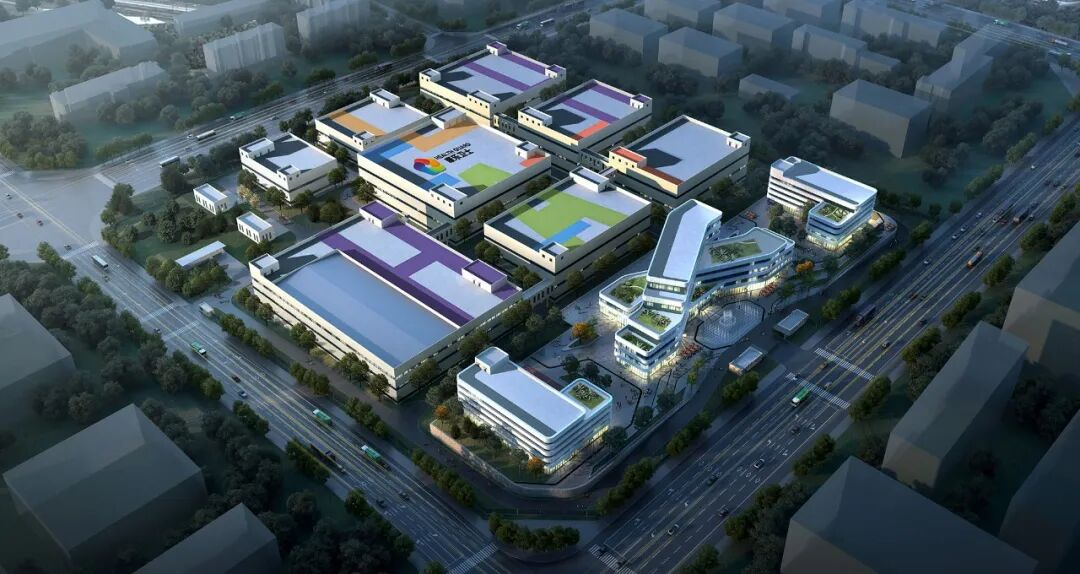
A cautionary tale on the risks of over-scaling infrastructure and R&D before achieving commercial viability.
30-Second TL;DR
What Changed
Company reported net losses of 579 million RMB in 2025.
Why It Matters
The case serves as a cautionary tale for AI startups regarding the dangers of over-scaling infrastructure and R&D before achieving commercial viability.
What To Do Next
Audit your current burn rate and prioritize R&D projects that have the most direct path to revenue generation.
Key Points
- •Company reported net losses of 579 million RMB in 2025.
- •Aggressive capital expenditure on high-end equipment and facilities led to cash flow depletion.
- •Multiple R&D pipelines entered expensive clinical phases simultaneously.
- •Market cooling for HPV vaccines and biotech funding exacerbated the crisis.
Deep Insight
Background and context from public sources — not the original article. 10 sources cited.
Enhanced Key Takeaways
- •Kangle Weishi secured substantial pre-IPO funding of 1.015 billion RMB in August 2021, earmarked for advancing its trivalent and 9-valent HPV vaccine clinical trials and constructing an industrial base in Kunming.
- •The company's 9-valent HPV vaccine commenced Phase III clinical trials in Indonesia in November 2023, marking it as the first Chinese firm to independently launch such a high-valency HPV vaccine trial overseas.
- •The broader Chinese HPV vaccine market is experiencing intense price competition, with domestic 9-valent vaccines, such as Wantai BioPharm's Cecolin 9, launching at approximately a 60% discount compared to Merck's Gardasil 9.
- •This heightened competition and a cooling market led Merck to report a 41% drop in Gardasil sales in China in Q1 2025 and subsequently announce a halt to Gardasil shipments to China by February 2026.
Competitor Analysis
| Company/Product | Vaccine Type | Key Features/Market Impact |
|---|---|---|
| Kangle Weishi (Pipeline) | Trivalent (16/18/58), 9-valent (6/11/16/18/31/33/45/52/58) | Facing insolvency due to high R&D costs and capital expenditure; 9-valent in Phase III overseas trials. |
| Merck (Gardasil 9) | 9-valent (6/11/16/18/31/33/45/52/58) | Dominant international player; experienced significant sales decline in China (41% in Q1 2025) due to local competition and price pressure; halted shipments to China by Feb 2026. |
| Wantai BioPharm (Cecolin) | Bivalent (16/18) | China's first domestically made bivalent HPV vaccine, launched in 2019; received WHO prequalification in 2021. |
| Wantai BioPharm (Cecolin 9) | 9-valent (6/11/16/18/31/33/45/52/58) | China's first domestically approved 9-valent HPV vaccine (June 2025); priced at a significant discount (approx. 499 RMB/dose) compared to Gardasil 9. |
| GlaxoSmithKline (Cervarix) | Bivalent (16/18) | International player; launched in China in 2016; remains relevant in emerging economies where cost is a priority. |
| Walvax Biotechnology (Walrinvax) | Bivalent (16/18) | Second domestically manufactured HPV vaccine approved in China (2022). |
Technical Deep Dive
- Kangle Weishi's trivalent and 9-valent HPV vaccine candidates are recombinant protein drugs.
- The vaccines are based on viral-like particle (VLP) technology, which involves eliminating the virus' nucleic acids but retaining its nucleocapsid protein L1 to form VLPs.
- These VLPs express viral antigens after intramuscular injection, stimulating humoral immunity and producing neutralizing antibodies to prevent specific HPV infections.
- Specifically, Kangle Weishi's 9-valent HPV vaccine utilizes an E. coli platform for the production of these virus-like particles.
Future ImplicationsAI analysis grounded in cited sources
Timeline
- 2008Kangle Weishi founded.
- 2021-08Completed 1.015 billion RMB pre-IPO financing, with trivalent and 9-valent HPV vaccines entering Phase III clinical trials.
- 2023-09Kangle Weishi's 9-valent HPV vaccine approved by the Indonesian Food and Drug Administration (BPOM).
- 2023-11Initiated Phase III clinical trials for its 9-valent HPV vaccine in Indonesia.
- 2025Reported net losses of 579 million RMB.
Sources (10)
Factual claims are grounded in the sources below. Forward-looking analysis is AI-generated interpretation.
Weekly AI Recap
Read this week's curated digest of top AI events →
AI-curated news aggregator. All content rights belong to original publishers.
Original source: 虎嗅 ↗
This is a summary, not the original. Read the source, or get the weekly briefing.
The weekly digest
One email a week. Unsubscribe anytime.