FCC grants Amazon waiver for Leo satellite broadband deadline
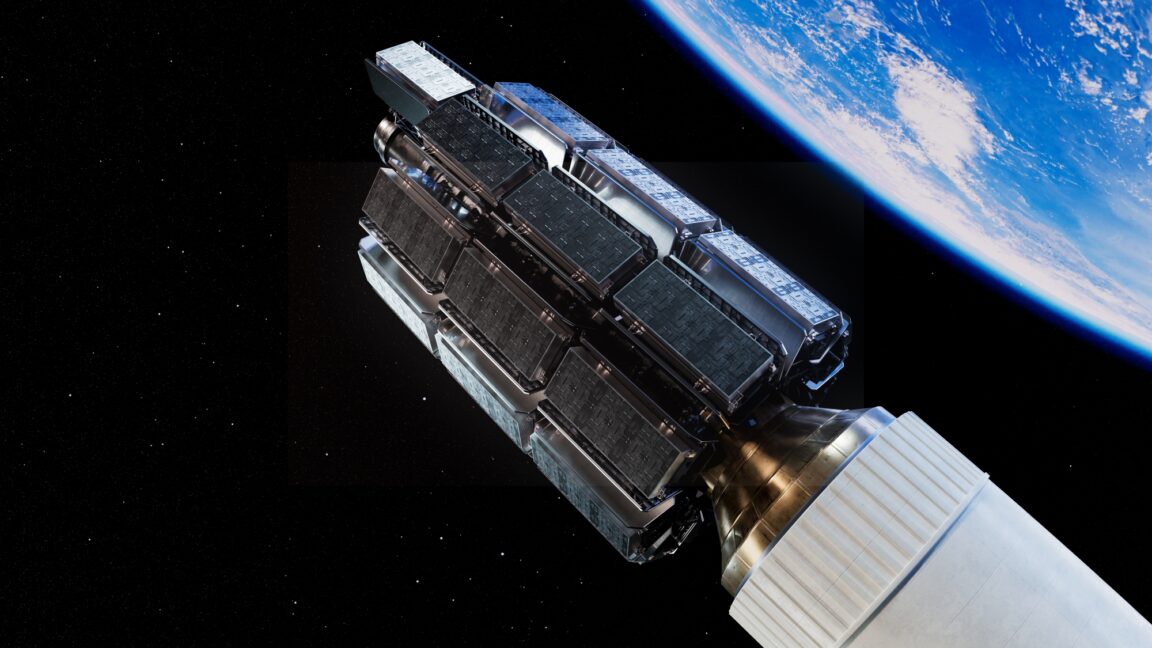
💡Amazon's satellite network is critical infrastructure for future edge AI and global connectivity at scale.
⚡ 30-Second TL;DR
What Changed
FCC granted a waiver to Amazon for its Project Kuiper satellite deployment schedule.
Why It Matters
This decision accelerates the timeline for Amazon to compete with Starlink, potentially lowering latency and increasing bandwidth availability for edge AI and remote data processing applications.
What To Do Next
Monitor the Project Kuiper API availability for edge-computing deployments in remote regions.
Key Points
- •FCC granted a waiver to Amazon for its Project Kuiper satellite deployment schedule.
- •The decision aims to promote a competitive alternative to existing large-scale satellite broadband providers.
- •Regulatory hurdles for low-earth orbit (LEO) infrastructure are being adjusted to encourage market entry.
🧠 Deep Insight
Background and context from public sources — not the original article. 28 sources cited.
🔑 Enhanced Key Takeaways
- •The FCC's waiver is conditional, temporarily stripping Amazon Leo of priority status for satellites launched after July 30, 2026, in the Ka and Ku spectrum bands, until Amazon meets specific deployment milestones or other conditions.
- •Amazon had requested a two-year extension to its original July 2026 deadline, citing limited availability of commercial launch opportunities and satellite redesign efforts.
- •SpaceX, a direct competitor with its Starlink constellation, opposed Amazon's request for an extension, arguing against granting special treatment.
- •Amazon has invested over $10 billion in Project Kuiper, including substantial contractual commitments for launch services through the first quarter of 2029.
- •Amazon Leo aims to begin offering services in five key markets—the UK, France, Germany, Canada, and the United States—by the end of March 2026, with plans to expand to 26 countries by the end of 2026.
📊 Competitor Analysis▸ Show
| Metric | Starlink (SpaceX) | OneWeb (Eutelsat) | Project Kuiper (Amazon Leo) |
|---|---|---|---|
| Constellation Size (Authorized) | ~42,000 (Gen 1 + Gen 2) | 648 (fully deployed) | 3,236 (Gen 1) |
| Satellites in Orbit (early 2026) | 6,000+ | 656 (654 operational) | ~330 (as of June 2026) |
| Orbital Altitude | ~340–570 km (majority ~550 km) | 1,200 km (polar orbit) | 590–630 km (three shells) |
| Inter-Satellite Links (ISLs) | Yes (laser ISLs on V2 satellites) | No (fixed beams, ground-dependent) | Yes (optical ISLs, 100 Gbps per link, planned on all Gen 1) |
| Launch Provider | SpaceX (Falcon 9 / Starship) | Multiple (e.g., Soyuz, Falcon 9, Ariane 6) | ULA (Atlas V, Vulcan Centaur), Blue Origin (New Glenn), Arianespace (Ariane 6), SpaceX (Falcon 9) |
| Service Start | Public beta Oct 2020; full service 2021 | Operational (through partners) | Prototype tests 2023; commercial service anticipated 2025/2026 |
| Typical Latency | 20–60 ms | 50–70 ms | Target 30–50 ms |
| Download Speed (Target) | 50–250 Mbps (consumer) | Varies by partner integration | Up to 100 Mbps (compact), 400 Mbps (standard), 1 Gbps (professional) |
| Target Market | Consumer, Enterprise, Maritime, Aviation, Government | Enterprise, Government, Maritime, Aviation (through partners) | Consumer, Enterprise, Government, Underserved areas |
🛠️ Technical Deep Dive
- Constellation Architecture: Amazon Leo's first-generation constellation is authorized for 3,236 satellites, operating in Low Earth Orbit (LEO) across three orbital shells at altitudes of 590 km, 610 km, and 630 km, distributed across 98 orbital planes.
- Inter-Satellite Links (ISLs): All first-generation satellites are equipped with Optical Inter-Satellite Links (OISL), utilizing infrared lasers for high-speed data transfer at rates up to 100 Gbps directly between satellites, forming a resilient mesh network in space.
- Onboard Processing: Each satellite is powered by Amazon's custom-designed “Prometheus” baseband chip (System-on-a-Chip), which combines the functions of multiple chips and is capable of processing up to 1 terabit per second (Tbps) of data directly on the satellite.
- Propulsion: Satellites feature in-house Hall-effect thrusters fueled by krypton propellant for precise orbital insertion, station-keeping, automated collision avoidance, and controlled end-of-life deorbiting.
- Antennas: The system relies on electronically steered, phased-array antennas for space-to-ground communication, forming reprogrammable spot beams.
- Ground Infrastructure: Comprises a global network of 300-350 autonomous gateway stations, each with 2.4-meter Ka-band antennas, and Telemetry, Tracking, and Control (TT&C) antennas. These are exclusively for Kuiper and are tightly integrated with Amazon Web Services (AWS) via dedicated fiber connections.
- Customer Terminals: Amazon has developed three primary customer terminal models: a compact 7x7 inch (approx. 18x18 cm) terminal offering up to 100 Mbps downlink, a standard 28x28 cm terminal providing up to 400 Mbps downlink and 100 Mbps uplink, and a professional terminal (76x51 cm) capable of up to 1 Gbps downlink and 400 Mbps uplink. All terminals use the same Prometheus ASIC as the satellites.
🔮 Future ImplicationsAI analysis grounded in cited sources
⏳ Timeline
📎 Sources (28)
Factual claims are grounded in the sources below. Forward-looking analysis is AI-generated interpretation.
- geekwire.com
- thenextweb.com
- pcmag.com
- indiatimes.com
- parolaanalytics.com
- telecoms.com
- broadbandbreakfast.com
- spacenexus.us
- spacenexus.us
- maxpolyakov.com
- advanced-television.com
- eoportal.org
- skylinker.io
- skylinker.io
- aboutamazon.eu
- businessinsider.com
- infrastructure.gov.au
- nasa.gov
- eurospace.org
- informa.com
- aws.com
- wikipedia.org
- fcc.gov
- forecastinternational.com
- aboutamazon.com
- youtube.com
- fcc.gov
- fcc.gov
Weekly AI Recap
Read this week's curated digest of top AI events →
👉Related Updates
AI-curated news aggregator. All content rights belong to original publishers.
Original source: Ars Technica ↗
This is a summary, not the original. Read the source, or get the weekly briefing.
The weekly digest
One email a week. Unsubscribe anytime.