來源Ars Technica•較早收集於 31m
FCC 批准 Amazon Leo 衛星寬頻期限豁免
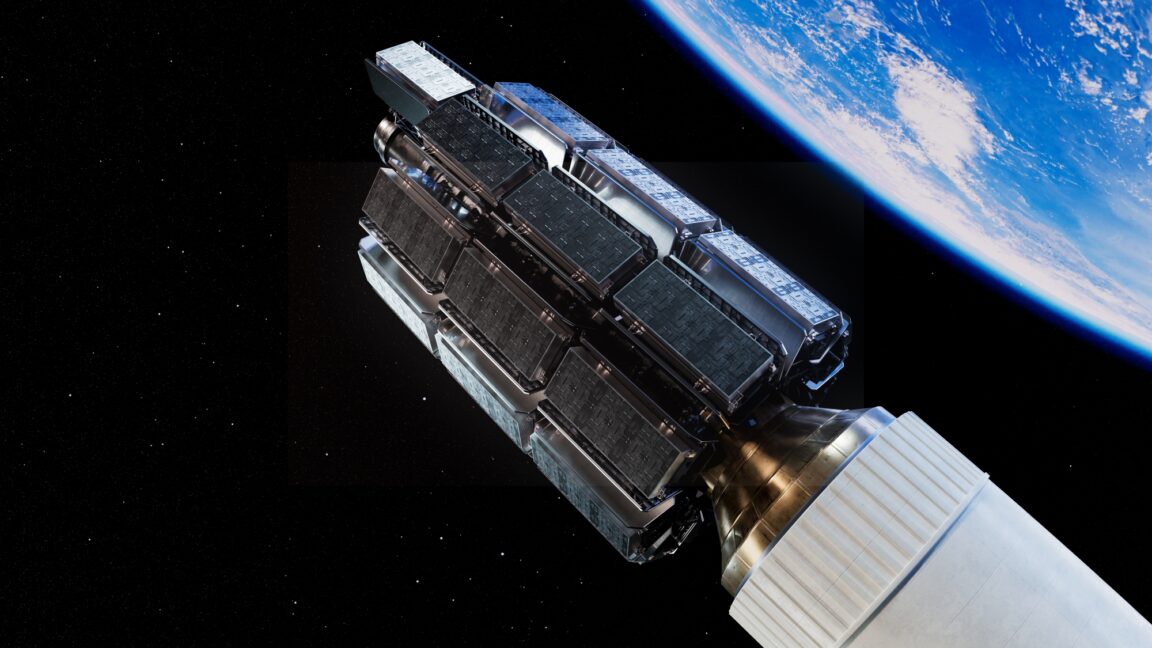
#satellite-internet#edge-computing#telecommunicationsamazon-project-kuiperamazonfccproject kuiper
💡Amazon 的衛星網路是未來邊緣 AI 與大規模全球連線的關鍵基礎設施。
⚡ 30 秒速覽
有什麼變化
FCC 批准了 Amazon Project Kuiper 衛星部署時間表的豁免。
為什麼重要
此決策加速了 Amazon 與 Starlink 競爭的時程,有望降低邊緣 AI 與遠端資料處理應用的延遲,並提升頻寬可用性。
下一步行動
密切關注 Project Kuiper API 的可用性,以便在偏遠地區進行邊緣運算部署。
誰應關注:Developers & AI Engineers
關鍵要點
- •FCC 批准了 Amazon Project Kuiper 衛星部署時間表的豁免。
- •此決策旨在推動市場競爭,提供現有大型衛星寬頻供應商之外的替代方案。
- •針對低地球軌道 (LEO) 基礎設施的監管障礙正在調整,以鼓勵市場進入。
🧠 深度解析
背景與延伸:來自公開資料,非原文內容。引用 28 個來源。
🔑 增強重點摘要
- •The FCC's waiver is conditional, temporarily stripping Amazon Leo of priority status for satellites launched after July 30, 2026, in the Ka and Ku spectrum bands, until Amazon meets specific deployment milestones or other conditions.
- •Amazon had requested a two-year extension to its original July 2026 deadline, citing limited availability of commercial launch opportunities and satellite redesign efforts.
- •SpaceX, a direct competitor with its Starlink constellation, opposed Amazon's request for an extension, arguing against granting special treatment.
- •Amazon has invested over $10 billion in Project Kuiper, including substantial contractual commitments for launch services through the first quarter of 2029.
- •Amazon Leo aims to begin offering services in five key markets—the UK, France, Germany, Canada, and the United States—by the end of March 2026, with plans to expand to 26 countries by the end of 2026.
📊 競品分析▸ Show
| Metric | Starlink (SpaceX) | OneWeb (Eutelsat) | Project Kuiper (Amazon Leo) |
|---|---|---|---|
| Constellation Size (Authorized) | ~42,000 (Gen 1 + Gen 2) | 648 (fully deployed) | 3,236 (Gen 1) |
| Satellites in Orbit (early 2026) | 6,000+ | 656 (654 operational) | ~330 (as of June 2026) |
| Orbital Altitude | ~340–570 km (majority ~550 km) | 1,200 km (polar orbit) | 590–630 km (three shells) |
| Inter-Satellite Links (ISLs) | Yes (laser ISLs on V2 satellites) | No (fixed beams, ground-dependent) | Yes (optical ISLs, 100 Gbps per link, planned on all Gen 1) |
| Launch Provider | SpaceX (Falcon 9 / Starship) | Multiple (e.g., Soyuz, Falcon 9, Ariane 6) | ULA (Atlas V, Vulcan Centaur), Blue Origin (New Glenn), Arianespace (Ariane 6), SpaceX (Falcon 9) |
| Service Start | Public beta Oct 2020; full service 2021 | Operational (through partners) | Prototype tests 2023; commercial service anticipated 2025/2026 |
| Typical Latency | 20–60 ms | 50–70 ms | Target 30–50 ms |
| Download Speed (Target) | 50–250 Mbps (consumer) | Varies by partner integration | Up to 100 Mbps (compact), 400 Mbps (standard), 1 Gbps (professional) |
| Target Market | Consumer, Enterprise, Maritime, Aviation, Government | Enterprise, Government, Maritime, Aviation (through partners) | Consumer, Enterprise, Government, Underserved areas |
🛠️ 技術深入
- Constellation Architecture: Amazon Leo's first-generation constellation is authorized for 3,236 satellites, operating in Low Earth Orbit (LEO) across three orbital shells at altitudes of 590 km, 610 km, and 630 km, distributed across 98 orbital planes.
- Inter-Satellite Links (ISLs): All first-generation satellites are equipped with Optical Inter-Satellite Links (OISL), utilizing infrared lasers for high-speed data transfer at rates up to 100 Gbps directly between satellites, forming a resilient mesh network in space.
- Onboard Processing: Each satellite is powered by Amazon's custom-designed “Prometheus” baseband chip (System-on-a-Chip), which combines the functions of multiple chips and is capable of processing up to 1 terabit per second (Tbps) of data directly on the satellite.
- Propulsion: Satellites feature in-house Hall-effect thrusters fueled by krypton propellant for precise orbital insertion, station-keeping, automated collision avoidance, and controlled end-of-life deorbiting.
- Antennas: The system relies on electronically steered, phased-array antennas for space-to-ground communication, forming reprogrammable spot beams.
- Ground Infrastructure: Comprises a global network of 300-350 autonomous gateway stations, each with 2.4-meter Ka-band antennas, and Telemetry, Tracking, and Control (TT&C) antennas. These are exclusively for Kuiper and are tightly integrated with Amazon Web Services (AWS) via dedicated fiber connections.
- Customer Terminals: Amazon has developed three primary customer terminal models: a compact 7x7 inch (approx. 18x18 cm) terminal offering up to 100 Mbps downlink, a standard 28x28 cm terminal providing up to 400 Mbps downlink and 100 Mbps uplink, and a professional terminal (76x51 cm) capable of up to 1 Gbps downlink and 400 Mbps uplink. All terminals use the same Prometheus ASIC as the satellites.
🔮 前景展望基於引用來源的 AI 分析
The conditional waiver will likely accelerate Amazon Leo's deployment while maintaining competitive pressure.
The FCC's decision to waive the interim deadline but impose conditions, such as the temporary loss of priority status, incentivizes Amazon to meet its final deployment goals quickly to regain full operational advantages and avoid interference issues.
The LEO satellite broadband market is poised for increased competition, potentially benefiting consumers with better service and affordability.
The FCC explicitly stated its remedy was 'tailored to ensure that Americans quickly benefit from multiple, facilities-based providers of next-gen satellite services,' indicating a regulatory intent to foster a competitive environment.
⏳ 時間線
2018
Amazon began researching Project Kuiper.
2019-04
Amazon officially unveiled its plans for Project Kuiper.
2020-07-30
FCC granted Amazon a license to deploy and operate 3,236 Project Kuiper satellites, with a condition to deploy half by July 2026 and the full constellation by July 2029.
2022-04-05
Amazon secured up to 83 launches from Arianespace, Blue Origin, and United Launch Alliance (ULA) to deploy the majority of its constellation.
2023-10-06
Amazon successfully launched and tested its two prototype satellites, KuiperSat-1 and KuiperSat-2, on a ULA Atlas V rocket.
2025-04-28
Amazon launched the first batch of 27 operational satellites (KA-01 mission) on a ULA Atlas V rocket.
2025-11-12
Project Kuiper was officially rebranded as Amazon Leo.
2026-01
Amazon requested a two-year extension from the FCC for its July 2026 deployment deadline.
2026-05-29
ULA Atlas V launched 29 Amazon Kuiper satellites.
2026-06-05
The FCC granted a conditional waiver for Amazon Leo's July 30, 2026, deployment deadline.
📎 來源 (28)
Factual claims are grounded in the sources below. Forward-looking analysis is AI-generated interpretation.
- geekwire.com
- thenextweb.com
- pcmag.com
- indiatimes.com
- parolaanalytics.com
- telecoms.com
- broadbandbreakfast.com
- spacenexus.us
- spacenexus.us
- maxpolyakov.com
- advanced-television.com
- eoportal.org
- skylinker.io
- skylinker.io
- aboutamazon.eu
- businessinsider.com
- infrastructure.gov.au
- nasa.gov
- eurospace.org
- informa.com
- aws.com
- wikipedia.org
- fcc.gov
- forecastinternational.com
- aboutamazon.com
- youtube.com
- fcc.gov
- fcc.gov
📰
AI 週報
閱讀本週精選 AI 大事摘要 →
👉相關動態
AI 策展新聞聚合。所有內容版權歸原始發布者所有。
原始來源: Ars Technica ↗
每週電子報
每週一封,可隨時退訂。