Fable 5 returns with stricter safety and higher costs
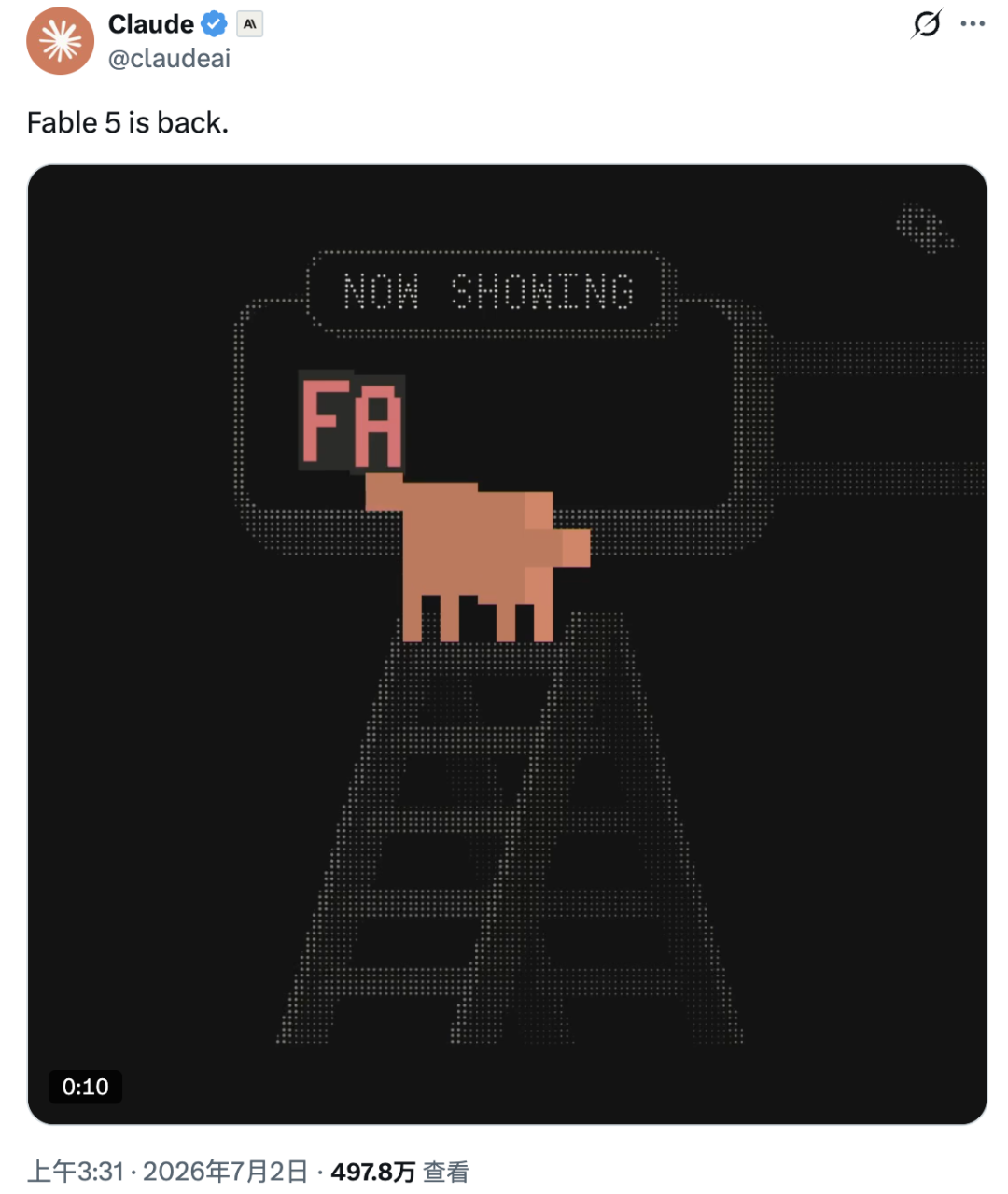
💡Understand the operational pitfalls and cost-efficiency issues of Anthropic's latest model after its re-release.
⚡ 30-Second TL;DR
What Changed
Fable 5 now features stricter safety classifiers for cybersecurity, biology, and internal reasoning extraction.
Why It Matters
The increased sensitivity of safety filters and high costs make Fable 5 less viable for general-purpose coding tasks, forcing developers to implement complex fallback strategies.
What To Do Next
Implement a tiered model routing strategy in your application to reserve Fable 5 only for high-complexity tasks while using Sonnet or Opus for routine requests to save costs.
Key Points
- •Fable 5 now features stricter safety classifiers for cybersecurity, biology, and internal reasoning extraction.
- •High false-positive rates trigger frequent fallbacks to Opus 4.8, despite users paying Fable 5's premium pricing.
- •Token consumption is significantly higher, with users reporting rapid depletion of usage credits.
- •Anthropic plans to optimize classifiers to reduce false positives in the coming weeks.
🧠 Deep Insight
AI-generated analysis for this event — not the original article.
🔑 Enhanced Key Takeaways
- •Anthropic's implementation of the new safety layer utilizes a 'Guardrail Orchestration' architecture that intercepts prompts before they reach the primary inference engine.
- •The fallback mechanism to Opus 4.8 is hard-coded into the API gateway, meaning developers cannot opt-out of the fallback even if they prefer a refusal over a model switch.
- •Internal telemetry suggests that the 'biology' safety classifier was updated in response to new regulatory guidelines regarding dual-use research of concern (DURC) in AI models.
- •Enterprise customers have reported that the increased token consumption is primarily driven by the redundant processing required when the safety layer triggers a re-routing event.
- •The 'internal reasoning extraction' filter is specifically designed to prevent 'chain-of-thought' leakage, where the model might inadvertently reveal its safety-check logic to the end user.
📊 Competitor Analysis▸ Show
| Feature | Fable 5 (Anthropic) | GPT-6 (OpenAI) | Gemini 2.0 Ultra (Google) |
|---|---|---|---|
| Safety Architecture | Reactive/Fallback-based | Proactive/Integrated | Hybrid/Layered |
| Pricing Model | Premium/Token-based | Tiered/Subscription | Usage-based |
| Reasoning Benchmark | High (Variable) | Very High | High |
🛠️ Technical Deep Dive
- Fable 5 utilizes a Mixture-of-Experts (MoE) architecture with a specialized safety-gating layer that operates at the embedding level.
- The fallback to Opus 4.8 occurs when the safety-gating layer returns a confidence score below 0.82 for the 'safe-to-process' classification.
- Token overhead is increased by approximately 15-20% per request due to the inclusion of safety-context headers and the re-processing of prompts by the fallback model.
- The biology classifier employs a fine-tuned BERT-based model that scans for specific chemical and biological nomenclature before allowing the Fable 5 transformer blocks to execute.
🔮 Future ImplicationsAI analysis grounded in cited sources
⏳ Timeline
Weekly AI Recap
Read this week's curated digest of top AI events →
👉Related Updates


AI-curated news aggregator. All content rights belong to original publishers.
Original source: 虎嗅 ↗
This is a summary, not the original. Read the source, or get the weekly briefing.
Weekly AI briefing
One email a week. Unsubscribe anytime.