EyeDAR Roadside Radar Boosts AV Third Eye
💡Infra radars give AVs 'third eye' for safer perception—vital AV research advance.
⚡ 30-Second TL;DR
What Changed
Rice University develops EyeDAR roadside radar
Why It Matters
EyeDAR could enable safer L4+ autonomy by fusing infrastructure data with onboard sensors. It supports smart city deployments, reducing AV sensor limitations in adverse conditions.
What To Do Next
Download Rice EyeDAR paper to prototype roadside radar fusion in your AV stack.
Key Points
- •Rice University develops EyeDAR roadside radar
- •Uses mmWave devices on road infrastructure
- •Transmits traffic data to AV onboard systems
- •Enhances perception precision and safety
- •Aims to provide extended sensing for autonomy
🧠 Deep Insight
Background and context from public sources — not the original article. 8 sources cited.
🔑 Enhanced Key Takeaways
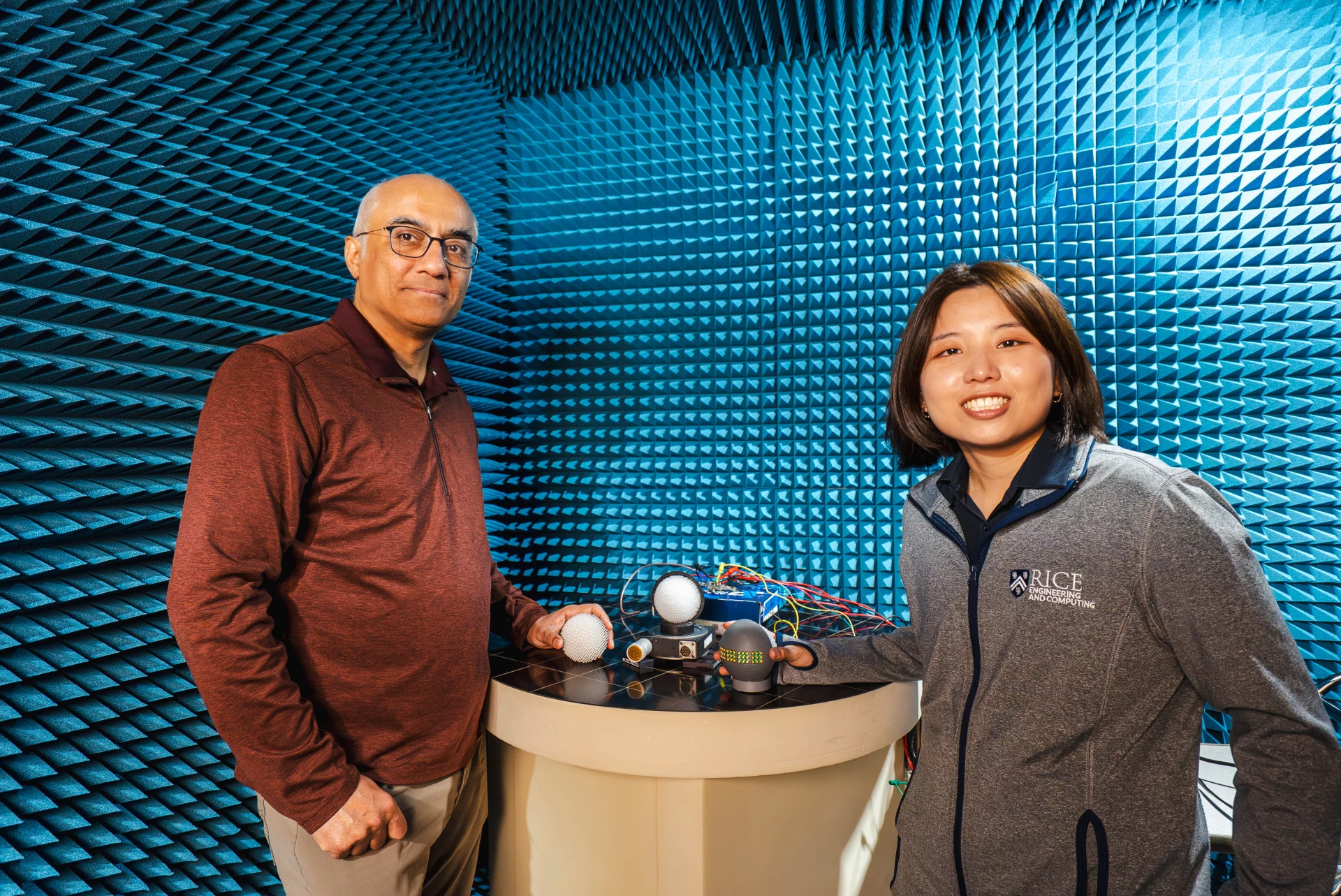
- •EyeDAR uses a 3D-printed Luneburg lens inspired by the human eye to focus incoming mmWave signals onto a ring of antennas for direction detection[1][6].
- •The device resolves target directions more than 200 times faster than traditional radar through analog processing via its lens structure[1][4][6].
- •EyeDAR communicates by modulating and reflecting existing radar waves back as binary data without generating new signals[4][6].
- •Led by postdoctoral researcher Kun Woo Cho, EyeDAR was presented at the HotMobile workshop in Atlanta on February 25-26, 2026[5][6].
🛠️ Technical Deep Dive
- •Size: Roughly the size of an orange, low-power millimeter-wave radar sensor[1][2][6].
- •Core components: 3D-printed Luneburg lens made from resin that focuses signals from any direction; ring of antennas acting as a 'retina' to detect signal landing position and determine direction[1][6].
- •Lens design: Composed of carefully arranged tiny elements that bend and channel incoming radar waves to specific antenna spots, enabling analog direction resolution over 200x faster than conventional digital radar[1][4][6].
- •Communication method: Does not transmit new waves; absorbs and reflects scattered waves from targets back to vehicle radars, modulating them into interpretable 0s and 1s[4][6].
- •Deployment: Mounted on streetlights, traffic signals, stop signs; captures reflections from blind spots like pedestrians behind buses[2][5].
🔮 Future ImplicationsAI analysis grounded in cited sources
⏳ Timeline
📎 Sources (8)
Factual claims are grounded in the sources below. Forward-looking analysis is AI-generated interpretation.
- tun.com — Roadside Eyedar Sensors Give Self Driving Cars New Vision
- engtechnica.com — Roadside Radar Expands Vision for Autonomous Vehicles
- en.eeworld.com.cn — Eic718432
- newatlas.com — Eyedar Expanded Radar Perception
- youtube.com — Watch
- news.rice.edu — Extra Set Eyes Self Driving Cars Roadside Radar Sensors Could Reduce Blind Spots
- repairerdrivennews.com — Texas University Student Designs Av Radar Touted to Enhance Sensing Accuracy
- news.rice.edu — Electrical and Computer Engineering
Weekly AI Recap
Read this week's curated digest of top AI events →
👉Related Updates


AI-curated news aggregator. All content rights belong to original publishers.
Original source: cnBeta (Full RSS) ↗
This is a summary, not the original. Read the source, or get the weekly briefing.
Weekly AI briefing
One email a week. Unsubscribe anytime.