Google Replaces Email OTPs with One-Click Credentials
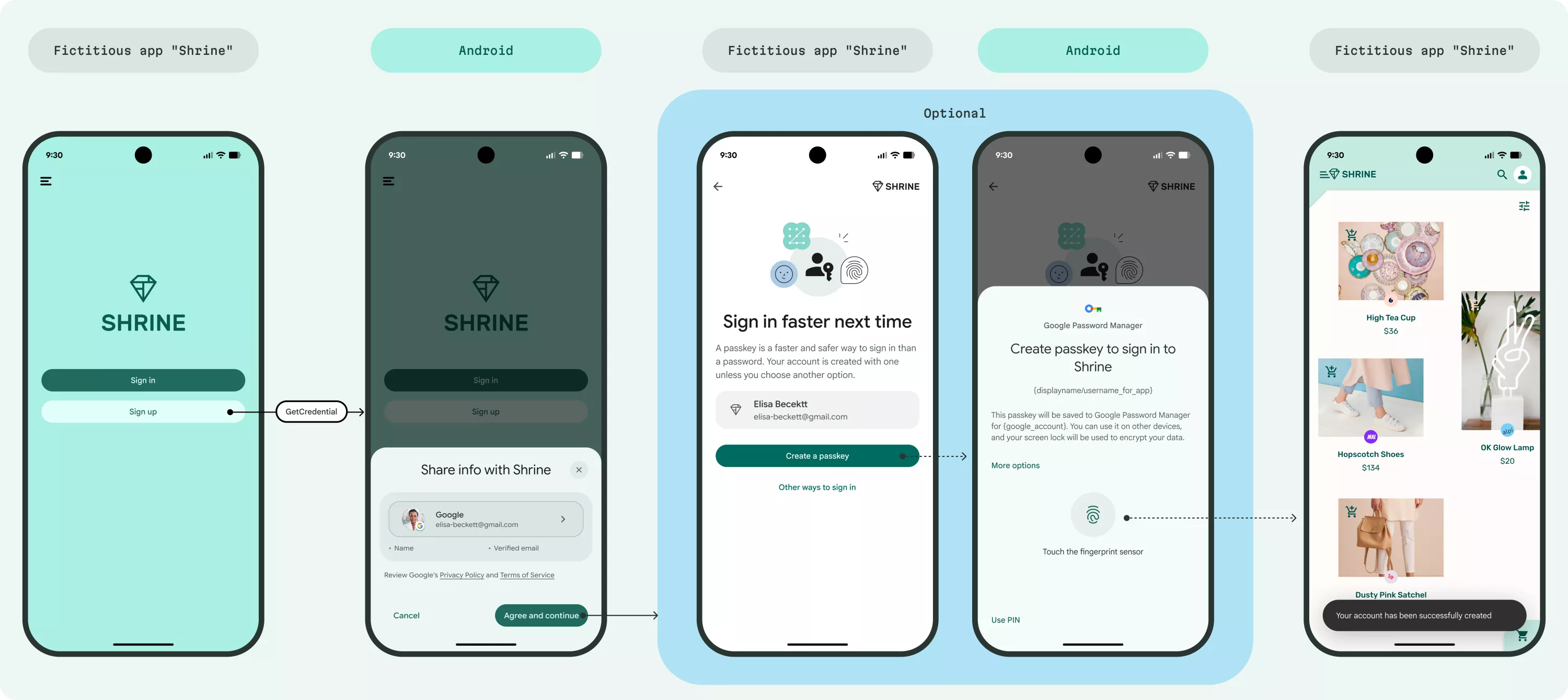
💡Faster, native Android auth cuts email OTP hassles for mobile AI apps
⚡ 30-Second TL;DR
What Changed
System-signed verified email credentials issued natively on Android
Why It Matters
Streamlines user onboarding for Android apps, improving conversion rates and security. Developers save on email infrastructure costs. Enhances native Android ecosystem integration.
What To Do Next
Integrate Android's verified email credentials API into your app's authentication flow today.
Key Points
- •System-signed verified email credentials issued natively on Android
- •Eliminates email-based OTPs and magic links for auth flows
- •Targets app developer scenarios: registration, login, recovery
- •Reduces dependency on external email verification services
🧠 Deep Insight
AI-generated analysis for this event — not the original article.
🔑 Enhanced Key Takeaways
- •The system leverages the Android Credential Manager API, allowing developers to request a user's verified email address directly from the OS without requiring the user to manually type or verify an OTP.
- •This implementation utilizes FIDO2/WebAuthn standards under the hood, ensuring that the credential exchange is cryptographically bound to the device and the specific app origin.
- •Google is positioning this as a privacy-preserving alternative to 'Sign in with Google' for scenarios where developers only need to verify email ownership rather than access full Google account profile data.
📊 Competitor Analysis▸ Show
| Feature | Google Verified Credentials | Apple Sign In | FIDO/Passkeys |
|---|---|---|---|
| Primary Mechanism | OS-level email assertion | OAuth/OIDC token | Cryptographic key pair |
| User Privacy | Email-only verification | Private Relay (masked email) | Identity-agnostic |
| Developer Effort | Low (Credential Manager API) | Medium (OAuth integration) | High (Backend infrastructure) |
🛠️ Technical Deep Dive
- •Integration occurs via the Credential Manager API, specifically utilizing the 'GetCredentialRequest' with a new 'VerifiedEmailCredential' provider type.
- •The Android OS performs an internal check against the signed-in Google account to verify email ownership before issuing a signed assertion to the requesting app.
- •The assertion returned to the app is a cryptographically signed JSON Web Token (JWT) containing the verified email address, the timestamp, and the app's package name to prevent replay attacks.
- •The system supports 'silent' credential retrieval if the user has previously granted permission, enabling a true one-click login experience.
🔮 Future ImplicationsAI analysis grounded in cited sources
⏳ Timeline
Weekly AI Recap
Read this week's curated digest of top AI events →
👉Related Updates
AI-curated news aggregator. All content rights belong to original publishers.
Original source: cnBeta (Full RSS) ↗
This is a summary, not the original. Read the source, or get the weekly briefing.
The weekly digest
One email a week. Unsubscribe anytime.