ExecuTorch Hackathon Highlights Future of On-Device AI
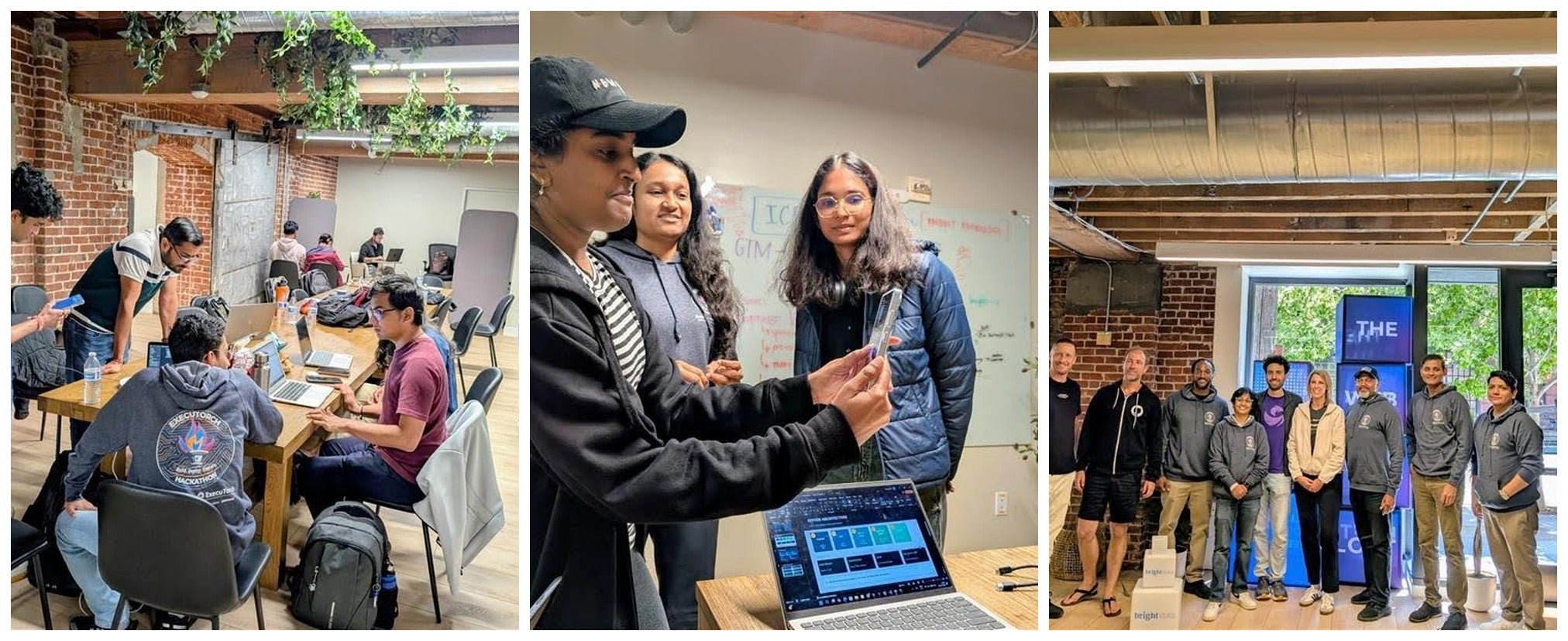
Learn how developers are optimizing PyTorch models for mobile and edge deployment using ExecuTorch.
30-Second TL;DR
What Changed
Gathered mobile developers and AI practitioners to build on-device solutions
Why It Matters
This event signals a strong industry push toward local, privacy-preserving AI execution. It encourages developers to move beyond cloud-based inference to optimize models for hardware constraints.
What To Do Next
Explore the ExecuTorch documentation to start porting your existing PyTorch models for mobile deployment.
Key Points
- •Gathered mobile developers and AI practitioners to build on-device solutions
- •Focused on practical deployment challenges for edge AI
- •Showcased the capabilities of the ExecuTorch framework for mobile environments
Deep Insight
AI-generated analysis for this event — not the original article.
Enhanced Key Takeaways
- •ExecuTorch is designed to support a wide range of hardware backends, including DSPs, NPUs, and GPUs, by leveraging a modular abstraction layer that minimizes the need for custom operator kernels.
- •The framework utilizes a ahead-of-time (AOT) compilation process that converts PyTorch models into a flatbuffer-based representation, significantly reducing binary size and memory footprint compared to the standard PyTorch runtime.
- •A core focus of the hackathon was the integration of ExecuTorch with the PyTorch 2.x compilation stack, specifically utilizing TorchDynamo to capture and optimize graphs for edge-specific execution.
- •The framework provides specific support for memory-constrained environments through static memory planning, which pre-allocates tensor buffers to avoid dynamic memory allocation during inference.
- •ExecuTorch emphasizes cross-platform portability by providing a C++ runtime that is lightweight and dependency-minimal, allowing it to be embedded in mobile OS environments like Android and iOS.
Competitor Analysis
- ExecuTorch
- PyTorch
- TensorFlow Lite
- TensorFlow
- ONNX Runtime
- Agnostic
- ExecuTorch
- Edge/Mobile
- TensorFlow Lite
- Edge/Mobile
- ONNX Runtime
- Cross-platform/Cloud/Edge
- ExecuTorch
- Flatbuffer (AOT)
- TensorFlow Lite
- TFLite (Flatbuffer)
- ONNX Runtime
- ONNX
- ExecuTorch
- High (NPU/DSP/GPU)
- TensorFlow Lite
- High (NNAPI/Delegate)
- ONNX Runtime
- High (EPs)
| Feature | ExecuTorch | TensorFlow Lite | ONNX Runtime |
|---|---|---|---|
| Primary Ecosystem | PyTorch | TensorFlow | Agnostic |
| Deployment Focus | Edge/Mobile | Edge/Mobile | Cross-platform/Cloud/Edge |
| Model Format | Flatbuffer (AOT) | TFLite (Flatbuffer) | ONNX |
| Hardware Acceleration | High (NPU/DSP/GPU) | High (NNAPI/Delegate) | High (EPs) |
Technical Deep Dive
- Uses a modular architecture consisting of a core runtime, operator library, and hardware-specific backends (delegates).
- Implements a custom memory management system that performs static analysis of the model graph to determine memory requirements before execution.
- Supports the PyTorch operator set through a tiered approach: core operators for high-performance execution and a fallback mechanism for custom or less common operators.
- Utilizes a flatbuffer-based serialization format to ensure fast model loading and minimal overhead on resource-constrained devices.
- Integrates with the PyTorch export API, allowing developers to transition from training to deployment with minimal code changes.
Future ImplicationsAI analysis grounded in cited sources
Timeline
- 2023-10ExecuTorch is officially announced as the successor to PyTorch Mobile.
- 2024-05ExecuTorch reaches Beta status, introducing improved support for LLMs and broader hardware backend compatibility.
- 2025-02ExecuTorch achieves production-ready status with expanded support for Apple Silicon and Android NNAPI.
Weekly AI Recap
Read this week's curated digest of top AI events →
AI-curated news aggregator. All content rights belong to original publishers.
Original source: PyTorch Blog ↗
This is a summary, not the original. Read the source, or get the weekly briefing.
The weekly digest
One email a week. Unsubscribe anytime.