Ex-Tencent AI Lead: China Trailing in LLM Race
Understand the leadership shifts and strategic hurdles facing China's top AI labs in the global LLM race.
30-Second TL;DR
What Changed
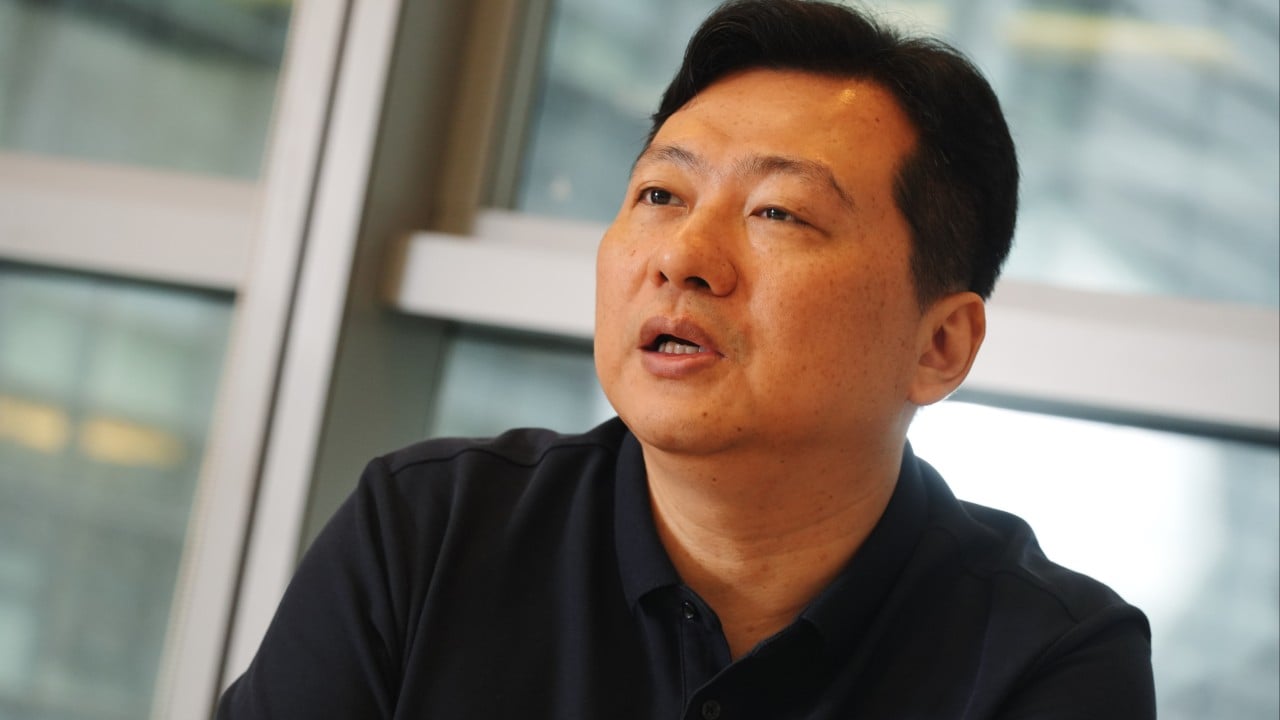
Liu Wei, a key figure in Tencent's AI strategy, has left the company.
Why It Matters
This departure signals potential internal shifts or strategic re-evaluations within Tencent's AI division. It underscores the difficulty of maintaining top-tier AI talent in a highly competitive global landscape.
What To Do Next
Monitor Tencent's upcoming AI research papers and model releases to see if the leadership change impacts their technical trajectory.
Key Points
- •Liu Wei, a key figure in Tencent's AI strategy, has left the company.
- •The Hunyuan model was launched by Tencent to compete in the generative AI space.
- •Industry experts suggest China faces structural hurdles in the global LLM race.
Deep Insight
Background and context from public sources — not the original article. 23 sources cited.
Enhanced Key Takeaways
- •Liu Wei, the former head of Tencent's Hunyuan team, departed in November 2024 to establish his own AI video generation startup, Video Rebirth, which has successfully secured $80 million in funding.
- •Tencent's Hunyuan model has been extensively integrated into over 700 of the company's internal business applications and scenarios, providing diverse capabilities including text-to-image and video generation.
- •In a strategic move to accelerate its generative AI push, Tencent launched its next-generation Hunyuan 3.0 large language model in April 2026 and is actively developing an advanced AI agent for its super-app WeChat.
- •The Chinese LLM market is embroiled in a fierce price war, with Tencent significantly cutting prices for its Hunyuan LLM in May 2024, making the lite version free and reducing standard versions by 50% to 87.5%.
- •Chinese open-source LLMs, including those from Tencent, have dramatically increased their global market share, growing from 1.2% in late 2024 to an estimated 30% by the end of 2025, surpassing the U.S. in global AI model downloads for the first time.
Competitor Analysis
- Key Features/Focus
- Multimodal (text-to-text, image, video), in-context learning, agent usability, efficient MoE architecture (Hunyuan-A13B)
- Pricing Strategy (as of May 2024)
- Lite version free; standard versions 50-87.5% price cut; Pro version 70% input price cut.
- Benchmarks/Performance Notes
- Hunyuan-A13B rivals OpenAI's o1 and DeepSeek's R1, 2.2-2.5x faster inference than larger models like Qwen3-A22B. Hunyuan-A13B-Instruct outclasses Qwen3-A22B in agentic reasoning.
- Key Features/Focus
- General-purpose LLM
- Pricing Strategy (as of May 2024)
- Lite version free.
- Benchmarks/Performance Notes
- Competes in the general chatbot market.
- Key Features/Focus
- Multilingual, multimodal (text, image, audio, video), progressive generation (Qwen-VLo), MoE architecture (Qwen 2.5-Max)
- Pricing Strategy (as of May 2024)
- Participated in price war.
- Benchmarks/Performance Notes
- Qwen 2.5-Max shows impressive performance in math, programming, and general tasks, competing with DeepSeek-V3 and GPT-4o. Qwen family surpassed 700 million downloads by Jan 2026.
- Key Features/Focus
- China's most popular AI chatbot, deeply integrated with TikTok/Douyin, personalization, multimodal
- Pricing Strategy (as of May 2024)
- Aggressive pricing (99.8% lower than OpenAI's GPT-4 for enterprises).
- Benchmarks/Performance Notes
- Over 100 million daily active users by end of 2025.
- Key Features/Focus
- Coding powerhouse (DeepSeek V3), cost-efficient, multimodal (DeepSeek V4)
- Pricing Strategy (as of May 2024)
- Aggressive pricing.
- Benchmarks/Performance Notes
- DeepSeek V3 achieves strong scores across benchmarks, excels in code generation and debugging. DeepSeek-R1 achieved high performance with fewer resources and lower production cost.
- Key Features/Focus
- General-purpose LLM, strong in voice AI
- Pricing Strategy (as of May 2024)
- Significantly reduced prices for some versions; lite version free.
- Benchmarks/Performance Notes
- Leading in voice AI race.
| Company/Model | Key Features/Focus | Pricing Strategy (as of May 2024) | Benchmarks/Performance Notes |
|---|---|---|---|
| Tencent Hunyuan | Multimodal (text-to-text, image, video), in-context learning, agent usability, efficient MoE architecture (Hunyuan-A13B) | Lite version free; standard versions 50-87.5% price cut; Pro version 70% input price cut. | Hunyuan-A13B rivals OpenAI's o1 and DeepSeek's R1, 2.2-2.5x faster inference than larger models like Qwen3-A22B. Hunyuan-A13B-Instruct outclasses Qwen3-A22B in agentic reasoning. |
| Baidu Ernie Bot | General-purpose LLM | Lite version free. | Competes in the general chatbot market. |
| Alibaba Qwen | Multilingual, multimodal (text, image, audio, video), progressive generation (Qwen-VLo), MoE architecture (Qwen 2.5-Max) | Participated in price war. | Qwen 2.5-Max shows impressive performance in math, programming, and general tasks, competing with DeepSeek-V3 and GPT-4o. Qwen family surpassed 700 million downloads by Jan 2026. |
| ByteDance Doubao | China's most popular AI chatbot, deeply integrated with TikTok/Douyin, personalization, multimodal | Aggressive pricing (99.8% lower than OpenAI's GPT-4 for enterprises). | Over 100 million daily active users by end of 2025. |
| DeepSeek | Coding powerhouse (DeepSeek V3), cost-efficient, multimodal (DeepSeek V4) | Aggressive pricing. | DeepSeek V3 achieves strong scores across benchmarks, excels in code generation and debugging. DeepSeek-R1 achieved high performance with fewer resources and lower production cost. |
| iFlyTek Spark LLM | General-purpose LLM, strong in voice AI | Significantly reduced prices for some versions; lite version free. | Leading in voice AI race. |
Technical Deep Dive
- Hunyuan-A13B: Utilizes a Mixture-of-Experts (MoE) architecture with a total of 80 billion parameters, but only 13 billion are actively used during inference, optimizing for efficiency.
- Hunyuan-T1: Described as the world's first ultra-large-scale Hybrid-Transformer-Mamba Mixture-of-Experts (MoE) model, combining Transformer and Mamba architectures for faster training and lower inference costs. It achieves 2X faster decoding than traditional Transformer models.
- Hunyuan-T1 Features: Includes dual-mode reasoning, allowing users to switch between 'slow-thinking' (chain-of-thought) and 'fast-thinking' modes, and employs a unified reward system combining self-rewarding and human preference alignment (RLHF).
- Hunyuan Image 3.0: An open-sourced text-to-image model with 80 billion total parameters and 13 billion active parameters during inference. It integrates an MoE architecture with the Transfusion method to unify multimodal understanding and generation capabilities.
- Hunyuan Image 3.0 Training: Employs a progressive training strategy that includes pre-training (low to high resolution, low to high quality), instruction tuning with chain-of-thought data, supervised fine-tuning with high-quality data, and reinforcement learning using DPO and GRPO algorithms.
- Hunyuan 3D Engine (Hunyuan3D-2.1): Features a two-stage generation pipeline for 3D assets, first creating a bare mesh and then synthesizing a texture map. It is fully open-sourced and incorporates Physically-Based Rendering (PBR) texture synthesis for photorealistic material generation.
- Inference Optimization: Tencent Hunyuan collaborated with NVIDIA to develop the AngelHCF inference engine, built on TensorRT-LLM, which has optimized inference costs by over 90% and reduced text-to-video inference time to under 2 minutes for Hunyuan models.
- Training Data Scale: Hunyuan-A13B was pretrained on an extensive dataset of 20 trillion tokens.
Future ImplicationsAI analysis grounded in cited sources
Timeline
- 2012Liu Wei received his Ph.D. in Computer Science and Electrical Engineering from Columbia University.
- 2016Liu Wei joined Tencent as a Distinguished Scientist.
- 2017Liu Wei became Director of the AI Lab Computer Vision Center and Director of Ads Multimedia AI at Tencent.
- 2024-11Liu Wei departed Tencent and founded his AI video generation startup, Video Rebirth.
- 2025-11Tencent globally launched its Hunyuan 3D creation engine.
- 2026-04Tencent launched its next-generation Hunyuan 3.0 LLM and updated its Hunyuan AI model (Hy3).
Sources (23)
Factual claims are grounded in the sources below. Forward-looking analysis is AI-generated interpretation.
Weekly AI Recap
Read this week's curated digest of top AI events →
Related Updates

AI-curated news aggregator. All content rights belong to original publishers.
Original source: SCMP Technology ↗
This is a summary, not the original. Read the source, or get the weekly briefing.
The weekly digest
One email a week. Unsubscribe anytime.