Esports Hotel Market Consolidation by Industry Giants
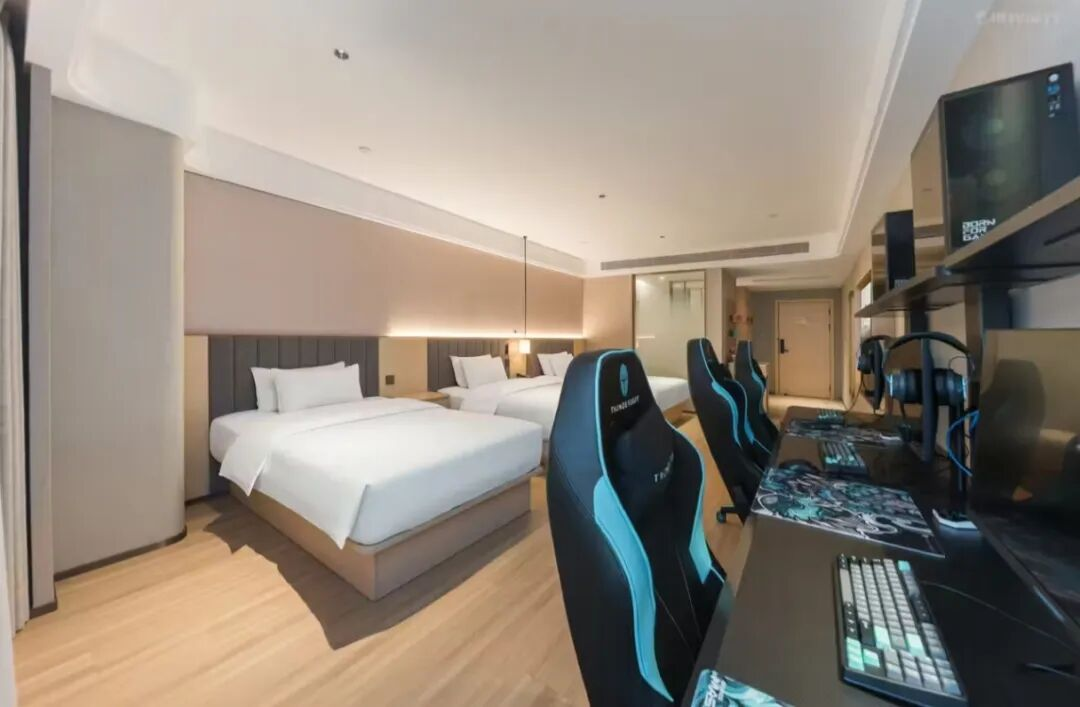
💡Learn how large-scale data and operational efficiency are reshaping the niche esports hospitality market.
⚡ 30-Second TL;DR
What Changed
Market shifting from 'grassroots' to 'giant's game' with high consolidation.
Why It Matters
Small, independent operators face extinction unless they pivot to niche, high-experience 'small but beautiful' models.
What To Do Next
If building for the hospitality sector, integrate IoT and AI-based occupancy prediction tools to optimize room utilization during off-peak hours.
Key Points
- •Market shifting from 'grassroots' to 'giant's game' with high consolidation.
- •Key success factors include supply chain bargaining power and traffic distribution capabilities.
- •Industry is moving toward 'esports + accommodation' integration to solve low-occupancy periods.
🧠 Deep Insight
AI-generated analysis for this event — not the original article.
🔑 Enhanced Key Takeaways
- •The Chinese esports hotel market has faced significant regulatory pressure regarding the admission of minors, leading to stricter ID verification systems and 'esports-only' zoning requirements.
- •Major hospitality groups are increasingly partnering with hardware manufacturers like NVIDIA and ASUS to standardize high-performance gaming rigs, reducing maintenance costs through bulk procurement.
- •Data analytics platforms are being integrated into hotel management systems to track 'gaming duration' and 'game preference' metrics, allowing for personalized marketing and dynamic pricing models.
- •The industry is shifting toward a 'membership-first' model where loyalty programs are cross-linked with gaming platforms like Steam or Tencent Games to drive recurring revenue.
- •Local governments in Tier 1 and Tier 2 Chinese cities have begun issuing specific zoning permits for esports hotels, effectively creating a barrier to entry that favors established, compliant corporate chains.
📊 Competitor Analysis▸ Show
| Feature | Independent Esports Hotels | Corporate Hospitality Chains | Gaming-Integrated Resorts |
|---|---|---|---|
| Hardware Standardization | Low (Fragmented) | High (Bulk Procurement) | Very High (Premium) |
| Pricing Strategy | Static/Low | Dynamic/Data-Driven | Premium/Experience-Based |
| Regulatory Compliance | High Risk | Low Risk (Institutional) | Low Risk (Institutional) |
| Ecosystem Integration | Minimal | Moderate (Loyalty Programs) | Deep (Tournament Hosting) |
🛠️ Technical Deep Dive
- Implementation of centralized 'Cloud Gaming' infrastructure allows hotels to reduce hardware depreciation by offloading rendering to edge servers.
- Deployment of low-latency, high-bandwidth fiber-optic networks (dedicated 10Gbps lines) to minimize packet loss during competitive play.
- Integration of IoT-based room controls that sync lighting (RGB) and climate settings with the gaming rig's status.
- Use of AI-driven predictive maintenance software to monitor GPU temperatures and fan health across thousands of distributed units.
🔮 Future ImplicationsAI analysis grounded in cited sources
⏳ Timeline
Weekly AI Recap
Read this week's curated digest of top AI events →
👉Related Updates

AI-curated news aggregator. All content rights belong to original publishers.
Original source: 虎嗅 ↗
This is a summary, not the original. Read the source, or get the weekly briefing.
Weekly AI briefing
One email a week. Unsubscribe anytime.