ESA's Euclid captures high-resolution Milky Way center
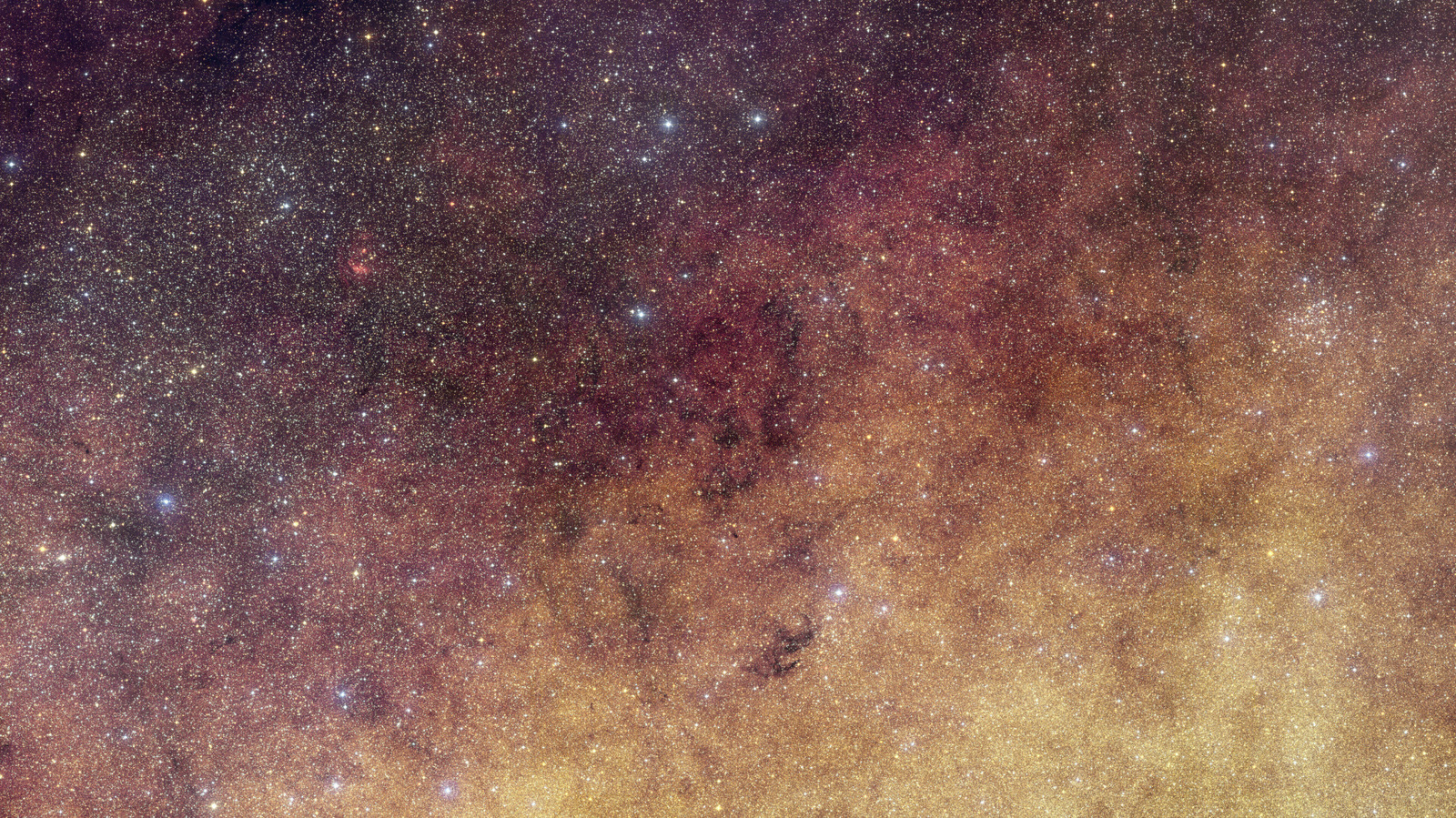
See how high-fidelity space imagery is driving new benchmarks for computer vision and pattern recognition models.
30-Second TL;DR
What Changed
Euclid telescope successfully imaged the dense star-filled center of the Milky Way.
Why It Matters
High-resolution astronomical data sets are increasingly used to train computer vision models for pattern recognition in scientific research. This imagery provides a new benchmark for deep-space image processing.
What To Do Next
Explore the ESA's open data archives to experiment with processing high-resolution astronomical imagery using your own computer vision pipelines.
Key Points
- •Euclid telescope successfully imaged the dense star-filled center of the Milky Way.
- •The mission aims to map the galactic structure with unprecedented clarity.
- •NASA is scheduled to begin a complementary mapping mission of the galactic bulge later this summer.
Deep Insight
AI-generated analysis for this event — not the original article.
Enhanced Key Takeaways
- •Euclid's observations utilize both its Visible Instrument (VIS) and Near-Infrared Spectrometer and Photometer (NISP) to penetrate the thick dust clouds obscuring the galactic center.
- •The mission is specifically designed to measure the 'dark universe,' using the galactic bulge data to refine models of dark matter distribution within the Milky Way.
- •The imagery captures millions of individual stars, allowing astronomers to perform 'galactic archaeology' by analyzing the chemical composition and motion of ancient stellar populations.
- •Euclid operates from the second Lagrange point (L2), providing a stable thermal environment essential for the high-precision infrared sensitivity required for this survey.
- •Data from this observation will be integrated into the Euclid Legacy Archive, which is intended to serve as a primary resource for the global astronomical community for the next decade.
Competitor Analysis
- ESA Euclid
- Dark Energy/Matter Mapping
- NASA Nancy Grace Roman Space Telescope
- Wide-field Infrared Survey
- James Webb Space Telescope (JWST)
- High-resolution Deep Field Imaging
- ESA Euclid
- Very Wide (0.5 sq deg)
- NASA Nancy Grace Roman Space Telescope
- Wide (0.28 sq deg)
- James Webb Space Telescope (JWST)
- Narrow (High resolution)
- ESA Euclid
- Sun-Earth L2
- NASA Nancy Grace Roman Space Telescope
- Sun-Earth L2
- James Webb Space Telescope (JWST)
- Sun-Earth L2
| Feature | ESA Euclid | NASA Nancy Grace Roman Space Telescope | James Webb Space Telescope (JWST) |
|---|---|---|---|
| Primary Goal | Dark Energy/Matter Mapping | Wide-field Infrared Survey | High-resolution Deep Field Imaging |
| Field of View | Very Wide (0.5 sq deg) | Wide (0.28 sq deg) | Narrow (High resolution) |
| Operational Orbit | Sun-Earth L2 | Sun-Earth L2 | Sun-Earth L2 |
Technical Deep Dive
- Euclid features a 1.2-meter Korsch telescope design optimized for wide-field imaging.
- The VIS instrument provides high-resolution imaging in the visible band (550-900 nm) with 0.1 arcsecond resolution.
- The NISP instrument performs photometry in three near-infrared bands (Y, J, H) and slitless spectroscopy.
- The spacecraft utilizes a cold-gas propulsion system for fine pointing and attitude control to maintain stability during long exposures.
- Data downlink is achieved via a high-gain Ka-band antenna, transmitting up to 850 gigabits of data per day.
Future ImplicationsAI analysis grounded in cited sources
Timeline
- 2023-07Euclid successfully launches from Cape Canaveral on a Falcon 9 rocket.
- 2023-11ESA releases the first full-color test images from the Euclid mission.
- 2024-05Euclid begins its primary six-year survey of the dark universe.
- 2025-05ESA releases the first major data set from the Euclid survey, covering a significant portion of the sky.
Weekly AI Recap
Read this week's curated digest of top AI events →
Related Updates

AI-curated news aggregator. All content rights belong to original publishers.
Original source: Engadget ↗
This is a summary, not the original. Read the source, or get the weekly briefing.
The weekly digest
One email a week. Unsubscribe anytime.