Engineers Bypass High Apple SSD Costs via Manual Upgrades
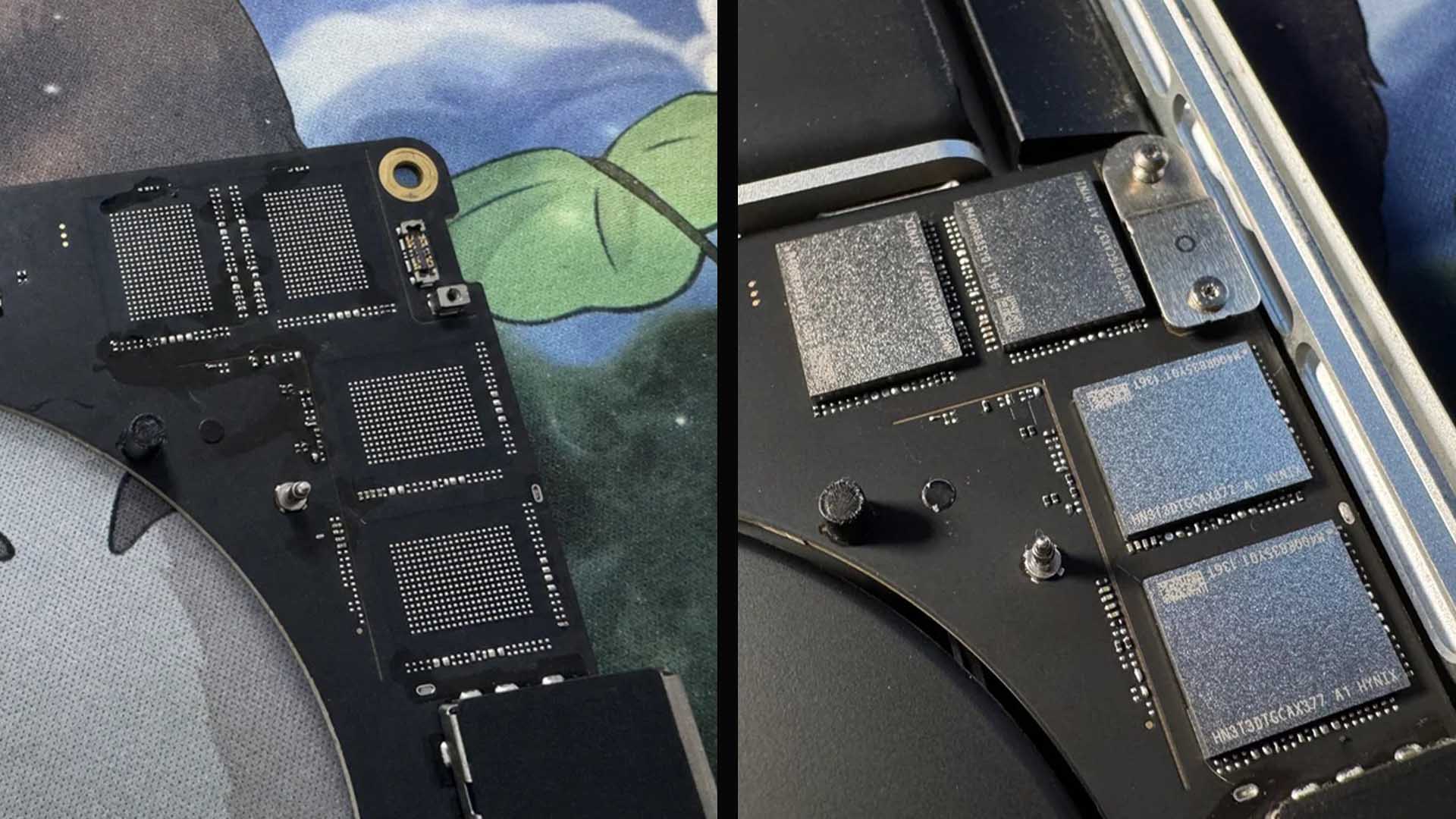
💡Rising hardware costs for AI development are forcing engineers to find creative, high-risk workarounds.
⚡ 30-Second TL;DR
What Changed
AI demand drives up global NAND flash and SSD prices
Why It Matters
Hardware costs for local AI development are rising, forcing developers to seek DIY solutions or cloud-based alternatives for large-scale data processing.
What To Do Next
Evaluate whether your local AI model training workflows require 8TB+ storage or if offloading data to high-speed cloud storage is more cost-effective.
Key Points
- •AI demand drives up global NAND flash and SSD prices
- •Apple charges ~$3,000 for 2TB to 8TB storage upgrades
- •Engineers are manually soldering NAND chips to bypass official pricing
🧠 Deep Insight
AI-generated analysis for this event — not the original article.
🔑 Enhanced Key Takeaways
- •Apple's unified memory architecture (UMA) and proprietary SSD controller integration create a hardware-locked ecosystem that complicates third-party storage upgrades beyond simple NAND replacement.
- •Manual NAND upgrades often require specialized software tools to rewrite the device's serial number and storage configuration data within the Apple Configurator or proprietary firmware flashing tools.
- •The M5 series chips utilize a new generation of high-density NAND flash that requires specific thermal management profiles, making manual soldering prone to overheating issues if not properly calibrated.
- •Third-party repair shops performing these upgrades report that Apple's latest macOS updates include 'storage verification' checks that can disable system functionality if non-authorized NAND modules are detected.
- •The high cost of official upgrades is partially attributed to Apple's 'binning' process, where only the highest-quality NAND chips are selected for high-capacity modules to ensure longevity under heavy AI-workload stress.
📊 Competitor Analysis▸ Show
| Feature | Apple (M5 Max) | Dell (Precision Workstation) | Framework Laptop |
|---|---|---|---|
| Storage Upgradability | Soldered/Proprietary | User-Replaceable M.2 | User-Replaceable M.2 |
| 8TB Upgrade Cost | ~$3,000 (Factory) | ~$800 - $1,200 (Retail) | ~$600 - $900 (Retail) |
| Performance | Proprietary Controller | Standard NVMe | Standard NVMe |
| Warranty Impact | Voids Warranty | No Impact | No Impact |
🛠️ Technical Deep Dive
- The M5 Max storage subsystem utilizes a proprietary Apple-designed controller integrated directly into the SoC, which manages NAND wear leveling and error correction.
- Manual upgrades involve desoldering the BGA (Ball Grid Array) NAND flash chips and replacing them with compatible high-density modules sourced from the secondary market.
- Post-soldering, the system requires a DFU (Device Firmware Update) mode restore to re-initialize the new NAND chips with the Apple-specific file system (APFS) and security keys.
- The process is complicated by the 'Locking' of the NAND to the specific controller's unique ID, necessitating the use of specialized programmers to spoof or update the controller's registry.
🔮 Future ImplicationsAI analysis grounded in cited sources
⏳ Timeline
Weekly AI Recap
Read this week's curated digest of top AI events →
👉Related Updates



AI-curated news aggregator. All content rights belong to original publishers.
Original source: cnBeta (Full RSS) ↗
This is a summary, not the original. Read the source, or get the weekly briefing.
Weekly AI briefing
One email a week. Unsubscribe anytime.