E-Vite Aviation secures funding for eVTOL development
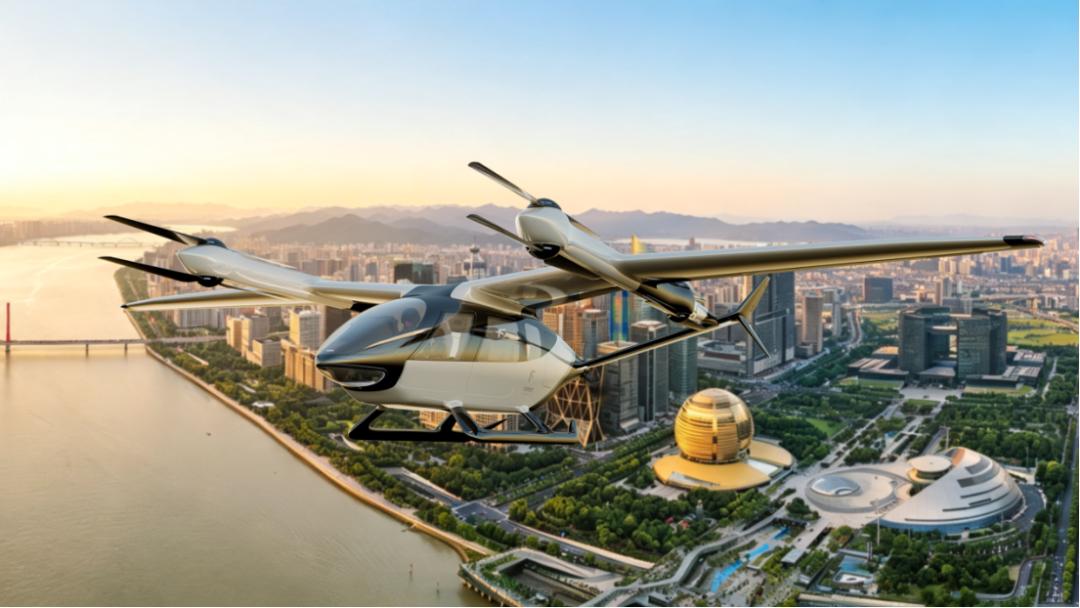
A rare look at how eVTOL startups are vertically integrating 800V power systems to solve airworthiness bottlenecks.
30-Second TL;DR
What Changed
Completed Series A+ funding to accelerate ET9 eVTOL airworthiness certification.
Why It Matters
The company's focus on self-developed propulsion and system engineering sets a benchmark for vertical integration in the Chinese eVTOL market, potentially lowering long-term operational costs.
What To Do Next
Analyze the integration of high-voltage power electronics in autonomous aerial vehicles to understand the shift toward proprietary hardware stacks in robotics.
Key Points
- •Completed Series A+ funding to accelerate ET9 eVTOL airworthiness certification.
- •Developed a proprietary 800V high-voltage electric propulsion system for 2-ton class aircraft.
- •Utilizes a modular design with over 85% carbon fiber composite materials for weight reduction.
- •Accumulated over 800 test flights to optimize flight control algorithms and structural integrity.
Deep Insight
AI-generated analysis for this event — not the original article.
Enhanced Key Takeaways
- •E-Vite Aviation has established a strategic partnership with regional municipal governments to pilot urban air mobility (UAM) routes specifically for emergency medical services (EMS) and organ transport.
- •The company's 800V propulsion system utilizes a proprietary silicon carbide (SiC) inverter architecture, which reportedly increases power density by 15% compared to traditional IGBT-based systems.
- •E-Vite has secured a provisional production certificate (PC) audit slot from the Civil Aviation Administration of China (CAAC), signaling an advanced stage in their manufacturing quality assurance process.
- •The ET9 design incorporates a distributed electric propulsion (DEP) configuration with six tilting rotors, specifically optimized for noise reduction to meet stringent urban acoustic regulations.
- •The Series A+ funding round was led by a consortium of industrial manufacturing venture capital firms, with participation from existing investors focusing on deep-tech aerospace hardware.
Competitor Analysis
- E-Vite ET9
- ~2 Tons
- Joby Aviation S4
- ~2.2 Tons
- EHang EH216-S
- ~0.6 Tons
- E-Vite ET9
- 800V SiC System
- Joby Aviation S4
- 800V Architecture
- EHang EH216-S
- Distributed Electric
- E-Vite ET9
- In-Progress (CAAC)
- Joby Aviation S4
- Type Certified (FAA)
- EHang EH216-S
- Type Certified (CAAC)
- E-Vite ET9
- Regional/EMS
- Joby Aviation S4
- Air Taxi/Commuter
- EHang EH216-S
- Autonomous Sightseeing
| Feature | E-Vite ET9 | Joby Aviation S4 | EHang EH216-S |
|---|---|---|---|
| Max Takeoff Weight | ~2 Tons | ~2.2 Tons | ~0.6 Tons |
| Propulsion | 800V SiC System | 800V Architecture | Distributed Electric |
| Certification Status | In-Progress (CAAC) | Type Certified (FAA) | Type Certified (CAAC) |
| Primary Use Case | Regional/EMS | Air Taxi/Commuter | Autonomous Sightseeing |
Technical Deep Dive
- Propulsion System: 800V high-voltage architecture utilizing Silicon Carbide (SiC) power modules to minimize thermal loss and weight.
- Structural Composition: Over 85% carbon fiber reinforced polymer (CFRP) usage, employing automated fiber placement (AFP) manufacturing techniques.
- Flight Control: Redundant fly-by-wire system with triple-modular redundancy and AI-assisted flight envelope protection.
- Battery Management: Integrated liquid-cooled battery pack with high C-rate discharge capability for vertical takeoff and landing phases.
Future ImplicationsAI analysis grounded in cited sources
Timeline
- 2023-05E-Vite Aviation founded with a focus on high-voltage eVTOL propulsion.
- 2024-02Successful maiden flight of the ET9 sub-scale prototype.
- 2025-01Completion of full-scale ET9 structural integration and ground testing.
- 2025-11Accumulation of 500+ test flights and initiation of formal CAAC airworthiness engagement.
- 2026-08Completion of Series A+ funding round to support certification acceleration.
Weekly AI Recap
Read this week's curated digest of top AI events →
AI-curated news aggregator. All content rights belong to original publishers.
Original source: 36氪 ↗
This is a summary, not the original. Read the source, or get the weekly briefing.
The weekly digest
One email a week. Unsubscribe anytime.