Duolingo’s Growth Slowdown Exposes Its AI Challenge
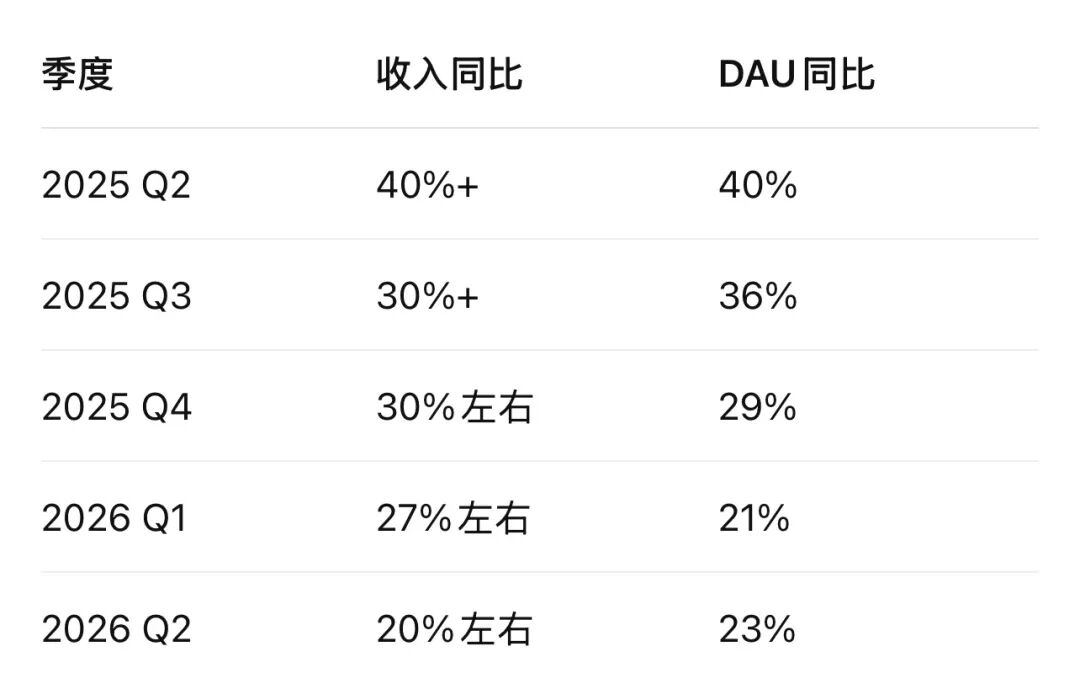
💡Duolingo’s numbers reveal why engagement alone may not protect an AI education product from ChatGPT.
⚡ 30-Second TL;DR
What Changed
Q2 2026 revenue grew 18.3% year over year, while daily active users grew 23% to 58.7 million.
Why It Matters
This is relevant to AI builders because it frames education products around outcome verification rather than engagement alone. It also highlights the strategic risk that general-purpose models can commoditize narrow AI tutoring features unless products own differentiated data, workflows, and evaluation.
What To Do Next
Prototype an AI learning loop that combines learner diagnosis, personalized planning, model tutoring, and measurable post-test evaluation before adding more gamification.
Key Points
- •Q2 2026 revenue grew 18.3% year over year, while daily active users grew 23% to 58.7 million.
- •The company’s gamification drives learning retention but does not clearly prove measurable learning outcomes.
- •ChatGPT, Doubao, and other general-purpose AI models can increasingly provide broader and faster language-learning assistance.
- •Duolingo may need an AI-driven learning loop covering diagnosis, planning, instruction, supervision, and evaluation.
🧠 Deep Insight
AI-generated analysis for this event.
🔑 Enhanced Key Takeaways
- •Duolingo has increasingly shifted its R&D focus toward 'Duolingo Max,' a subscription tier powered by GPT-4o, which introduces features like 'Explain My Answer' and 'Roleplay' to address criticisms regarding pedagogical depth.
- •Market analysts have noted a 'saturation effect' in Duolingo's core North American and European markets, forcing the company to pivot toward emerging markets where monetization per user is significantly lower.
- •The company has integrated proprietary 'Birdbrain' AI technology, which uses item response theory to dynamically adjust lesson difficulty based on individual user performance patterns.
- •Duolingo's recent financial reports indicate a strategic increase in marketing spend to combat churn, which has compressed operating margins despite the growth in paid subscribers.
- •Internal data suggests that while gamification metrics like 'streaks' remain high, the correlation between streak length and standardized language proficiency test scores remains a point of contention for institutional investors.
📊 Competitor Analysis▸ Show
| Feature | Duolingo | ChatGPT (OpenAI) | Doubao (ByteDance) |
|---|---|---|---|
| Core Model | Gamified/Structured | General LLM/Conversational | General LLM/Conversational |
| Pricing | Freemium/Subscription | Freemium/Subscription | Freemium/Usage-based |
| Learning Path | Highly Structured | User-Defined | User-Defined |
| Feedback Loop | Automated/Fixed | Contextual/Adaptive | Contextual/Adaptive |
🛠️ Technical Deep Dive
- Duolingo utilizes a proprietary AI engine named Birdbrain, which leverages Item Response Theory (IRT) to estimate user ability and item difficulty in real-time.
- The platform employs a multi-model architecture, integrating OpenAI's GPT-4o for high-level conversational tasks while maintaining a custom-built, lightweight neural network for core grammar and vocabulary exercises to reduce latency.
- The system architecture relies on a massive data pipeline that processes millions of daily interactions to retrain its spaced-repetition algorithms, optimizing for long-term retention rather than immediate accuracy.
🔮 Future ImplicationsAI analysis grounded in cited sources
⏳ Timeline
Weekly AI Recap
Read this week's curated digest of top AI events →
👉Related Updates


AI-curated news aggregator. All content rights belong to original publishers.
Original source: 虎嗅 ↗