China Cities Race to Import Global Universities
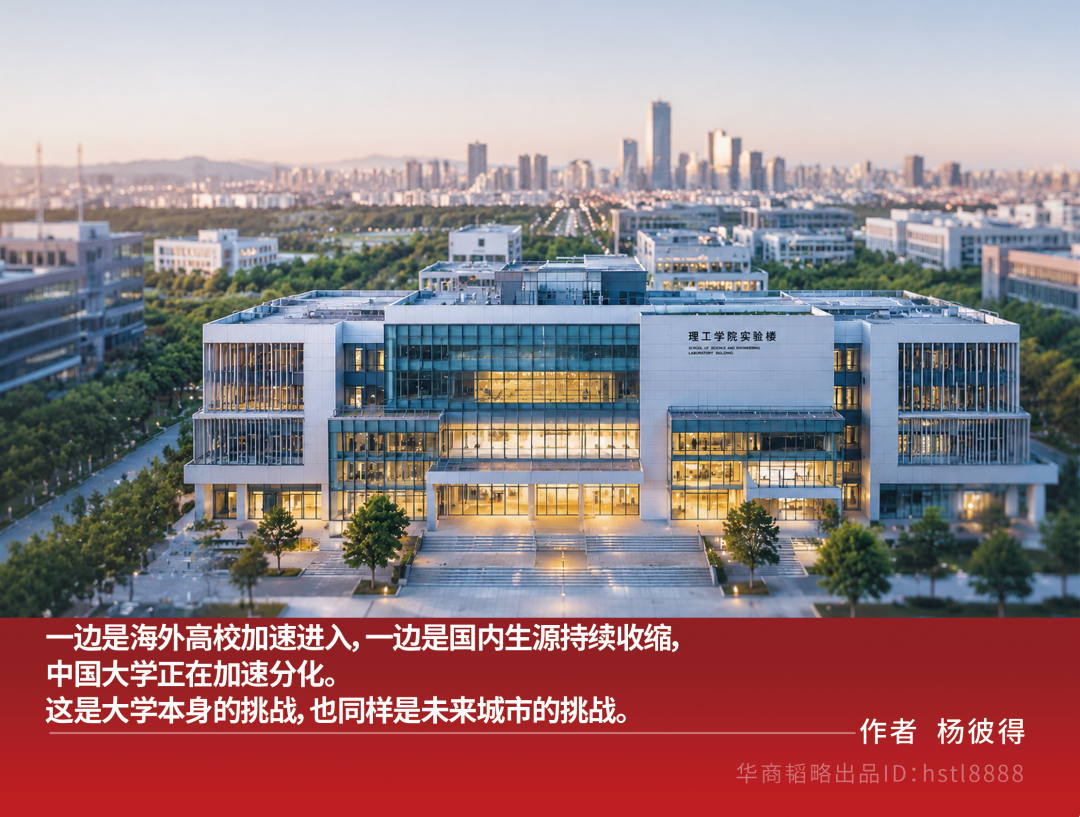
💡China’s new university partnerships may reshape where AI talent and robotics research are produced.
⚡ 30-Second TL;DR
What Changed
The Ministry of Education approved 86 new institutions and 133 new programs, nearly double the number from the same period last year.
Why It Matters
For AI companies and founders, this expansion could create more localized talent pipelines and industry-connected research capacity outside Beijing and Shanghai. Cities may increasingly use international universities to accelerate robotics, AI, and advanced-manufacturing ecosystems rather than relying solely on subsidies to attract existing talent.
What To Do Next
Map the new AI and robotics joint institutions in your target Chinese market and approach their industry committees for pilot projects or hiring partnerships.
Key Points
- •The Ministry of Education approved 86 new institutions and 133 new programs, nearly double the number from the same period last year.
- •About 50 new units involve 30 UK universities, while cooperation is expanding to France, Singapore, Russia, Spain, Hungary, and other regions.
- •Roughly two-thirds of new programs are engineering-focused, covering AI, data science, intelligent manufacturing, and biomedical technologies.
- •New institutions are spreading to industrial cities such as Shenzhen, Suzhou, Foshan, and Ningbo, not just traditional higher-education hubs.
- •Industry-linked models are emerging, including corporate-designed curricula, robot-based training, and university research platforms for local manufacturers.
🧠 Deep Insight
AI-generated analysis for this event.
🔑 Enhanced Key Takeaways
- •The Chinese Ministry of Education has shifted its approval criteria to prioritize 'New Engineering' (新工科) disciplines, explicitly linking institutional accreditation to regional industrial clusters' specific labor shortages.
- •Financial models for these partnerships have evolved from simple tuition-sharing to 'Joint Innovation Labs' where foreign universities receive equity-like stakes in commercialized IP generated within Chinese industrial zones.
- •Recent policy adjustments allow for 'flexible faculty appointments,' enabling researchers from top-tier global institutions to maintain dual-employment status, effectively bypassing previous residency restrictions.
- •The surge in UK-China partnerships is partially attributed to the 'UK-China Higher Education Cooperation Framework,' which provides streamlined visa processing for academic staff in STEM fields.
- •Local municipal governments in cities like Foshan and Ningbo are offering 'land-for-talent' subsidies, providing free campus infrastructure to foreign universities that commit to a minimum 10-year operational tenure.
🔮 Future ImplicationsAI analysis grounded in cited sources
⏳ Timeline
Weekly AI Recap
Read this week's curated digest of top AI events →
👉Related Updates

AI-curated news aggregator. All content rights belong to original publishers.
Original source: 虎嗅 ↗