Dropping Flock Cameras Doesn’t End Surveillance
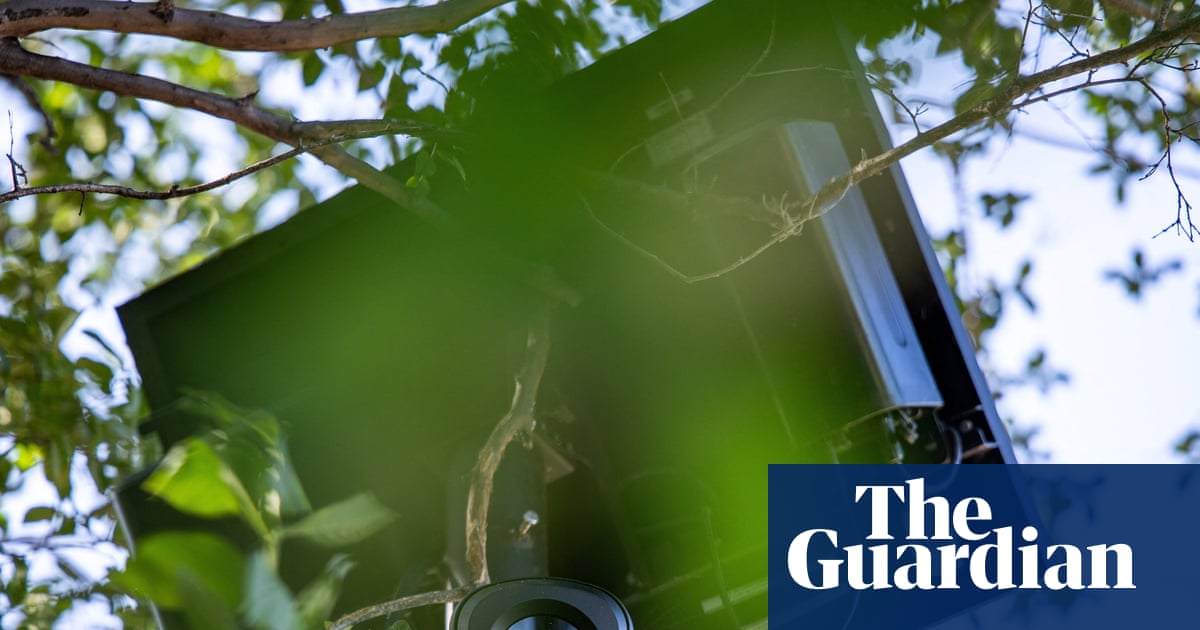
💡Replacing an AI surveillance vendor may change the name, not the monitoring or governance risks.
⚡ 30-Second TL;DR
What Changed
Longmont allowed its contract with Flock Safety to lapse after activist opposition.
Why It Matters
For AI and computer-vision builders, the story underscores that surveillance deployments are governed by procurement and policy as much as by model capability. Vendors may face stronger requirements around retention, data sharing, transparency, and public consent.
What To Do Next
Before deploying an ALPR or vision system, document retention, cross-agency sharing, audit logs, and opt-out requirements in the vendor evaluation checklist.
Key Points
- •Longmont allowed its contract with Flock Safety to lapse after activist opposition.
- •The city later approved another vendor to install automated license plate readers.
- •The broader concern is vendor substitution rather than the removal of automated surveillance itself.
🧠 Deep Insight
Background and context from public sources — not the original article. 27 sources cited.
🔑 Enhanced Key Takeaways
- •Longmont City Council unanimously approved Axon as the new automated license plate reader (ALPR) vendor after letting the Flock Safety contract lapse.
- •Concerns leading to Longmont's decision to drop Flock Safety included potential data sharing with Immigration and Customs Enforcement (ICE) and issues with transparency and compliance with state law.
- •Axon's ALPR system for Longmont will initially have no automatic data sharing with outside agencies, and Longmont will retain ownership of its data, with images deleted after 30 days, contrasting with Flock's previous opt-out data sharing model.
- •Flock Safety recently announced new privacy measures, including reducing its standard data retention window from 30 days to seven days and requiring mandatory case codes for law enforcement searches.
- •At least 56 municipalities have deactivated, canceled, or rejected contracts with Flock Safety in 2026 due to privacy concerns, with other cities like Denver also switching from Flock to Axon.
📊 Competitor Analysis▸ Show
| Vendor | Key Features | Pricing Model | Data Retention (Default) | Data Sharing Model | Other Notes |
|---|---|---|---|---|---|
| Flock Safety | ALPR, "Vehicle Fingerprint" (make, model, color, etc.), gunfire detection, mass video surveillance | Subscription-based, ~$2,400-$3,000 per camera annually (leasing) | 7 days (recently reduced from 30 days) | Opt-out (previously, now with more controls) | Operates in 5,000+ communities, 20 billion scans/month (as of 2025) |
| Axon | ALPR, integrates with existing Axon ecosystem (body cameras, evidence management), AI-powered | Scales with deployment size (e.g., $300K-$500K for 50+ cameras over multi-year terms) | 30 days (Longmont contract), can be less | Opt-in (explicitly grant access agency by agency) | Long-standing relationship with many police departments |
| Motorola Solutions (Vigilant) | ALPR, largest commercially operated ALPR database (100+ billion plate reads), National Vehicle Location Service (NVLS) | Not explicitly detailed, but enterprise-grade | Not explicitly detailed | Shared network (NVLS) | Best for enterprise and statewide networks |
| Rekor | ALPR, mobile ALPR (REKOR Go app), software-only camera-agnostic systems | Not explicitly detailed | Not explicitly detailed | Not explicitly detailed | Best for highway, transit, and open-road ALPR |
| Genetec (AutoVu) | ALPR, unified VMS and ALPR integration | Not explicitly detailed | Not explicitly detailed | Not explicitly detailed | Enterprise choice for cities already running Genetec Security Center |
| Surveillant | LPR and full video analytics on existing ONVIF/RTSP cameras | Not explicitly detailed | Keeps footage private, not pooled | Private, not shared network | Software-based, no proprietary hardware |
| PLACA.AI GuardCam | ALPR, solar-powered, 4G LTE, wire-free | One-time purchase of $999 per camera (hardware ownership) | Not explicitly detailed | Not explicitly detailed | Claims 40% savings vs. Flock over 3 years for HOAs |
🛠️ Technical Deep Dive
- ALPR systems typically consist of high-speed cameras (often with an infrared filter), a processor with optical character recognition (OCR) software, application software to compare plates to databases, and a user interface.
- These systems capture a contextual photo of the vehicle, an image of the license plate, the geographic coordinates of where the image was captured, and the date and time of the recording.
- Flock Safety cameras are solar-powered and use LTE connectivity for data upload, eliminating the need for extra wiring.
- Flock's "Vehicle Fingerprint" technology captures details beyond just license plates, including vehicle type, make, color, license plate state, and other identifiers like bumper stickers or roof racks.
- The cameras are designed to capture license plates up to 100 feet away, covering up to two lanes of traffic per camera, with a claimed 97% capture rate.
- Flock Safety utilizes AI-powered computer vision and machine learning to analyze recordings and categorize data.
- LPR cameras require high accuracy, needing to capture clear images of moving vehicles in approximately 20 milliseconds or less, while accounting for factors like resolution, headlight compensation (glare reduction), dynamic range, and shutter speeds.
- Flock's data is fed into a centralized database called "Flock OS," which allows for local and national searches.
- Flock was developing a product called Nova, a "public safety data platform" intended to supplement ALPR data with information from public records and commercially available data to track individuals, though the company later decided not to include data from breaches.
🔮 Future ImplicationsAI analysis grounded in cited sources
⏳ Timeline
📎 Sources (27)
Factual claims are grounded in the sources below. Forward-looking analysis is AI-generated interpretation.
- reddit.com
- yellowscene.com
- theguardian.com
- boulderreportinglab.org
- 9news.com
- yellowscene.com
- foxbusiness.com
- wbrz.com
- aclu.org
- facebook.com
- wikipedia.org
- contrary.com
- businessmodelcanvastemplate.com
- placa.ai
- civiciq.com
- surveillant.ai
- aviseanalytics.com
- theiacp.org
- pathlms.com
- cehrp.org
- pelco.com
- longmontleader.com
- coloradosun.com
- oecd.ai
- facebook.com
- reddit.com
- business-humanrights.org
Weekly AI Recap
Read this week's curated digest of top AI events →
👉Related Updates

AI-curated news aggregator. All content rights belong to original publishers.
Original source: The Guardian Technology ↗
This is a summary, not the original. Read the source, or get the weekly briefing.
Weekly AI briefing
One email a week. Unsubscribe anytime.