Donut Robotics unveils 130cm humanoid robot cinnamon mini
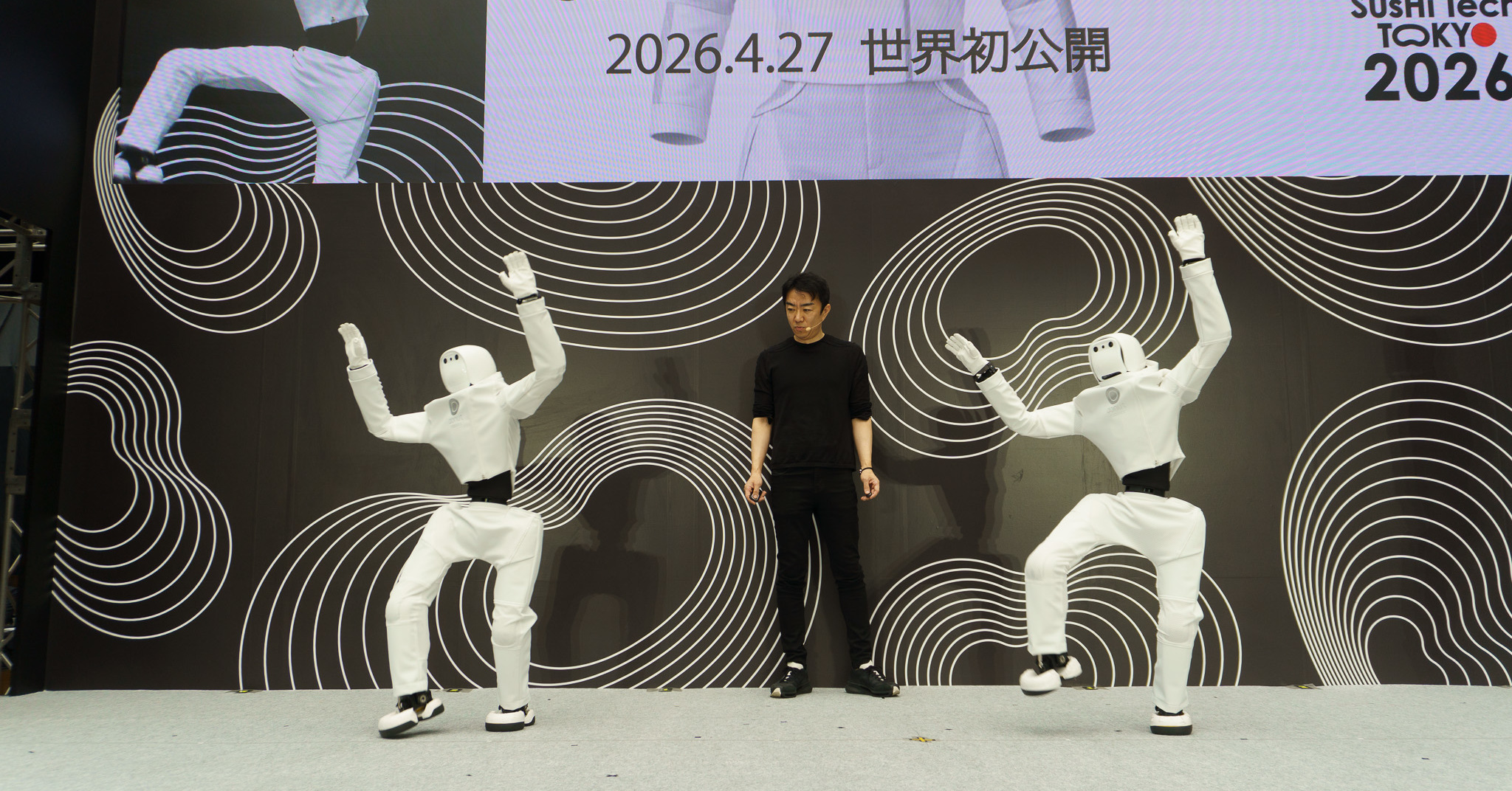
A key move in the Japanese robotics industry to shift from imported hardware to fully domestic humanoid production.
30-Second TL;DR
What Changed
Donut Robotics introduced the 130cm 'cinnamon mini' humanoid robot at SusHi Tech Tokyo 2026.
Why It Matters
This move highlights the growing trend of Japanese robotics firms seeking to localize supply chains for embodied AI, potentially shifting the competitive landscape for small-scale humanoid platforms.
What To Do Next
Monitor Donut Robotics' upcoming roadmap announcement to understand their specific hardware-software integration strategy for domestic production.
Key Points
- •Donut Robotics introduced the 130cm 'cinnamon mini' humanoid robot at SusHi Tech Tokyo 2026.
- •The current model utilizes Chinese hardware as a base for development.
- •The company is actively working on a roadmap to transition to fully domestic Japanese manufacturing.
Deep Insight
Background and context from public sources — not the original article. 14 sources cited.
Enhanced Key Takeaways
- •Donut Robotics' humanoid robots, including the 'cinnamon mini', incorporate a "Silent Gesture Control" system, enabling intuitive non-verbal communication through hand and finger movements, which is particularly beneficial in noisy industrial settings or quiet environments.
- •The company is actively developing a proprietary Vision-Language-Action (VLA) AI system to facilitate autonomous behavior by interpreting visual, linguistic, and contextual cues for intelligent task execution.
- •Donut Robotics has a history of developing communication robots and smart masks (C-Mask) with translation capabilities, predating its entry into the full-sized humanoid robot market, showcasing an evolution in its product strategy.
- •The broader Japanese humanoid robot market, which Donut Robotics is targeting, is projected for substantial growth, valued at USD 0.22 billion in 2025 and forecast to reach USD 3.99 billion by 2034, driven by severe labor shortages and government support for robotics innovation.
- •Donut Robotics, founded in 2014 and incorporated in 2016, has garnered international attention, including being selected for the Haneda Airport Robot Project and featured in publications like The New York Times and TIME magazine.
Technical Deep Dive
- Height: 'cinnamon mini' is 130cm (as per article). Donut Robotics' 'Cinnamon 1' is 170cm (5.6ft).
- Weight: 'Cinnamon 1' is approximately 65-70kg (143 lbs).
- Locomotion: Bipedal locomotion system.
- Control System: Features "Silent Gesture Control," allowing operators to command the robot using hand and finger movements, suitable for environments where voice commands are impractical.
- AI Integration: Utilizes Vision-Language Model (VLM) for understanding images and language, and is developing a unique Vision-Language-Action (VLA) AI system for autonomous behavior, interpreting visual, linguistic, and contextual cues to act appropriately.
- Translation Capabilities: Integrated 8-language real-time translation (Japanese, English, Chinese, Korean, Vietnamese, Indonesian, Spanish, French).
- Other Features: Advanced facial recognition for personalized interaction, noise-optimized translation for industrial environments, and emergency assistance capabilities.
- Hardware Origin: Currently based on an overseas OEM platform/Chinese hardware, with a stated goal for future full domestic Japanese manufacturing.
Future ImplicationsAI analysis grounded in cited sources
Timeline
- 2014Donut Robotics founded in a garage in Kitakyushu City, Fukuoka Prefecture.
- 2016Donut Robotics formally incorporated.
- 2017Selected for the Haneda Airport Robot Project.
- 2020-06Debuted the C-Mask, a smart mask with translation capabilities, adapting technology from its airport guides.
- 2024Awarded the "EY innovative startup" award in Japan.
- 2025Announced Cinnamon 1, a bipedal humanoid robot.
- 2026-01Donut Robotics officially unveiled Cinnamon 1, highlighting its Silent Gesture Control.
- 2026-04Debuted 'cinnamon mini' at SusHi Tech Tokyo 2026 (event held April 27-29, 2026).
Sources (14)
Factual claims are grounded in the sources below. Forward-looking analysis is AI-generated interpretation.
Weekly AI Recap
Read this week's curated digest of top AI events →
Related Updates
AI-curated news aggregator. All content rights belong to original publishers.
Original source: ITmedia AI+ (日本) ↗
This is a summary, not the original. Read the source, or get the weekly briefing.
The weekly digest
One email a week. Unsubscribe anytime.