Dognosis Trains Dogs and AI to Detect Cancer
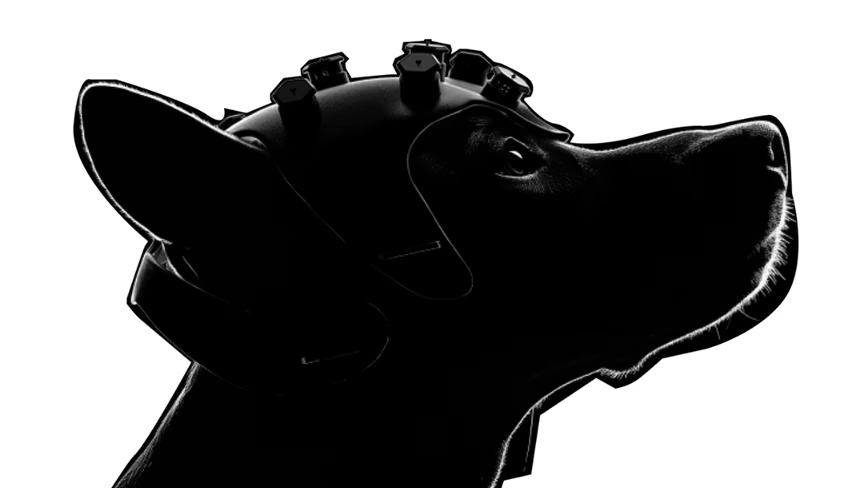
💡See how canine olfaction and AI are being combined for non-invasive cancer prescreening—and where the evidence ends.
⚡ 30-Second TL;DR
What Changed
Dognosis uses trained dogs to analyze odors associated with cancer.
Why It Matters
If validated, the approach could support low-cost, non-invasive cancer prescreening. However, practitioners should treat the current claims cautiously because trial-stage detection performance does not establish clinical reliability.
What To Do Next
Review Dognosis’s trial protocol and reported sensitivity and specificity before considering any clinical-AI partnership or pilot.
Key Points
- •Dognosis uses trained dogs to analyze odors associated with cancer.
- •AI is paired with canine detection to identify potential cancer signals in breath samples.
- •The technology remains in prescreening trials and should not be treated as a clinical diagnosis.
🧠 Deep Insight
AI-generated analysis for this event.
🔑 Enhanced Key Takeaways
- •Dognosis utilizes a proprietary 'Bio-Sensor' approach that integrates canine olfactory capabilities with electronic nose (e-nose) sensors to create a hybrid detection system.
- •The company focuses specifically on early-stage detection for high-prevalence cancers, including lung, breast, and oral cancers, by identifying volatile organic compounds (VOCs) in exhaled breath.
- •Dognosis has established partnerships with regional hospitals and research institutions in India to conduct clinical validation studies and gather longitudinal data for their AI models.
- •The AI component of the system is designed to reduce false positives by filtering out environmental noise and non-cancerous VOCs that might otherwise trigger a canine alert.
- •The startup operates under a 'One Health' framework, emphasizing the synergy between animal intelligence and machine learning to improve accessibility to cancer screening in resource-constrained settings.
📊 Competitor Analysis▸ Show
| Feature | Dognosis | Canary Health Technologies | Owlstone Medical |
|---|---|---|---|
| Detection Method | Canine + AI Hybrid | Electronic Nose (e-nose) | Breath Biopsy (GC-MS) |
| Primary Focus | Prescreening/Public Health | Early Cancer Detection | Precision Medicine/Research |
| Clinical Status | Trial/Prescreening | Clinical Validation | Commercial/Clinical |
| Pricing | Not Public | Not Public | High (B2B/Research) |
🛠️ Technical Deep Dive
- Canine Olfactory Integration: Dogs are trained using positive reinforcement to identify specific VOC profiles associated with malignant cells.
- AI Model Architecture: Employs supervised machine learning algorithms to process data from gas sensors that mimic the canine olfactory response.
- Data Normalization: Breath samples are collected in specialized containers to stabilize VOC concentrations before analysis by both biological and digital sensors.
- Signal Processing: The system uses pattern recognition software to map the chemical signatures detected by the dogs against a database of known cancer-related biomarkers.
🔮 Future ImplicationsAI analysis grounded in cited sources
⏳ Timeline
Weekly AI Recap
Read this week's curated digest of top AI events →
👉Related Updates


AI-curated news aggregator. All content rights belong to original publishers.
Original source: The Next Web (TNW) ↗