DLSS 5 Runs on Apple Silicon—But at 2.32 FPS

💡See how far Apple Silicon can run neural rendering—and why missing FP8 hardware causes a 240 ms latency penalty.
⚡ 30-Second TL;DR
What Changed
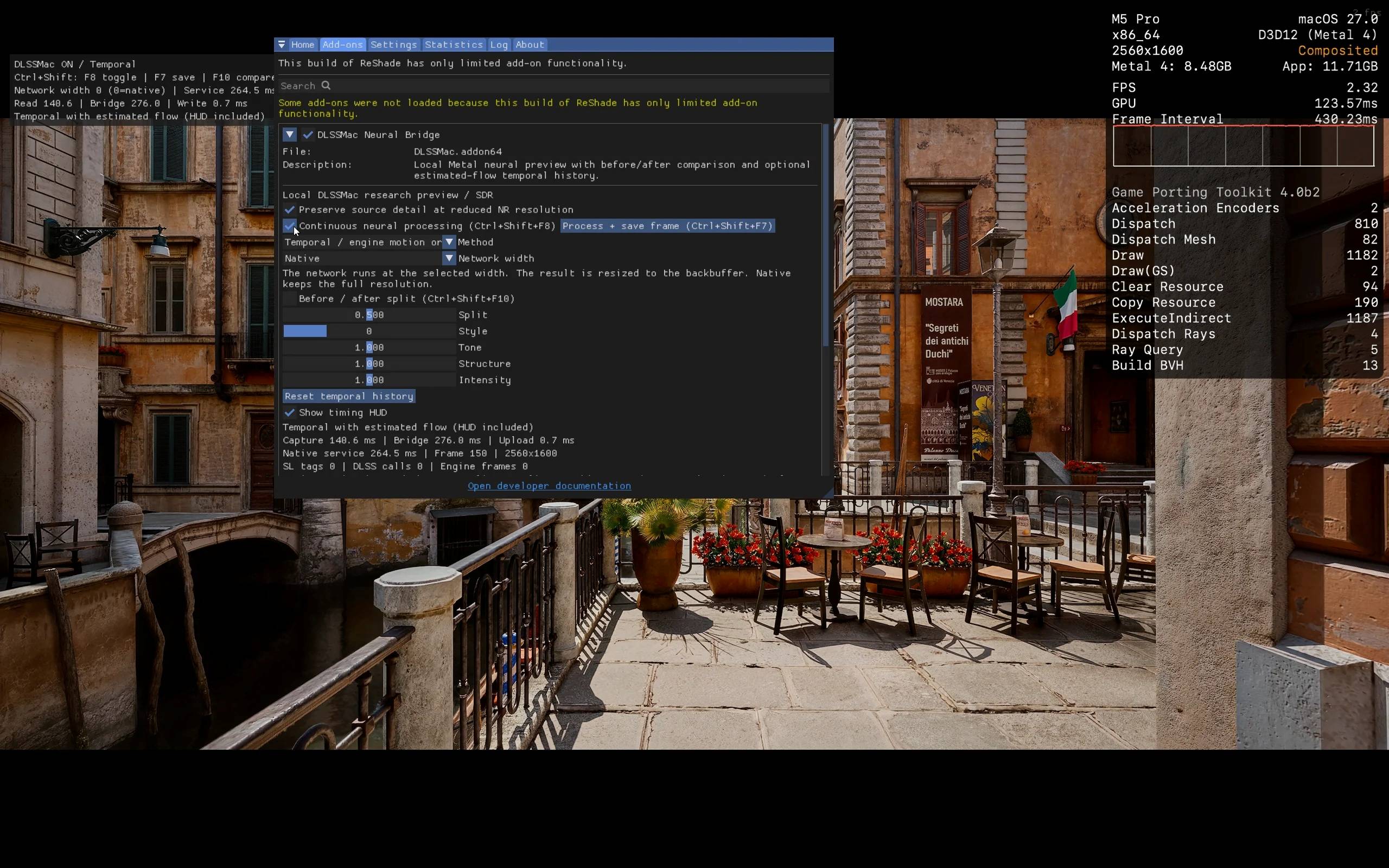
DLSS 5 was ported to Apple Silicon by developers using a Metal backend and ReShade.
Why It Matters
The port demonstrates that advanced neural rendering can be adapted to Apple’s GPU stack, but the current performance makes it impractical for real-time gaming. For AI developers, it highlights the importance of native low-precision hardware support when deploying neural rendering workloads.
What To Do Next
Benchmark your Apple Silicon neural-rendering prototype with Metal Performance HUD and compare FP16 versus FP8-capable NVIDIA hardware before planning a production deployment.
Key Points
- •DLSS 5 was ported to Apple Silicon by developers using a Metal backend and ReShade.
- •On an M5 Pro with a 16-core GPU, surface lighting, ambient occlusion, and depth perception improved.
- •1440p performance dropped to 2.32 FPS, producing 240 ms of input latency.
- •Limited dedicated FP8 hardware forced parts of the neural workload to run through FP16.
- •The M5 Pro reportedly delivers 26 TOPS of FP8 performance versus about 105 TOPS for an RTX 5050.
Weekly AI Recap
Read this week's curated digest of top AI events →
👉Related Updates
AI-curated news aggregator. All content rights belong to original publishers.
Original source: IT之家 ↗
This is a summary, not the original. Read the source, or get the weekly briefing.
Weekly AI briefing
One email a week. Unsubscribe anytime.