DJI’s Autonomous Flight Bet Enters Mid-Game
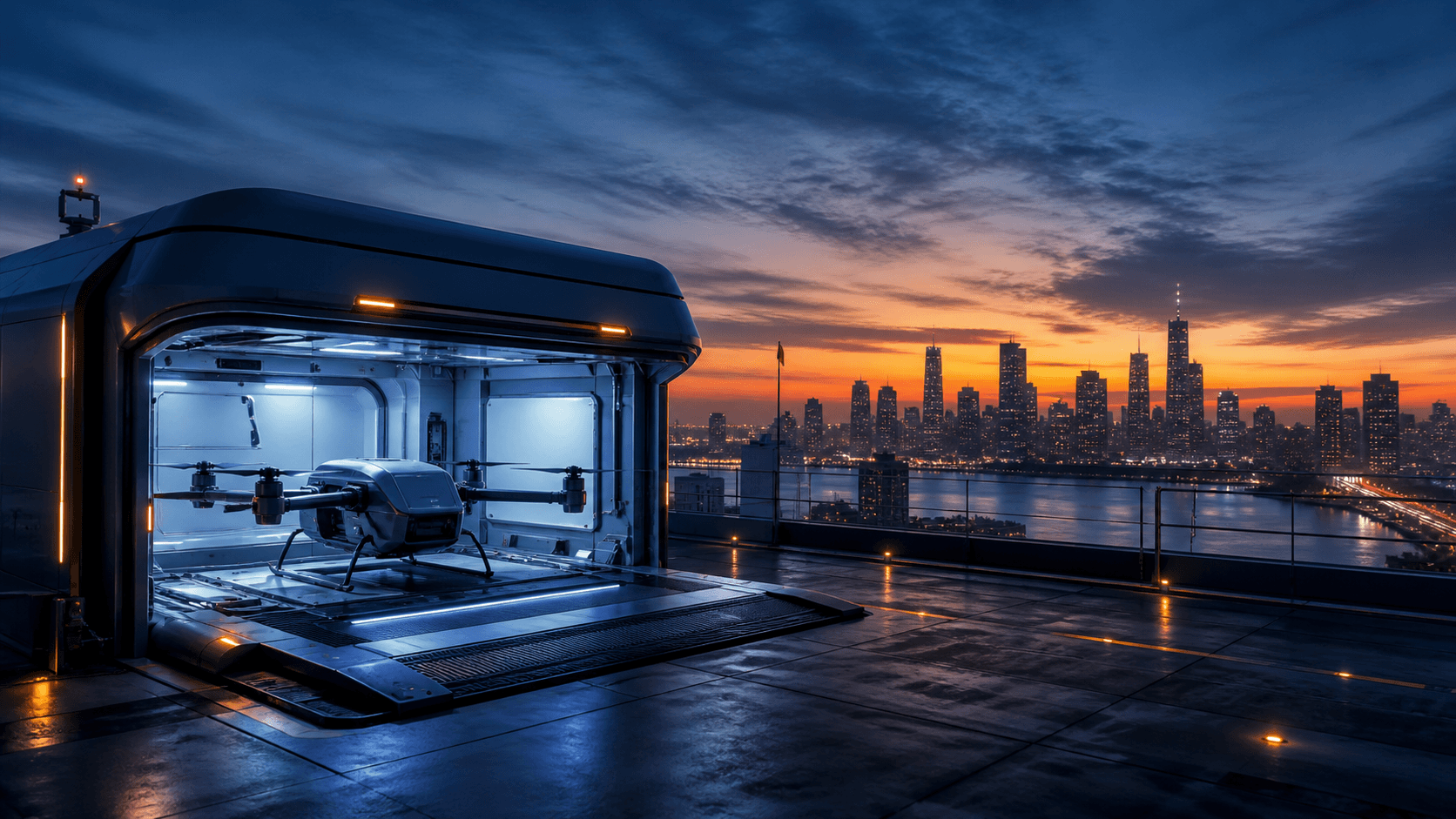
DJI’s 8 million autonomous sorties reveal what scaled real-world aerial AI infrastructure looks like.
30-Second TL;DR
What Changed
DJI has conducted more than 8 million autonomous sorties.
Why It Matters
For AI and robotics practitioners, the figures illustrate how autonomous systems can transition from demonstrations to large-scale field operations. The main opportunity is not only onboard autonomy, but also the infrastructure required to deploy, monitor, and service fleets reliably.
What To Do Next
Evaluate DJI’s autonomous-flight platform and rooftop infrastructure as a reference architecture for fleet deployment, focusing on remote operations, failover, and maintenance workflows.
Key Points
- •DJI has conducted more than 8 million autonomous sorties.
- •Its low-altitude operations now span over 80 countries.
- •Rooftop-based infrastructure is emerging as a key enabler for autonomous aerial services.
- •The company’s progress suggests China’s low-altitude economy is moving from experimentation toward scaled deployment.
Deep Insight
AI-generated analysis for this event — not the original article.
Enhanced Key Takeaways
- •DJI's autonomous ecosystem relies heavily on the DJI Dock 2, which integrates the Matrice 3D/3TD series drones for automated takeoff, landing, and charging without human intervention.
- •The Chinese government officially designated the 'low-altitude economy' as a strategic emerging industry in the 2024 Government Work Report, providing the regulatory tailwind for DJI's rapid scaling.
- •DJI's autonomous flight software, FlightHub 2, serves as the cloud-based command center that enables real-time mission planning, live streaming, and automated data processing for enterprise users.
- •Beyond simple surveillance, DJI's autonomous systems are increasingly utilized for high-precision industrial inspections, including wind turbine maintenance and power line monitoring, which require centimeter-level accuracy.
- •The deployment of rooftop infrastructure is supported by DJI's 'Dock' ecosystem, which features IP55-rated weather protection, allowing for continuous operation in diverse environmental conditions.
Competitor Analysis
- DJI (Dock 2/M3D)
- Industrial/Infrastructure
- Skydio (Dock/X10)
- Enterprise/Defense
- Autel Robotics (Dragonfish/Nest)
- Industrial/Mapping
- DJI (Dock 2/M3D)
- High (Full Cloud Control)
- Skydio (Dock/X10)
- High (AI-Driven Navigation)
- Autel Robotics (Dragonfish/Nest)
- Moderate (Automated)
- DJI (Dock 2/M3D)
- Extensive (80+ Countries)
- Skydio (Dock/X10)
- Primarily North America
- Autel Robotics (Dragonfish/Nest)
- Emerging Global
- DJI (Dock 2/M3D)
- Ecosystem Integration
- Skydio (Dock/X10)
- Obstacle Avoidance AI
- Autel Robotics (Dragonfish/Nest)
- Modular Payload Options
| Feature | DJI (Dock 2/M3D) | Skydio (Dock/X10) | Autel Robotics (Dragonfish/Nest) |
|---|---|---|---|
| Primary Focus | Industrial/Infrastructure | Enterprise/Defense | Industrial/Mapping |
| Autonomy Level | High (Full Cloud Control) | High (AI-Driven Navigation) | Moderate (Automated) |
| Global Presence | Extensive (80+ Countries) | Primarily North America | Emerging Global |
| Key Advantage | Ecosystem Integration | Obstacle Avoidance AI | Modular Payload Options |
Technical Deep Dive
- DJI Dock 2 utilizes a dual-camera system for precision landing, combining RTK positioning with visual markers to ensure landing accuracy within 3cm.
- The Matrice 3D series drones feature O3 Enterprise transmission, supporting up to 10km of range in FCC-compliant regions.
- The system architecture supports automated battery swapping or direct-contact charging, depending on the specific dock configuration.
- FlightHub 2 utilizes edge computing capabilities to process imagery locally on the drone before transmitting actionable insights to the cloud, reducing bandwidth requirements.
- The drones incorporate multi-directional obstacle sensing using binocular vision and infrared sensors to navigate complex urban environments autonomously.
Future ImplicationsAI analysis grounded in cited sources
Timeline
- 2022-05DJI launches FlightHub 2 to enable cloud-based drone management.
- 2022-05DJI introduces the original DJI Dock, marking its entry into autonomous docking stations.
- 2024-03China's 'low-altitude economy' is formally prioritized in the national government work report.
- 2024-03DJI releases the Dock 2 and Matrice 3D series, significantly reducing the footprint and cost of autonomous stations.
- 2026-01DJI surpasses the 8 million autonomous sortie milestone across global operations.
Weekly AI Recap
Read this week's curated digest of top AI events →
Related Updates




AI-curated news aggregator. All content rights belong to original publishers.
Original source: Pandaily ↗
This is a summary, not the original. Read the source, or get the weekly briefing.
The weekly digest
One email a week. Unsubscribe anytime.