DJI and Insta360 Disrupting Legacy Imaging Giants
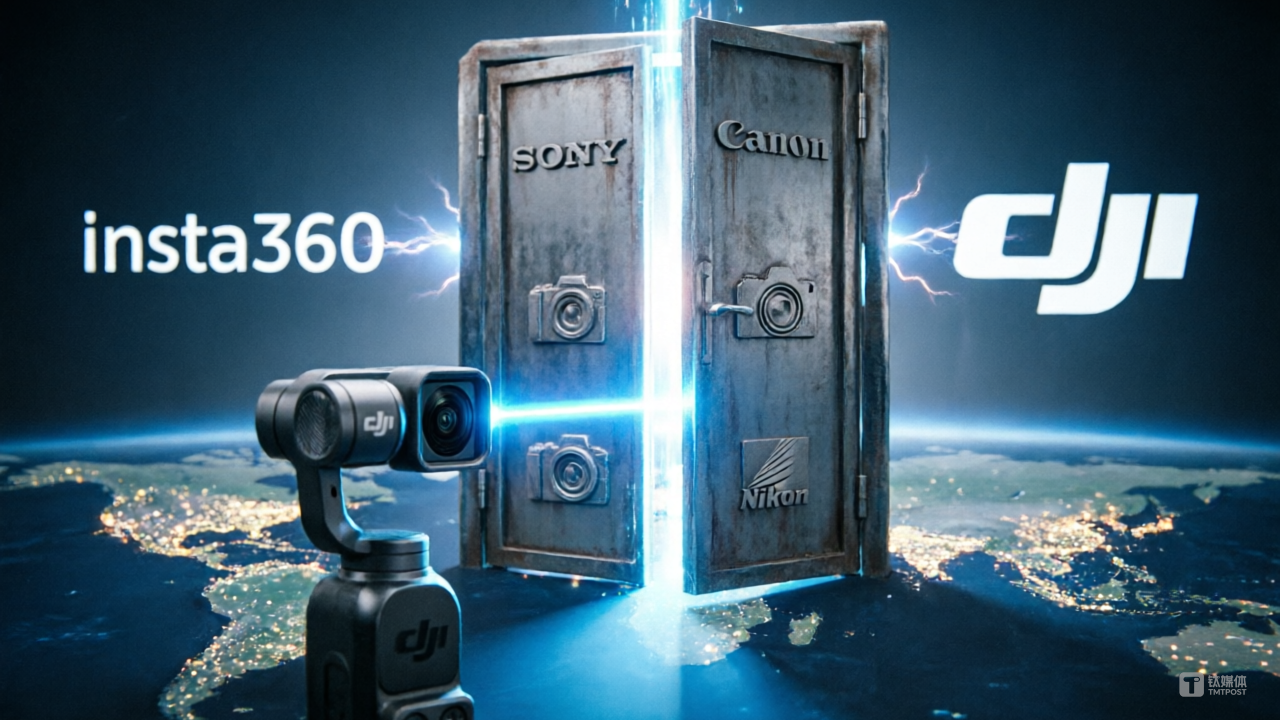
💡See how AI-integrated hardware is disrupting century-old imaging giants and changing the consumer electronics landscape.
⚡ 30-Second TL;DR
What Changed
DJI and Insta360 are capturing market share from traditional Japanese imaging brands
Why It Matters
The shift in the imaging market highlights how AI-integrated hardware is rendering traditional optical-only business models obsolete. This trend signals a broader shift toward software-defined hardware in consumer electronics.
What To Do Next
Evaluate how AI-driven image processing algorithms are replacing traditional hardware optics in your own computer vision projects.
Key Points
- •DJI and Insta360 are capturing market share from traditional Japanese imaging brands
- •Patent litigation between the two does not hinder their collective disruption of legacy players
- •Legacy companies are forced to undergo significant business reinvention
🧠 Deep Insight
Background and context from public sources — not the original article. 29 sources cited.
🔑 Enhanced Key Takeaways
- •DJI and Insta360 have significantly eroded GoPro's once-dominant market share in the action camera sector, with DJI capturing 66% and Insta360 13% of the global market by Q3 2025, while GoPro's share shrank to 18% from 84% in 2022.
- •The ongoing patent disputes between DJI and Insta360 escalated in June 2026, involving specific products like DJI's Osmo Pocket 3 and Insta360's Luna Ultra, with both companies filing lawsuits alleging infringement on design and utility patents related to gimbal stabilization and tracking technology.
- •Insta360's rapid innovation cycle is characterized by modular camera designs, AI-enabled software for features like FlowState Stabilization and 'shoot first, frame later' capabilities, and strategic collaborations such as with Leica.
- •DJI's aggressive market entry into panoramic cameras in July 2025, directly benchmarking Insta360's products and employing competitive pricing, rapidly secured 49% of the Chinese e-commerce channel for its Osmo 360 within three months, intensifying the competition.
- •The intense competition between DJI and Insta360, including price wars and legal battles, has financially impacted Insta360, with its market capitalization halving despite impressive revenue growth, as both companies burn cash on R&D and market expansion.
📊 Competitor Analysis▸ Show
| Company | Primary Focus | Global Action Camera Market Share (Q1-Q3 2025) | Global Panoramic Camera Market Share (Q3 2024 - Q3 2025) | Key Innovation/Strategy |
|---|---|---|---|---|
| DJI | Drones, Gimbals, Action/Panoramic Cameras | 66% | 49% (China e-commerce, Q3 2025, for Osmo 360) | Drone imaging algorithms, integrated ecosystems, aggressive pricing, subject tracking, gimbal technology. |
| Insta360 | 360 Cameras, Action Cameras, Gimbals | 13% | Leading position (global, Q3 2024 - Q3 2025) | Modular design, FlowState Stabilization, AI image processing, 'shoot first, frame later' workflow, invisible selfie stick. |
| GoPro | Action Cameras | 18% | Below 5% (global, Q3 2024 - Q3 2025) | Pioneering action camera market, brand recognition, rugged design. |
🛠️ Technical Deep Dive
- Insta360's FlowState Stabilization: Software-driven gimbal-like smoothness, often combined with a 6-axis gyroscope.
- Insta360's AI-Powered Reframing & Editing: Tools that automatically reframe 360-degree shots and enhance content creation, including features like Bullet Time and motion-lapse.
- Insta360's Sensor Technology: Utilizes upgraded 1/2-inch sensors (e.g., in X3) and larger 1/1.28-inch sensors with a Triple AI Chip system (e.g., in X5) for enhanced image quality, low-light performance, and 8K video capabilities.
- DJI's Gimbal & Tracking Technology: Patents cover control devices for gimbals allowing mode switching, handheld gimbals with integrated subject tracking and real-time display, and gimbal control methods driven by target images.
- DJI's Drone Camera Systems: Features include 4/3 CMOS Hasselblad cameras (e.g., Mavic 3 Classic) capable of 5.1K video, 4K HDR video (e.g., Mini 3), and advanced obstacle sensing.
- DJI's Video Transmission: Employs technologies like O4 for extended range and high-definition live view.
🔮 Future ImplicationsAI analysis grounded in cited sources
⏳ Timeline
📎 Sources (29)
Factual claims are grounded in the sources below. Forward-looking analysis is AI-generated interpretation.
- 36kr.com
- moomoo.com
- 36kr.com
- kr-asia.com
- engadget.com
- hypebeast.com
- petapixel.com
- dpreview.com
- substack.com
- reddit.com
- businessmodelcanvastemplate.com
- equalocean.com
- wikipedia.org
- 360rumors.com
- bhphotovideo.com
- insta360.com
- insta360.com
- pandaily.com
- biggo.com
- dronelife.com
- pcmag.com
- dji.com
- dji.com
- dji.com
- drdrone.ca
- dji.com
- mashable.com
- biggo.com
- 36kr.com
Weekly AI Recap
Read this week's curated digest of top AI events →
👉Related Updates


AI-curated news aggregator. All content rights belong to original publishers.
Original source: 钛媒体 ↗
This is a summary, not the original. Read the source, or get the weekly briefing.
Weekly AI briefing
One email a week. Unsubscribe anytime.