Distinguishing prediction, forecast, and warning in disaster management
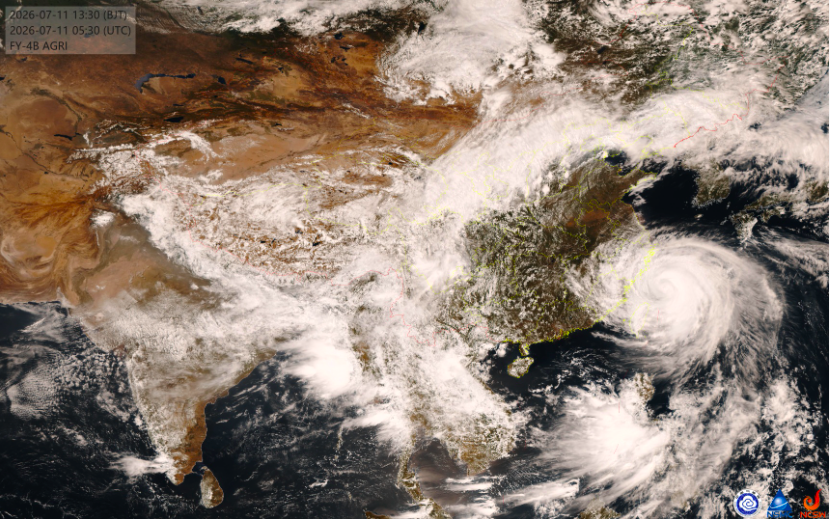
💡Learn the critical terminology for building AI-based risk assessment and early warning systems.
⚡ 30-Second TL;DR
What Changed
Prediction is based on scientific models and historical data
Why It Matters
Understanding these distinctions is crucial for developers building AI-driven early warning systems to ensure proper communication and user response.
What To Do Next
If building an AI risk-monitoring tool, clearly label outputs as 'prediction' or 'warning' to manage user expectations and legal liability.
Key Points
- •Prediction is based on scientific models and historical data
- •Forecasts are specific updates on potential events
- •Warnings are actionable signals for immediate risk mitigation
- •The inherent uncertainty in natural systems limits the accuracy of all three
🧠 Deep Insight
AI-generated analysis for this event — not the original article.
🔑 Enhanced Key Takeaways
- •The WMO (World Meteorological Organization) standardizes these terms globally to ensure interoperability between national meteorological services and emergency management agencies.
- •Probabilistic forecasting has increasingly replaced deterministic models, shifting the focus from 'if' an event will occur to the 'likelihood' of specific impact thresholds.
- •The 'Warning-Response Gap' is a recognized phenomenon where technical accuracy in warnings fails to translate into public action due to cognitive biases and lack of trust in authorities.
- •Modern disaster management systems now integrate 'Impact-Based Forecasting' (IBF), which translates meteorological data into specific socio-economic consequences rather than just physical parameters.
- •The 'Lead Time' vs. 'Accuracy' trade-off remains the primary technical constraint, where increasing the warning window inherently decreases the spatial and temporal precision of the prediction.
🛠️ Technical Deep Dive
- Ensemble Forecasting: Utilizes multiple model runs with slightly perturbed initial conditions to quantify uncertainty and generate probability distributions for disaster events.
- Data Assimilation: Employs techniques like 4D-Var or Ensemble Kalman Filters to incorporate real-time observational data into numerical weather prediction models.
- Multi-Hazard Early Warning Systems (MHEWS): Architectures that integrate disparate data streams (seismic, hydrological, meteorological) into a unified decision-support platform.
- Threshold-based Alerting: Implementation of automated triggers where specific sensor readings (e.g., river levels, ground acceleration) automatically escalate from forecast to warning status without human intervention.
🔮 Future ImplicationsAI analysis grounded in cited sources
Weekly AI Recap
Read this week's curated digest of top AI events →
👉Related Updates



AI-curated news aggregator. All content rights belong to original publishers.
Original source: 虎嗅 ↗
This is a summary, not the original. Read the source, or get the weekly briefing.
The weekly digest
One email a week. Unsubscribe anytime.