Denza D9 OTA Adds End-to-End AI Driving
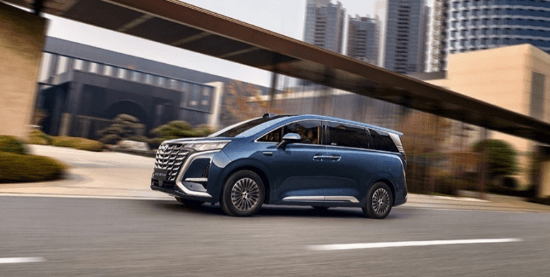
💡BYD's end-to-end AV AI hits consumer cars—key for embodied driving benchmarks
⚡ 30-Second TL;DR
What Changed
Major OTA update deployed for Denza D9
Why It Matters
This strengthens BYD's position in autonomous driving against rivals like Tesla. It accelerates adoption of AI in consumer vehicles in China.
What To Do Next
Benchmark your AV models against Denza D9's end-to-end driving via public demo videos.
Key Points
- •Major OTA update deployed for Denza D9
- •Introduces end-to-end AI driving model
- •Enhances smart cockpit functionalities
- •Targets Chinese automaker's intelligent driving push
🧠 Deep Insight
AI-generated analysis for this event — not the original article.
🔑 Enhanced Key Takeaways
- •The update integrates BYD's 'Xuanji' architecture, which unifies the vehicle's intelligent driving and smart cockpit systems into a single, centralized AI-driven framework.
- •This end-to-end model replaces traditional modular perception-planning-control stacks with a neural network that maps raw sensor data directly to driving commands, significantly improving navigation in complex urban environments.
- •The OTA update specifically targets the 'God's Eye' (Tian Shen Zhi Yan) advanced driver-assistance system, expanding its capabilities to include more nuanced lane-changing and intersection handling in the Denza D9.
📊 Competitor Analysis▸ Show
| Feature | Denza D9 (Updated) | Li Auto Mega | XPeng X9 |
|---|---|---|---|
| Driving Model | End-to-End AI | Modular/Hybrid | End-to-End AI |
| Primary Sensor | LiDAR + Vision | LiDAR + Vision | LiDAR + Vision |
| Cockpit OS | BYD Xuanji | Li OS | XOS |
| Market Positioning | Premium MPV | Ultra-Premium MPV | Tech-Focused MPV |
🛠️ Technical Deep Dive
- •Architecture: Transitioned from a modular pipeline to a transformer-based end-to-end neural network model.
- •Sensor Fusion: Utilizes high-resolution LiDAR, multiple 8MP cameras, and ultrasonic sensors processed through a unified perception layer.
- •Compute Platform: Leverages high-performance automotive SoCs (likely NVIDIA Orin-X) to handle the increased computational load of the end-to-end model.
- •Training Data: The model is trained on massive datasets collected from BYD's fleet, utilizing imitation learning to mimic human driving behavior in dense traffic.
🔮 Future ImplicationsAI analysis grounded in cited sources
⏳ Timeline
Weekly AI Recap
Read this week's curated digest of top AI events →
👉Related Updates
AI-curated news aggregator. All content rights belong to original publishers.
Original source: Pandaily ↗
This is a summary, not the original. Read the source, or get the weekly briefing.
The weekly digest
One email a week. Unsubscribe anytime.