Demystifying True AI-Native Apps
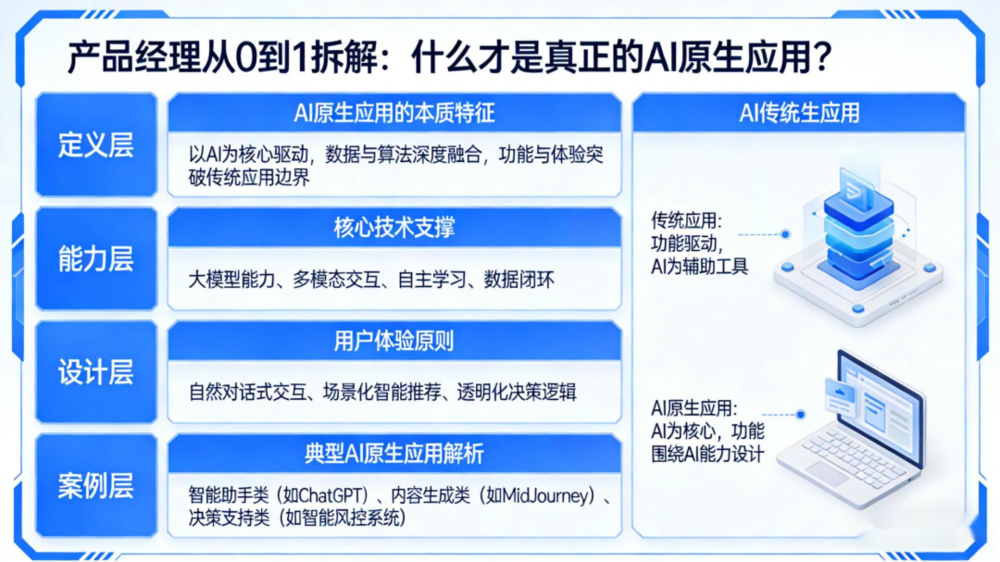
💡Master PM workflows for AI-native apps to avoid chatbox pitfalls
⚡ 30-Second TL;DR
What Changed
Demand analysis evolves to 'scenario intent pools' mapping fuzzy language like 'place to daze' to features via AI
Why It Matters
Empowers PMs to build deeply integrated AI products, moving beyond superficial chat interfaces to reshape user experiences fundamentally.
What To Do Next
Define a scenario intent pool for your AI app to handle fuzzy user queries before implementing agents.
Key Points
- •Demand analysis evolves to 'scenario intent pools' mapping fuzzy language like 'place to daze' to features via AI
- •Interactions use multimodal perception, e.g., image upload triggers Vision model for personalized suggestions
- •Architecture shifts to Agent orchestration: analyzer, scheduler calling APIs, reviewer for conflicts
- •Delivery as interactive dynamic cards with real-time re-generation on user edits
🧠 Deep Insight
Background and context from public sources — not the original article. 7 sources cited.
🔑 Enhanced Key Takeaways
- •AI-native architectures integrate four core components: Agent Orchestrator for workflow management, Knowledge Plane for RAG-based grounding, Feature Store for low-latency feature serving, and Causal Tracing Engine for linking model decisions to outcomes.[1]
- •Key characteristics include intelligence embedded everywhere, distributed data infrastructure via Data Mesh, zero-touch automation, and AI as a Service (AIaaS) for modular exposure of capabilities.[3]
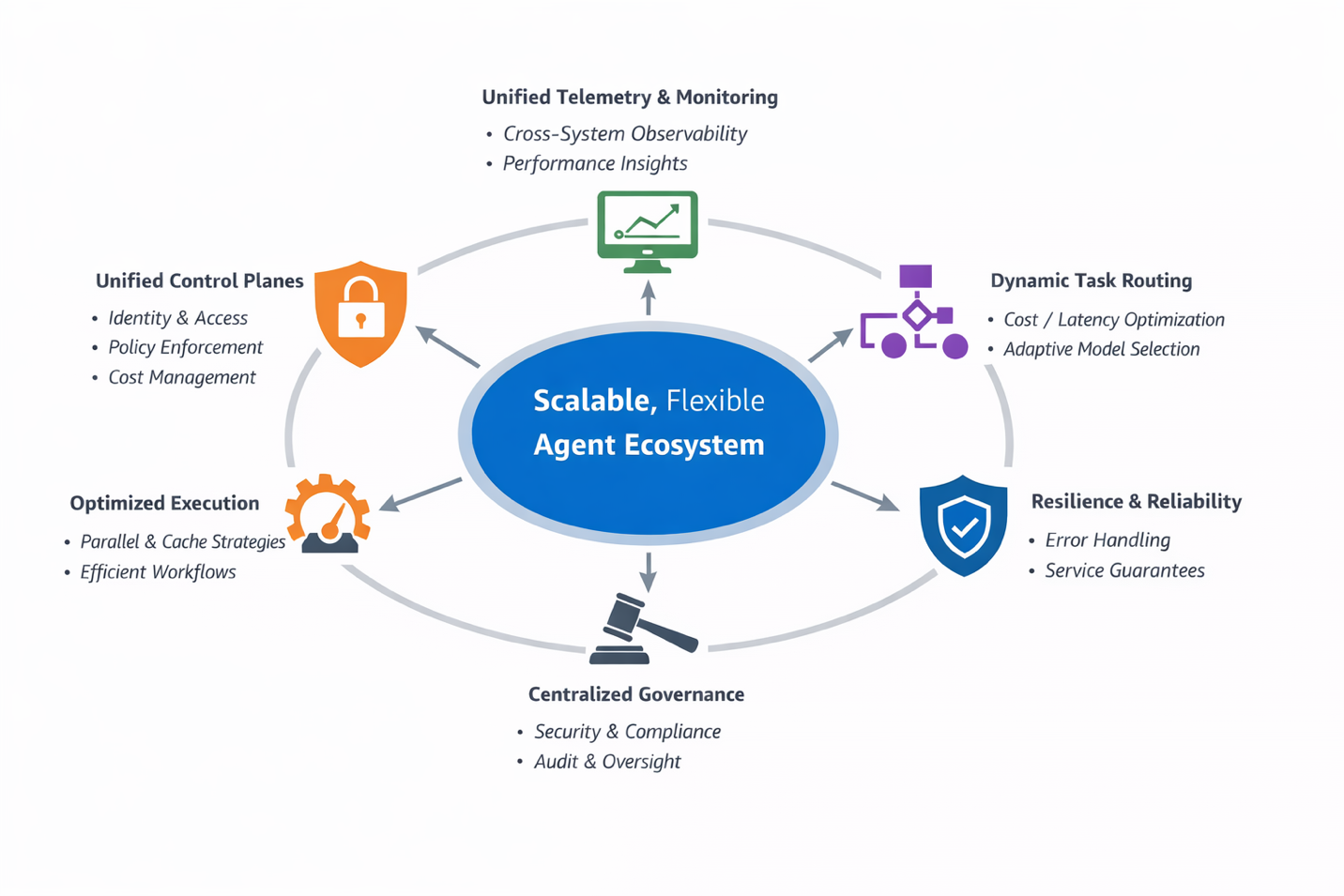
- •AI-native gateways act as chokepoints between services and models, handling rate limiting, model selection by cost/task, logging, and policy enforcement without altering application code.[2]
🛠️ Technical Deep Dive
- •Agent Orchestrator serves as the API gateway entry point, orchestrating autonomous agents or DSLMs, managing tool calling, and dynamically routing based on real-time context before core services.[1]
- •Knowledge Plane implements RAG systems for grounding LLMs in real-time data, requiring low-latency inference compute like TPUs or GPUs directly in the request path.[1]
- •Model gateways enable provider swapping, fallback models, and safety filters via centralized logging of latency, token usage, and activations.[2]
- •AI-native systems support MLOps functions like data observability, feature engineering, model drift detection, and lifecycle management of AI artifacts.[3]
🔮 Future ImplicationsAI analysis grounded in cited sources
📎 Sources (7)
Factual claims are grounded in the sources below. Forward-looking analysis is AI-generated interpretation.
- dev.to — The Complete Guide to System Design in 2026 AI Native and Serverless 1kpb
- lawzava.com — 2026 01 26 AI Native Architecture 2026
- ericsson.com — AI Native
- exabeam.com — Understanding AI Native Architecture 4 Amazing Use Cases
- ibm.com — AI Native
- techstoriess.com — AI Native Platforms in 2026 Definition Architecture Use Cases and Benefits
- tblocks.com — API Trends
Weekly AI Recap
Read this week's curated digest of top AI events →
👉Related Updates



AI-curated news aggregator. All content rights belong to original publishers.
Original source: 虎嗅 ↗
This is a summary, not the original. Read the source, or get the weekly briefing.
Weekly AI briefing
One email a week. Unsubscribe anytime.