Deezer launches non-AI music remixing tool
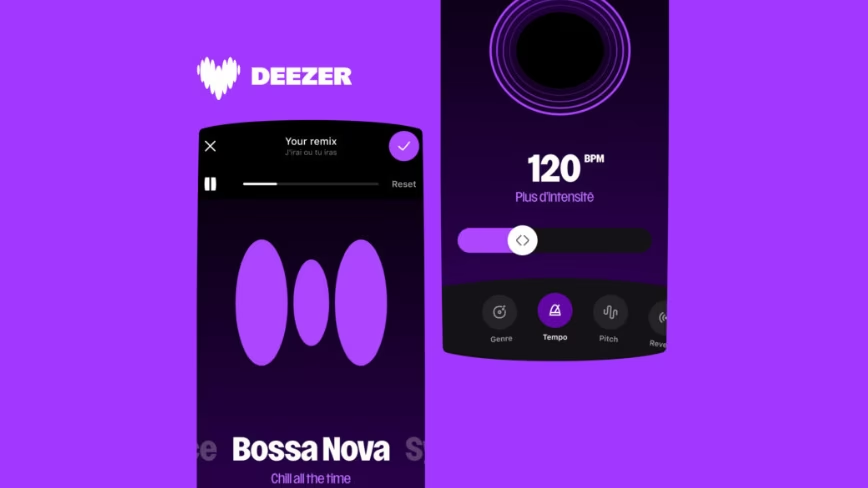
A rare example of a major platform choosing manual tools over AI, highlighting the growing focus on creator rights.
30-Second TL;DR
What Changed
Remix Lab uses manual tools instead of generative AI
Why It Matters
This approach offers a human-centric alternative to AI-driven music generation, potentially setting a standard for ethical remixing in the streaming industry.
What To Do Next
If you are building music tech, consider implementing royalty-tracking smart contracts to ensure fair compensation for creators.
Key Points
- •Remix Lab uses manual tools instead of generative AI
- •Artists receive royalties for every stream of remixed tracks
- •Requires explicit consent from original rights holders
Deep Insight
AI-generated analysis for this event — not the original article.
Enhanced Key Takeaways
- •Remix Lab integrates with Deezer's existing 'SongCatcher' technology to allow users to identify and manipulate stems from a library of pre-cleared tracks.
- •The tool utilizes a proprietary 'non-generative' audio processing engine that restricts users to time-stretching, pitch-shifting, and EQ adjustments rather than synthesizing new audio content.
- •Deezer has established a 'Remix Royalty Pool' specifically to manage the split payments between the original artist, the remixer, and the rights holders.
- •The platform enforces a 'Creative Integrity Filter' that prevents the upload or creation of remixes that violate community guidelines or contain unauthorized samples.
- •Deezer's move is part of a broader strategy to combat 'AI-generated noise' on streaming platforms by prioritizing human-curated and human-created content.
Competitor Analysis
- Deezer Remix Lab
- Manual/Non-AI
- Spotify Remix Tools
- N/A (AI-focused)
- SoundCloud Remix Features
- Manual/Community-based
- Deezer Remix Lab
- Integrated/Automated
- Spotify Remix Tools
- Manual/Third-party
- SoundCloud Remix Features
- Manual/Copyright Match
- Deezer Remix Lab
- Direct Royalty Split
- Spotify Remix Tools
- N/A
- SoundCloud Remix Features
- Ad-revenue sharing
| Feature | Deezer Remix Lab | Spotify Remix Tools | SoundCloud Remix Features |
|---|---|---|---|
| Technology | Manual/Non-AI | N/A (AI-focused) | Manual/Community-based |
| Rights Management | Integrated/Automated | Manual/Third-party | Manual/Copyright Match |
| Monetization | Direct Royalty Split | N/A | Ad-revenue sharing |
Technical Deep Dive
- Utilizes a non-generative Digital Signal Processing (DSP) architecture for real-time audio manipulation.
- Implements a server-side rights-management layer that validates metadata against the Deezer catalog before allowing remixing.
- Employs a proprietary stem-separation verification system to ensure only authorized, high-fidelity audio files are accessible for manipulation.
- Uses a cloud-based rendering engine to process user edits, ensuring consistent audio quality across different device types.
Future ImplicationsAI analysis grounded in cited sources
Timeline
- 2023-09Deezer announces a new artist-centric streaming model to prioritize professional artists over noise.
- 2024-02Deezer implements advanced AI detection tools to identify and flag non-human generated content.
- 2025-11Deezer begins beta testing of manual audio manipulation tools with select independent labels.
- 2026-06Official launch of 'Remix Lab' to the general public.
Weekly AI Recap
Read this week's curated digest of top AI events →
Related Updates



AI-curated news aggregator. All content rights belong to original publishers.
Original source: The Next Web (TNW) ↗
This is a summary, not the original. Read the source, or get the weekly briefing.
The weekly digest
One email a week. Unsubscribe anytime.