🐯虎嗅•Stalecollected in 12m
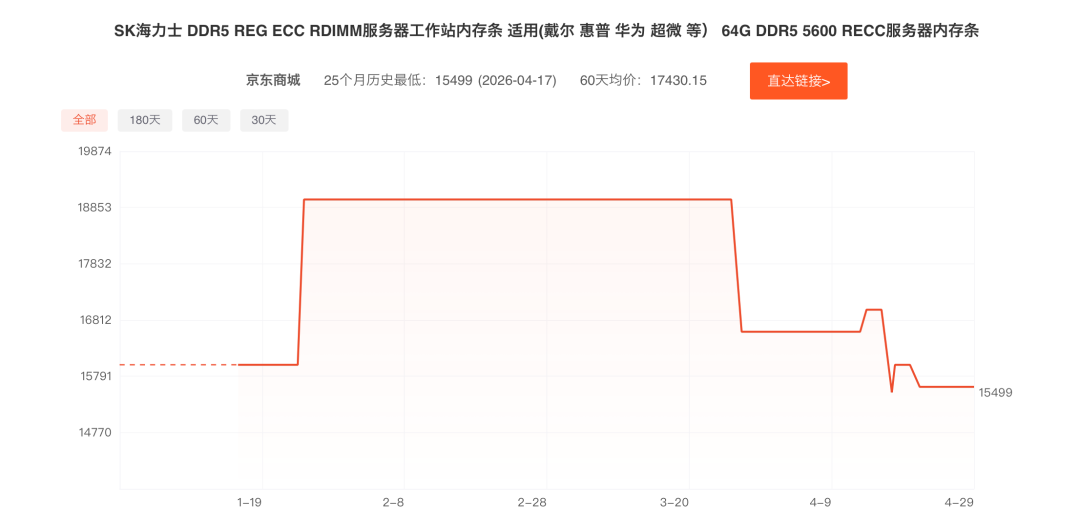
DDR5 Prices Dip Mildly on AI Demand
💡AI server memory prices stable & rising—key for data center builds.
⚡ 30-Second TL;DR
What Changed
No cliff-like DDR5 drop; 4-6% spot declines in server/consumer segments since April.
Why It Matters
Sustained high DDR5 prices pressure AI infrastructure costs but signal robust demand; spot buyers gain from dips while contracts rise.
What To Do Next
Track TrendForce DDR5 contract forecasts for planning AI server memory procurement.
Who should care:Enterprise & Security Teams
Key Points
- •No cliff-like DDR5 drop; 4-6% spot declines in server/consumer segments since April.
- •AI data center demand keeps contract prices rising quarterly through 2026.
- •Prices still 4x higher than 2025; shortages persist until 2028 new capacity.
- •Fluctuations tied to spot market emotions, not overall trend reversal.
🧠 Deep Insight
AI-generated analysis for this event.
🔑 Enhanced Key Takeaways
- •HBM3e and HBM4 production prioritization by major DRAM manufacturers (Samsung, SK Hynix, Micron) is actively cannibalizing wafer capacity previously allocated to standard DDR5 modules.
- •The transition to DDR5-8400 and higher speeds for next-generation AI-optimized server platforms is creating a tiered pricing structure where high-speed modules command significant premiums over standard JEDEC-spec DDR5-4800/5600.
- •Geopolitical export controls on advanced semiconductor manufacturing equipment continue to constrain the expansion of domestic Chinese DRAM production, forcing reliance on global supply chains that prioritize high-margin AI-server memory.
🛠️ Technical Deep Dive
- •DDR5 architecture utilizes On-Die ECC (Error Correction Code) to improve reliability as process nodes shrink below 10nm.
- •Power Management Integrated Circuit (PMIC) is moved from the motherboard to the DIMM itself, allowing for better power distribution and signal integrity at higher data rates.
- •Dual-channel architecture: Each DDR5 DIMM features two independent 32-bit sub-channels, increasing bus efficiency compared to the single 64-bit channel of DDR4.
- •Bank Grouping: DDR5 doubles the bank groups from 4 to 8, and the total bank count from 16 to 32, significantly reducing latency during concurrent access operations.
🔮 Future ImplicationsAI analysis grounded in cited sources
DDR5 supply will remain constrained through at least Q4 2027.
The industry-wide shift toward HBM production for AI accelerators limits the available wafer starts for standard DDR5, preventing a return to pre-shortage pricing levels.
Enterprise server procurement costs will increase by 15-20% annually through 2026.
The persistent mismatch between AI-driven demand for high-density memory and the limited supply of advanced DRAM nodes forces contract prices upward despite spot market volatility.
⏳ Timeline
2021-11
Intel launches Alder Lake processors, marking the first mainstream platform support for DDR5 memory.
2023-05
DDR5 market penetration surpasses DDR4 in the premium server segment due to AI infrastructure requirements.
2025-01
Major DRAM manufacturers announce strategic pivot to prioritize HBM3e production, tightening DDR5 supply.
2026-02
Global DRAM contract prices reach a multi-year peak as AI server demand outpaces capacity expansion.
📰
Weekly AI Recap
Read this week's curated digest of top AI events →
👉Related Updates


AI-curated news aggregator. All content rights belong to original publishers.
Original source: 虎嗅 ↗