🐯虎嗅•Stalecollected in 12m
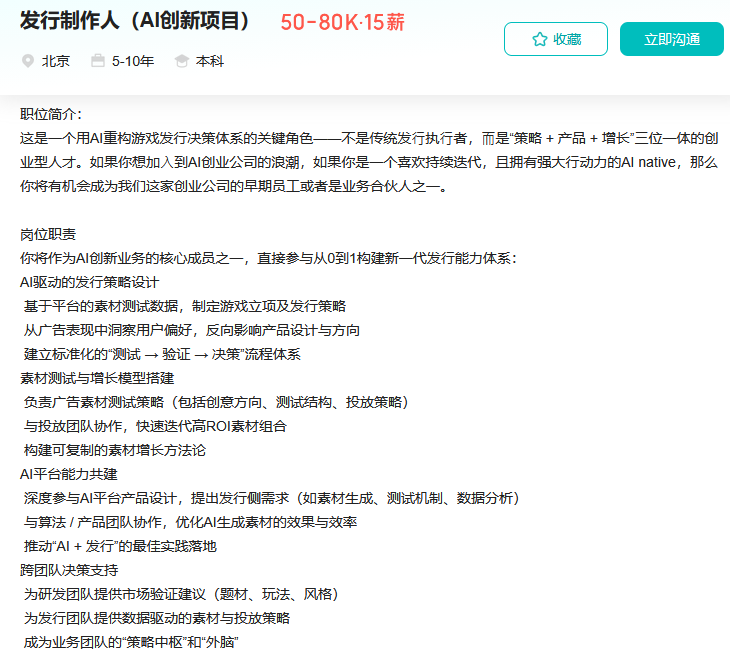
Solo Builds AI Game Publishing System
💡Practical guide to launch AI agent systems for business automation in gaming.
⚡ 30-Second TL;DR
What Changed
Created AGENTS.md as foundational doc outlining project philosophy, priorities, and人機分工 for game publishing.
Why It Matters
Enables solo operators to scale game publishing via AI, reducing manual repetition and improving decision speed in competitive markets.
What To Do Next
Adapt the open-sourced AGENTS.md template to structure AI agents for your business workflows.
Who should care:Marketers & Content Teams
Key Points
- •Created AGENTS.md as foundational doc outlining project philosophy, priorities, and人機分工 for game publishing.
- •AI handles preprocessing, analysis, and asset precipitation; humans make final business decisions.
- •Prioritizes tasks by frequency, importance, and AI efficiency gains; open-sourced for adaptation.
- •Targets overseas markets with ad creatives, UA, data analysis, and competitor monitoring.
🧠 Deep Insight
AI-generated analysis for this event.
🔑 Enhanced Key Takeaways
- •The AGENTS.md framework utilizes a modular 'Agent-as-a-Service' architecture, allowing developers to swap specific LLM backends (e.g., switching from GPT-4o to specialized local models) without refactoring the core publishing logic.
- •The system integrates real-time API hooks into major ad networks like Meta and Google Ads, enabling automated A/B testing of creative assets based on AI-generated performance predictions before human review.
- •The project has gained significant traction within the indie developer community on GitHub, specifically for its 'Human-in-the-Loop' (HITL) design pattern which mitigates AI hallucination risks in high-stakes budget allocation.
📊 Competitor Analysis▸ Show
| Feature | Solo AI Publishing System | Traditional Publishing Agencies | Automated UA Platforms (e.g., AppLovin/Unity) |
|---|---|---|---|
| Cost Structure | Low (Open Source/API usage) | High (Revenue Share/Fees) | High (Ad Spend %/Platform Fees) |
| Control | Full (Human-in-the-loop) | Low (Outsourced) | Medium (Black-box algorithms) |
| Customization | High (Code-level) | Low (Standardized) | Low (Platform-defined) |
🛠️ Technical Deep Dive
- Architecture: Employs a Directed Acyclic Graph (DAG) workflow where each node represents a specialized agent (e.g., 'Creative Analyst', 'UA Strategist').
- Data Pipeline: Uses a vector database (typically Pinecone or Milvus) to store historical ad performance data, allowing the AI to perform Retrieval-Augmented Generation (RAG) on past campaign successes.
- Integration: Built primarily in Python, utilizing LangChain for orchestration and Pydantic for strict schema enforcement between AI outputs and business logic modules.
- Human Interface: Implements a 'Decision Dashboard' that presents AI-generated recommendations with confidence scores and 'explainability' logs, requiring a digital signature for budget execution.
🔮 Future ImplicationsAI analysis grounded in cited sources
Indie game studios will shift from hiring junior UA managers to hiring 'AI Orchestrators'.
The automation of high-frequency, low-complexity tasks like ad optimization reduces the need for manual labor, shifting the required skillset toward system management and prompt engineering.
Open-source publishing frameworks will disrupt the traditional 30-50% revenue share model of game publishers.
By lowering the barrier to entry for professional-grade publishing operations, solo developers can retain a larger share of revenue by managing their own distribution infrastructure.
⏳ Timeline
2025-11
Initial development of the AI publishing prototype begins using GPT Codex.
2026-02
AGENTS.md framework is formalized and published to GitHub.
2026-04
The system achieves its first successful overseas game launch with automated UA management.
📰
Weekly AI Recap
Read this week's curated digest of top AI events →
👉Related Updates



AI-curated news aggregator. All content rights belong to original publishers.
Original source: 虎嗅 ↗