Datacenters face rising climate-related legal challenges globally
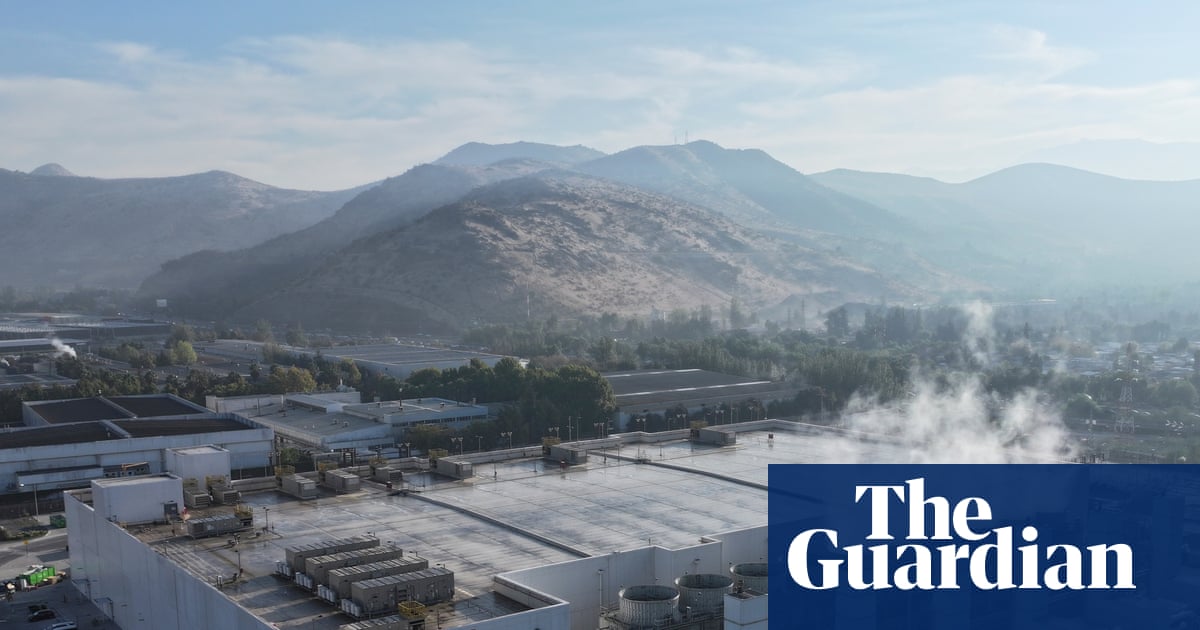
AI infrastructure is under legal fire; learn how climate litigation could impact your datacenter scaling strategy.
30-Second TL;DR
What Changed
LSE analyzed 3,600 climate-related lawsuits filed since 2015.
Why It Matters
The rising legal scrutiny could force AI companies to adopt stricter sustainability reporting and potentially increase operational costs for datacenter expansion.
What To Do Next
Audit your cloud provider's sustainability reports and water usage effectiveness (WUE) metrics to assess your project's environmental risk profile.
Key Points
- •LSE analyzed 3,600 climate-related lawsuits filed since 2015.
- •Litigation targets energy sources, water consumption, and air pollution linked to AI infrastructure.
- •Legal actions are occurring globally, including the US, UK, Chile, and Ireland.
Deep Insight
AI-generated analysis for this event — not the original article.
Enhanced Key Takeaways
- •Legal strategies are increasingly utilizing 'greenwashing' claims, alleging that datacenter operators mislead investors and the public regarding the carbon neutrality of their AI-driven expansion projects.
- •Local planning authorities in jurisdictions like Ireland and the Netherlands have begun implementing moratoriums on new datacenter construction due to grid capacity constraints and public opposition.
- •The concept of 'Scope 3' emissions is becoming a central legal battleground, as plaintiffs argue that datacenter operators must be held accountable for the lifecycle emissions of the hardware and AI models they host.
- •Litigation is shifting toward 'duty of care' arguments, where community groups claim that the noise pollution and heat island effects generated by massive cooling systems violate local environmental health standards.
- •Regulatory bodies are increasingly requiring 'water neutrality' assessments for new facilities, forcing companies to invest in closed-loop cooling technologies to avoid legal injunctions.
Technical Deep Dive
- Liquid Cooling Systems: Shift from traditional air-cooled CRAC/CRAH units to direct-to-chip liquid cooling to manage the high thermal design power (TDP) of modern AI accelerators.
- Power Usage Effectiveness (PUE) Optimization: Implementation of AI-driven workload orchestration to shift non-latency-sensitive tasks to periods of high renewable energy availability.
- Water Usage Effectiveness (WUE) Metrics: Adoption of advanced evaporative cooling alternatives, such as dry coolers or membrane-based heat exchangers, to reduce water consumption in water-stressed regions.
- Grid-Interactive Datacenters: Integration of onsite battery energy storage systems (BESS) and hydrogen fuel cells to provide grid frequency regulation and reduce reliance on peak-load fossil fuel plants.
Future ImplicationsAI analysis grounded in cited sources
Timeline
- 2021-09EirGrid introduces strict connection policies for datacenters in the Dublin region due to energy security concerns.
- 2023-05The European Parliament adopts the Energy Efficiency Directive, mandating stricter energy reporting for large datacenters.
- 2024-02LSE Grantham Research Institute publishes initial findings on the surge of climate litigation targeting digital infrastructure.
- 2025-11Major US court ruling establishes precedent for considering cumulative water usage of AI clusters in environmental impact statements.
Weekly AI Recap
Read this week's curated digest of top AI events →
AI-curated news aggregator. All content rights belong to original publishers.
Original source: The Guardian Technology ↗
This is a summary, not the original. Read the source, or get the weekly briefing.
The weekly digest
One email a week. Unsubscribe anytime.