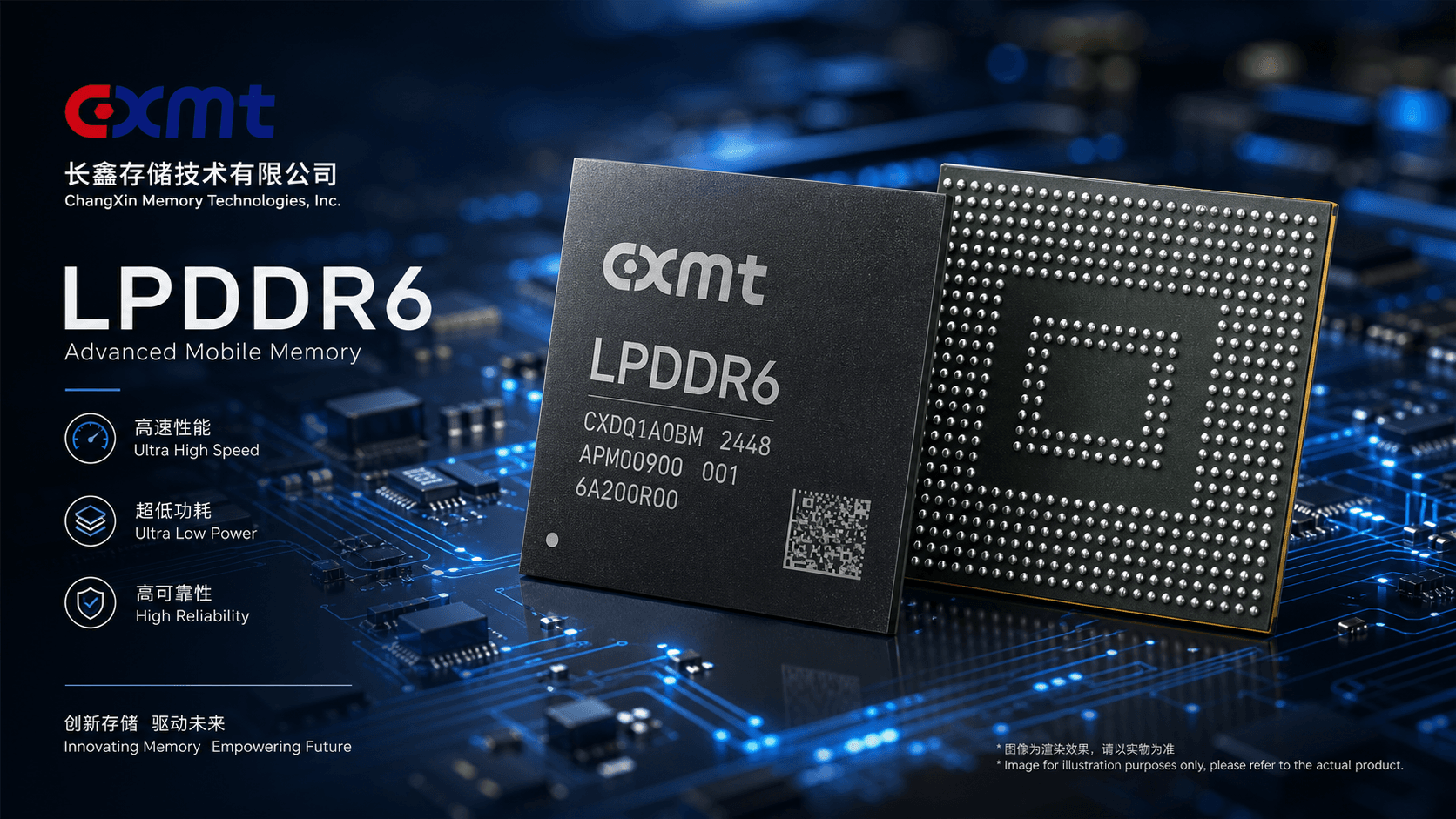
CXMT Projects Massive Revenue Growth for H1 2026

💡Major growth in domestic memory production impacts the cost and availability of hardware for AI infrastructure.
⚡ 30-Second TL;DR
What Changed
Projected H1 2026 revenue: 110-120 billion RMB
Why It Matters
CXMT's rapid growth highlights the strengthening of China's domestic memory supply chain, which is critical for AI infrastructure and high-performance computing hardware.
What To Do Next
Monitor CXMT's memory product roadmap to assess potential supply chain integration for local AI hardware development.
Key Points
- •Projected H1 2026 revenue: 110-120 billion RMB
- •Year-over-year revenue growth: 612.53% to 677.31%
- •Projected net profit: 66-75 billion RMB
- •IPO filing indicates aggressive market scaling
🧠 Deep Insight
Web-grounded analysis with 17 cited sources.
🔑 Enhanced Key Takeaways
- •CXMT has significantly narrowed the technology gap with global leaders, achieving mass production of 16nm DDR5 DRAM in early 2025 and targeting 15nm (G5) by late 2025 with samples in 2026.
- •The company's IPO on the Shanghai Stock Exchange, aiming to raise 20-40 billion RMB (up to $4.2 billion USD), is intended to fund further R&D and capacity expansion, including a focus on high-bandwidth memory (HBM).
- •CXMT turned profitable in 2025 after years of losses, driven by surging DRAM prices due to AI server demand and a strategic shift from legacy DRAM to DDR5 and LPDDR5 production.
- •CXMT's aggressive pricing strategy, offering older-generation DDR4 chips at approximately half the prevailing market rate, has led to increased market share and is reportedly being tested by major US hardware firms like HP and Dell.
- •As China's largest DRAM producer, CXMT operates as an integrated device manufacturer (IDM) and is a key component of China's national strategy for semiconductor self-sufficiency, backed by significant government-linked investments.
📊 Competitor Analysis▸ Show
A Markdown table comparing this with competitors (Feature/Pricing/Benchmarks). Return null if not applicable (e.g. op-ed, interview, single-product announcement with no clear competitors).
🛠️ Technical Deep Dive
Detailed technical specs, model architecture, or implementation details found via web search. Use Markdown bullet points (- item). Never use HTML tags. Return null if insufficient technical data exists.
🔮 Future ImplicationsAI analysis grounded in cited sources
⏳ Timeline
📎 Sources (17)
Factual claims are grounded in the sources below. Forward-looking analysis is AI-generated interpretation.
- Google Search Source
- Google Search Source
- Google Search Source
- Google Search Source
- Google Search Source
- Google Search Source
- Google Search Source
- Google Search Source
- Google Search Source
- Google Search Source
- Google Search Source
- Google Search Source
- Google Search Source
- Google Search Source
- Google Search Source
- Google Search Source
- Google Search Source
Weekly AI Recap
Read this week's curated digest of top AI events →
👉Related Updates
AI-curated news aggregator. All content rights belong to original publishers.
Original source: 36氪 ↗